

Iraq seeks Egyptian and Saudi investment for developing new cities

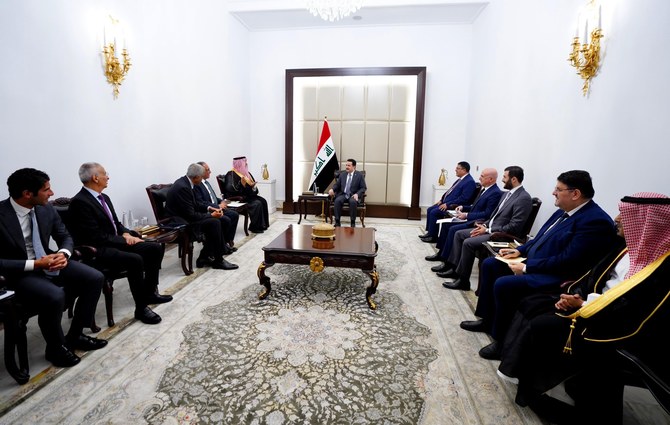
Iraqi Prime Minister Mohammed Shia Al-Sudani presented these projects under the government’s initiative to launch 11 new cities, emphasizing their crucial role in addressing the urban housing challenge. Supplied
Short Url
Updated 14 July 2024
Follow

Iraq seeks Egyptian and Saudi investment for developing new cities

RIYADH: Iraq has unveiled plans to attract Egyptian and Saudi investment for five new cities in Baghdad and other governorates, as part of efforts to address the housing shortage. 

Iraqi Prime Minister Mohammed Shia Al-Sudani presented these projects under the government’s initiative to launch 11 new cities, emphasizing their crucial role in addressing the urban housing challenge, especially for low-income groups, according to an official statement. 

The country has long been affected by political instability, impacting its economy and infrastructure, and faces a significant housing shortage. 

The prime minister highlighted Iraq’s rapid growth and recovery phase, noting numerous promising investment opportunities, particularly in housing and new city projects.  

With a demand for around 3 million housing units, he emphasized the government’s commitment to developing integrated cities that incorporate all sectors, services, entertainment, and commercial facilities, linked to Baghdad through a strong transportation network. 

The prime minister hosted a delegation of Egyptian, Saudi, and Iraqi businessmen, including Hisham Talaat Moustafa, chairman of TMG Holding; Sulaiman Al-Muhaidib, group chairman of Al Muhaidib Group; and businessman Ahmed Talaat Hani. The delegation specializes in real estate development and the establishment of integrated and smart residential cities. The meeting was attended by the Saudi Ambassador to Iraq, Abdulaziz bin Khalid Al-Shammari. 

Al-Sudani urged Egyptian and Saudi company owners to invest in resorts, hotels, and entertainment facilities, highlighting Iraq’s diverse tourist destinations. He emphasized that Iraq’s development and progress align with the economic interests of other Arab countries. 

Earlier this month, Mohammed Al-Khareef, chairperson of the Saudi-Iraqi Business Council, said a new law will protect Saudi investments in Iraq, with trade between the two countries witnessing an annual growth rate of 12 percent. 

Al-Khareef noted that the body is actively working to enhance funding from the Kingdom to Iraq, coinciding with Saudi Arabia’s private and governmental sectors showing interest in investing in the country. 

The new law, set to potentially be enacted in the coming months, aims to bolster economic cooperation between the two countries — with trade between the nations reaching SR5 billion ($1.33 billion), according to Al-Khareef. 

The announcement came during a meeting between Hassan Al-Huwaizi, chairman of the Federation of Saudi Chambers of Commerce, and Shalan Al-Karim, head of the Saudi-Iraqi Friendship Committee in the Iraqi Parliament, as part of an official visit to the Kingdom. 

In April, Saudi Arabia and Iraq signed 12 memorandums of understanding for quality investment projects to further strengthen economic ties.


Council of Economic and Development Affairs reviews budget performance report during virtual meeting

Updated 8 sec ago
Follow

Council of Economic and Development Affairs reviews budget performance report during virtual meeting

JEDDAH: The Council of Economic and Development Affairs held a virtual meeting, the Saudi Press Agency has reported.

At the outset of the meeting, the council reviewed the quarterly report submitted by the Ministry of Economy and Planning, which included updates on the global economy and the impact of geopolitical challenges and volatility in global markets on growth prospects.

The report also addressed the latest developments related to the national economy and future projections through 2027, highlighting its high resilience in confronting global challenges and noting that various economic statistics and indicators point to remarkable growth that further cements the Kingdom’s position among the fastest-growing and most stable economies in the world.

The council reviewed the fourth-quarter performance report of the state’s general budget for fiscal year 2025, submitted by the Ministry of Finance, which provided a comprehensive overview of financial performance during the period, including developments in revenues and expenditures, public debt levels, and an analysis of local and global economic variables and their implications for financial indicators.

The report results showed the continued adoption of a balanced and flexible fiscal policy that supports economic growth and enhances financial sustainability over the medium and long terms, through the use of disciplined and efficient fiscal tools and the continuation of countercyclical spending, directed toward development programs and projects with economic and social impact, contributing to improving the quality of public services, stimulating investment, and strengthening the resilience of public finances.

The council discussed a number of procedural matters, including a draft Government Tenders and Procurement Law, a draft Space Law, and a briefing on steps taken regarding the assignment of the Council of University Affairs to update the regulations necessary for the governance of public and private universities and health colleges, supervise and follow up on them periodically, and update compliance processes in public and private universities and health colleges based on quality standards approved by the Council of University Affairs.

The council was also briefed on the results of the quarterly Real Estate Price Index report, along with two summaries of the monthly Consumer Price Index and Wholesale Price Index reports, and the underlying reports on which the summaries were based.

The council adopted the necessary decisions and recommendations regarding these matters.