

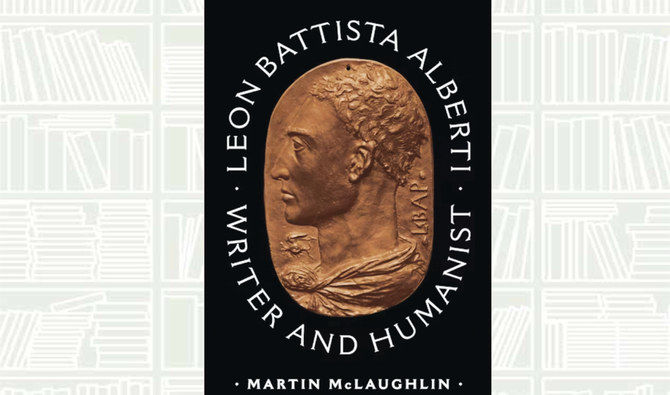

Author: Martin McLaughlin
Leon Battista Alberti (1404–1472) was one of the most prolific and original writers of the Italian Renaissance—a fact often eclipsed by his more celebrated achievements as an art theorist and architect, and by Jacob Burckhardt’s mythologizing of Alberti as a “Renaissance or Universal Man.” In this book, Martin McLaughlin counters this partial perspective on Alberti, considering him more broadly as a writer dedicated to literature and humanism, a major protagonist and experimentalist in the literary scene of early Renaissance Italy. McLaughlin, a noted authority on Alberti, examines all of Alberti’s major works in Latin and the Italian vernacular and analyzes his vast knowledge of classical texts and culture.
McLaughlin begins with what we know of Alberti’s life, comparing the facts laid out in Alberti’s autobiography with the myth created in the 19th century by Burckhardt, before moving on to his extraordinarily wide knowledge of classical texts. He then turns to Alberti’s works, tracing his development as a writer through texts that range from an early comedy in Latin successfully passed off as the work of a fictitious ancient author to later philosophical dialogues written in the Italian vernacular (a revolutionary choice at the time).


