WASHINGTON: The United States will start deploying long-range fire capabilities in Germany in 2026 in an effort to demonstrate its commitment to NATO and European defense, the US and Germany said in a joint statement on Wednesday.
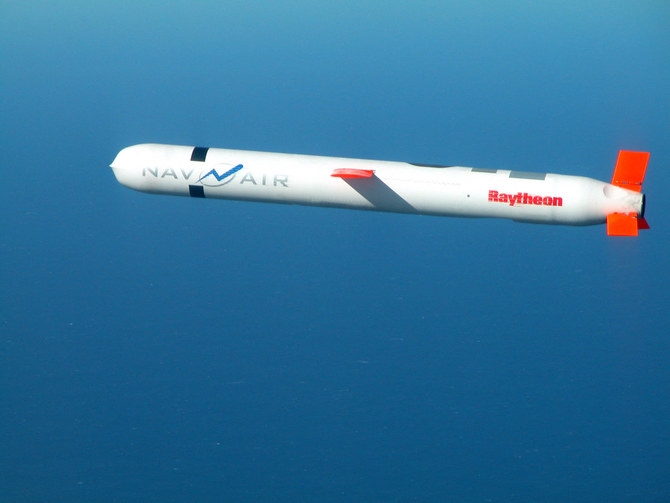
The United States’ “episodic deployments” are in preparation for longer-term stationing of such capabilities that will include SM-6, Tomahawk cruise missiles and developmental hypersonic weapons that have a longer range than current capabilities in Europe, the two countries said.
Both the Tomahawk and the Standard Missile-6 (SM-6) are made by RTX’s Raytheon division.
Ground-based missiles with a range exceeding 500 kilometers were banned until 2019 under the Intermediate-Range Nuclear Forces Treaty signed by the Soviet Union’s Mikhail Gorbachev and former US President Ronald Reagan in 1987.
It marked the first time the two superpowers had agreed to reduce their nuclear arsenals and eliminated a whole category of weapons.
Falling in line with the signatories, Germany, Hungary, Poland and the Czech Republic destroyed their missiles in the 1990s, to be followed later by Slovakia and Bulgaria.
The US withdrew from the INF Treaty in 2019 saying that Moscow was violating the accord, citing Russia’s development of the 9M729 ground-launched cruise missile, known in NATO as the SSC-8.
The Kremlin repeatedly denied the accusation and then imposed a moratorium on its own development of missiles previously banned by the INF treaty — ground-based ballistic and cruise missiles with ranges of 500 km to 5,500 km.
At the end of June, Russian President Vladimir Putin said Moscow should resume production of intermediate and shorter range nuclear-capable missiles after the US brought similar missiles to Europe and Asia.
Putin said Russia had pledged not to deploy such missiles but that the US had resumed their production, brought them to Denmark for exercises and also taken them to the Philippines.


![]()

US to start deploying long-range weapons in Germany in 2026
Short Url
https://arab.news/6ff3b
US to start deploying long-range weapons in Germany in 2026
- Ground-based missiles with a range exceeding 500 km were banned until 2019 under a US-Soviet treaty signed in 1987
- The US withdrew from the INF Treaty in 2019 saying that Moscow was violating the accord, a charge Russia denied

Latest updates


© 2026 SAUDI RESEARCH & PUBLISHING COMPANY, All Rights Reserved And subject to Terms of Use Agreement.