
WASHINGTON: The Iranian government is covertly encouraging American campus protests over Israel’s war against Hamas in Gaza in a bid to stoke outrage ahead of the fall election, the nation’s top intelligence official said Tuesday.
Using social media platforms popular in the US, groups linked to Tehran have posed as online activists, encouraged campus protests and have provided financial support to some protest groups, Director of National Intelligence Avril Haines said in a statement.
“Iran is becoming increasingly aggressive in their foreign influence efforts, seeking to stoke discord and undermine confidence in our democratic institutions,” Haines said.
This effort noted by the top US intelligence official is the latest evidence that America’s adversaries are harnessing the Internet to warp domestic debates and widen political divides ahead of the election.
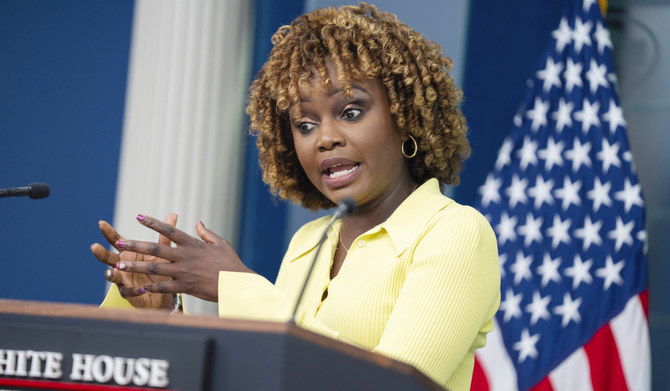
White House press secretary Karine Jean-Pierre said it was important to warn Americans to help them “guard against efforts by foreign powers to take advantage of or coopt their legitimate protest activities.”
She also warned Iran that “meddling in our politics and seeking to stoke division is unacceptable.”
In recent years, Iran, Russia and China have all refined their abilities to use online bots and networks of fake social media accounts to amplify divisive debates within the US over immigration, shootings by police, COVID-19, environmental catastrophes, and even Chinese spy balloons.
In most cases, these influence campaigns exploit existing social conflicts, and Haines noted Tuesday that Americans participating in protests over Israel’s conduct in Gaza have a right to express their views. But she said Americans need to know when foreign actors are trying to meddle in domestic American politics.
“Americans who are being targeted by this Iranian campaign may not be aware that they are interacting with or receiving support from a foreign government,” Haines said.
Demonstrations over Israel’s offensives in Gaza emerged on campuses across the country in recent months. The protests quickly became a factor in political campaigns and prompted concerns about antisemitism and the role of “outside agitators ” as well as worries about a larger regional conflict between Israel and Iran.
Iran isn’t the only nation seeking to influence American discourse ahead of the 2024 election. During a briefing with reporters Tuesday, intelligence officials said America’s adversaries will look to harness the latest artificial intelligence to dramatically expand the reach and penetration of election misinformation.
The officials — from agencies including the FBI and the Office of the Director of National Intelligence — spoke with reporters on condition of anonymity under ground rules set by the office of the director.
Russia remains the greatest threat, according to the officials, who said the Kremlin is mounting a government-wide effort to spread election disinformation ahead of the 2024 race. Russia has already sought to exploit debates over immigration as part of its strategy to undermine international support for Ukraine.
Russia is also seeking to cover its tracks by laundering its disinformation through supposedly independent news sites and American influencers who may not know they are parroting Russian talking points.
The officials declined to answer directly when asked if Russia preferred a particular presidential candidate but pointedly noted that the country’s preference remained unchanged from prior election cycles, when Russia was assessed by the US intelligence community to have worked to try to get Republican candidate Donald Trump elected.
While China mounted a sprawling disinformation campaign ahead of Taiwan’s recent election, the nation has been more cautious in its use of disinformation targeting Americans this year. Officials said Tuesday that China shows no indication that it will try to influence the presidential race.
China, one official said, doesn’t see a benefit in choosing between candidates both seen as trying to curb its power.
Sen. Mark Warner, chairman of the Senate Intelligence Committee, has said the US may be more vulnerable to foreign disinformation this year than it was before the 2020 election. He thanked the intelligence community for holding Tuesday’s briefing as a way to inform the public about the threat.
“Social media, in particular, continues to be a popular vector for foreign covert influence attempts, and our adversaries remain focused on stoking social, racial, and political tensions among Americans,” said Warner, D-Virginia.