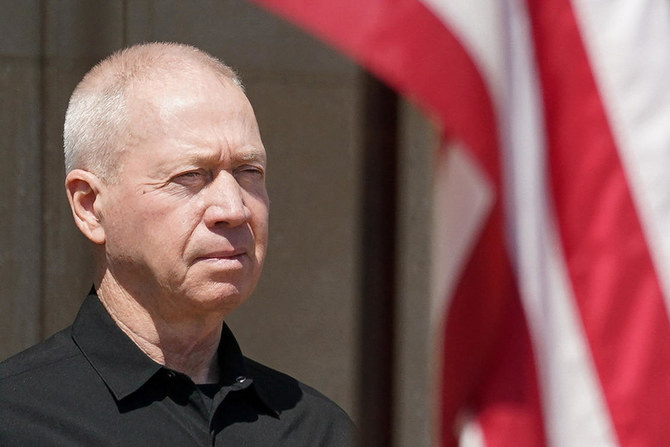
JERUSALEM: Israeli Defense Minister Yoav Gallant approved a plan on Tuesday to start drafting ultra-Orthodox Jews into the military, a move likely to further strain relations within Prime Minister Benjamin Netanyahu’s fractious right-wing coalition.
His government relies on two ultra-Orthodox parties that regard conscription exemptions as key to keeping their constituents in religious seminaries and out of a melting-pot army that might test their traditional customs.
Their political leaders are fiercely opposed to conscription at a time when Israel’s army is seeking to bolster its ranks amid the nine-month-old war with Hamas in the Gaza Strip.
After discussions with top military officials, Gallant approved their recommendations for a so-called first call-up of ultra-Orthodox men into the military over the coming month, the Defense Ministry said in a statement.
The order is for an initial screening and evaluation to determine potential recruits, it said. Initial call-ups are sent to Israelis when they are over 16 years old and they usually begin military service at the age of 18.
Israelis are bound by law to serve in the military for 24-32 months. Members of Israel’s 21 percent Arab minority are mostly exempt, though some do serve, and ultra-Orthodox Jewish seminary students have also been largely exempt for decades.
But Israel’s Supreme Court last month ruled that the state must begin drafting ultra-Orthodox Jewish seminary students into the military.
The long-time military waiver for the ultra-Orthodox has sparked protests in recent months by Israelis angry that the risk of fighting in Gaza is not being equally shared. For their part, ultra-Orthodox protesters have blocked roads under the banner “death before conscription.”


![]()

Israel’s defense minister OKs plan to start drafting ultra-Orthodox
Short Url
https://arab.news/42ysa
Israel’s defense minister OKs plan to start drafting ultra-Orthodox
- After discussions with top military officials, Gallant approved their recommendations for a so-called first call-up of ultra-Orthodox men into the military
- The order is for an initial screening and evaluation to determine potential recruits


Latest updates


© 2026 SAUDI RESEARCH & PUBLISHING COMPANY, All Rights Reserved And subject to Terms of Use Agreement.