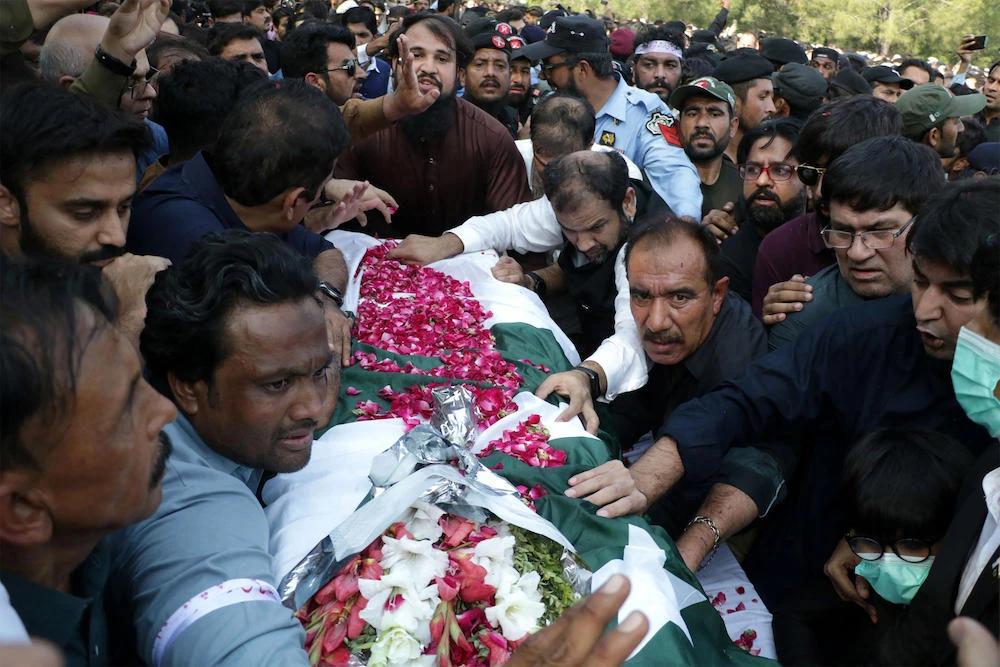
- Arshad Sharif was shot in the head when Kenyan police opened fire on his car in October 2022
- High Court in Kajiado, a town south of Nairobi, rejected a police claim that the killing was a case of mistaken identity
NAIROBI: A Kenyan court on Monday found police acted unlawfully over the killing of a Pakistani journalist in 2022 following a complaint by his widow, her lawyer and local media said.
Arshad Sharif, a strident critic of Pakistan’s powerful military establishment and supporter of former premier Imran Khan, was shot in the head when Kenyan police opened fire on his car in October 2022.
His widow Javeria Siddique and two journalist groups in Kenya filed a complaint last year against top police and legal officials over the “arbitrary and unlawful killing” of Sharif and the respondents’ “consequent failure to investigate.”
On Monday, the High Court in Kajiado, a town south of Nairobi, rejected a police claim that the killing was a case of mistaken identity, and that officers’ believed they were firing on a stolen vehicle involved in an abduction.
Judge Stella Mutuku ruled that Sharif’s murder was unconstitutional and that his rights to life and protection were violated, Kenyan media said.
“I find that the respondents, jointly and severally through their actions violated the rights of the petitioners,” Mutuku said, according to The Nation.
Siddique’s lawyer Ochiel Dudley confirmed the court ruling, describing it as a “great precedent for police accountability.”
He said the ruling found “Kenya violated Arshad Sharif’s right to life, dignity, and freedom from torture, cruel, and degrading treatment.”
He said the court ordered the government to pay 10 million Kenyan shillings ($78,000) in compensation.
The Kenyan court said the Office of the Director of Public Prosecutions and Independent Policing Oversight Authority had violated Sharif’s rights by not prosecuting the two officers involved, Dudley added.
It ordered the two institutions to conclude their investigations and charge the two police officers, he said.
Sharif fled Pakistan in August 2022, days after interviewing a senior opposition politician who said junior officers in Pakistan’s military should disobey orders that went against “the will of the majority.”
The country has been ruled by the military for several decades of its 75-year history and criticism of the security establishment has long been seen as a red line.