- Pakistan is the world’s fourth-largest mango producer and its export generates millions of dollars in revenue, according to exporters
- Additionally, mangoes serve as a cultural symbol and a diplomatic tool that help the government strengthen international connections
ISLAMABAD: The All Pakistan Fruit and Vegetable Exporters Association (APFVEA) said on Sunday that Pakistan might not meet its target of exporting 100,000 metric tons of mangoes this year due to adverse effects of climate change on its production, with officials pinning their hopes on a surge in demand from the Middle East.
Pakistan is the world’s fourth-largest mango producer and the fruit export generates millions of dollars in revenue annually, according to the APFVEA. Additionally, mangoes serve as a cultural symbol and a diplomatic tool that help the government strengthen international connections.
Pakistan has faced mango export challenges in recent years due to adverse weather, and pest and fruit fly infestation, with production declining for the third consecutive year in 2024.
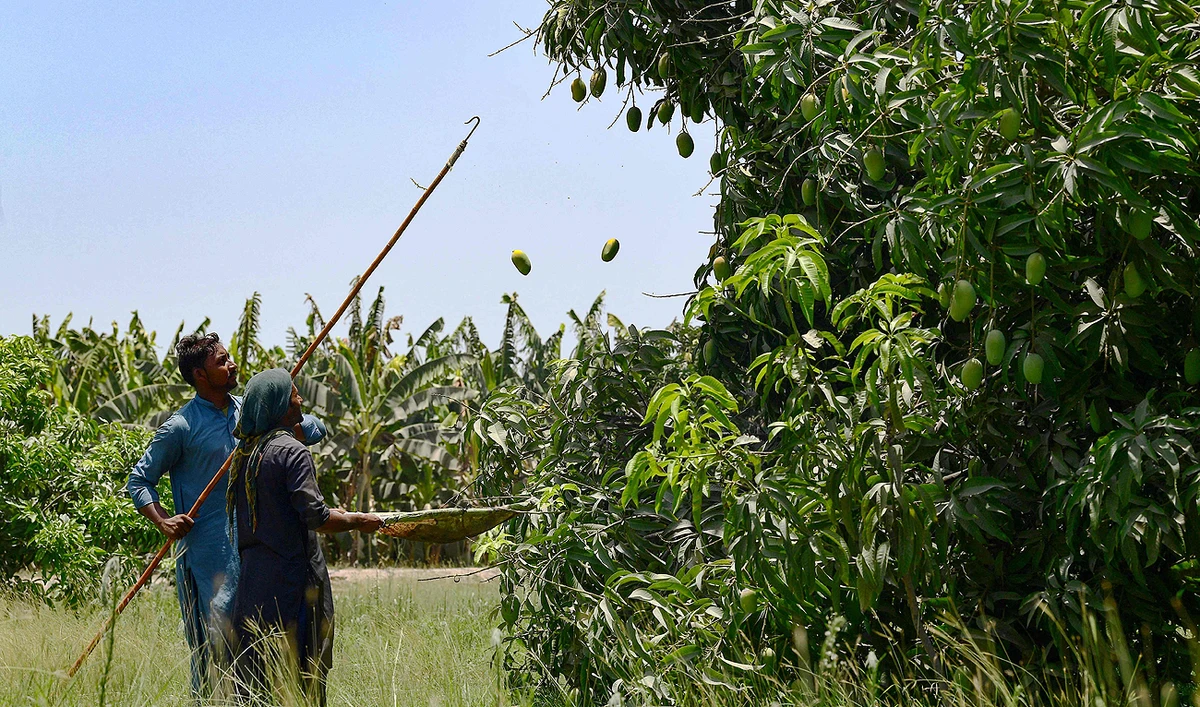
The country produces around 1,800,000 metric tons of mangoes annually, with 70 percent grown in Punjab, 29 percent in Sindh and one percent grown in Khyber Pakhtunkhwa.
“We had set a target of exporting 100,000 metric tons of mangoes this season, but it seems unachievable due to the pronounced negative impact of climate change on Pakistan’s mango orchards resulting in less production and a lack of export-quality mangoes,” Muhammad Shehzad Sheikh, the APFVEA chairman, told Arab News.
Due to the weather this year, he said, mango production was down by up to 40 percent in Punjab and 20 percent in Sindh, reducing the overall production by around 600,000 metric tons.
He said the APFVEA reduced this year’s target because it could not achieve the export target of 125,000 metric tons last year and exported only 100,000 metric tons of mangoes in 2023.
“With the export of 100,000 metric tons of mangoes during the current season, if achieved, a valuable foreign exchange of $90 million would be generated,” Sheikh said.
Expressing grave concerns, the APFVEA chairman said the effects of climate change on fruit cultivation, particularly mangoes, as well as on the larger agricultural sector were intensifying with each passing year.
“Extended winters, heavy rains, hailstorms and subsequent severe heatwaves have altered disease patterns throughout the seasons,” he explained, stressing an urgent need for research-based solutions to mitigate these effects and warning that failure to promptly do so could further jeopardize mango production and exports.
Besides climate change, the sector faces challenges like increased withholding tax and higher costs of electricity, gas, transportation, garden maintenance, pesticides and water management, which make it difficult to compete with other exporters, according to Sheikh.
On the contrary, officials said that despite production delays caused by climate change, there had been a surge in demand for Pakistani mangoes, particularly in the Middle East, that would not only make it possible to achieve the export target, but the country was also expected to exceed it.
“While the final figures will be clear by the end of the season in September, we expect around a 20 percent increase compared to last year,” Rashid Gillani, a deputy manager at the Trade Development Authority of Pakistan (TDAP), told Arab News. “Our target is to exceed $120 million worth of [overall] mango exports.”
Last year, around 50 percent of all Pakistani mango exports went to the Middle Eastern countries, including the UAE, Saudi Arabia, Oman, Qatar and Iran, according to the APFVEA.
Gillani said operations were now running smoothly despite production delays and more fruit was ready to be shipped, noting that TDAP had organized several mango festivals in different countries with the assistance of Pakistani missions to increase the export of the fruit.
On Saturday, the Pakistani embassy in the UAE organized a mango festival event at the Pakistan Association Dubai, in collaboration with the Pakistan Business Council. The event was attended by diplomats, foreign dignitaries, community members and government officials.
Speaking to Arab News, Ali Zeb, commercial counselor at the Pakistani embassy, said the demand for Pakistani mangoes had been steadily increasing in the Emirates and it was expected to further enhance this year, following a positive response from visitors at the Dubai festival.
“In 2022, Pakistani mango exports to the UAE totaled 41,000 metric tons, valued at $27 million, marking a 16 percent increase from the previous year,” he said. “In 2023, exports grew to approximately 50,000 metric tons, worth $31 million.”
This upward trend in mango exports to the UAE was likely to continue this year as well, Zeb added.