



RIYADH: To enhance the efficiency and effectiveness of dermatological care, experts at Saudi Arabia’s King Abdullah University of Science and Technology have created a groundbreaking new diagnostic system, SkinGPT-4, which leverages the power of artificial intelligence.
Leading the research, Xin Gao, a professor of computer science, co-chair of the Center of Excellence on Smart Health, and chair of Bioinformatics Platform at KAUST, says SkinGPT-4’s goal is to detect, diagnose, and identify suitable treatments for skin diseases.
Developed in partnership with Juexiao Zhou, a PhD candidate at KAUST, who is the first author of SkinGPT-4, Gao says that the technology could provide a potentially life-saving service to patients, particularly those in rural areas where there is often a shortage of trained dermatologists.

“Those specific challenges in dermatology led to the creation of SkinGPT-4,” Gao told Arab News. “The variability in skin presentations and the need for specialized knowledge to correctly identify and treat these conditions highlighted the need for an advanced, AI-driven solution.”
The team identified the need for such a solution after recognizing the limitations of traditional diagnostic methods and the potential of AI, especially large language models (LLMs) such as the eponymous ChatGPT, in enhancing the accuracy and efficiency of dermatological diagnosis.
“With SkinGPT-4, users could upload their own skin photos for diagnosis and SkinGPT-4 could autonomously determine the characteristics and categories of skin conditions, perform analysis, provide treatment recommendations, and allow interactive diagnosis,” Gao said.
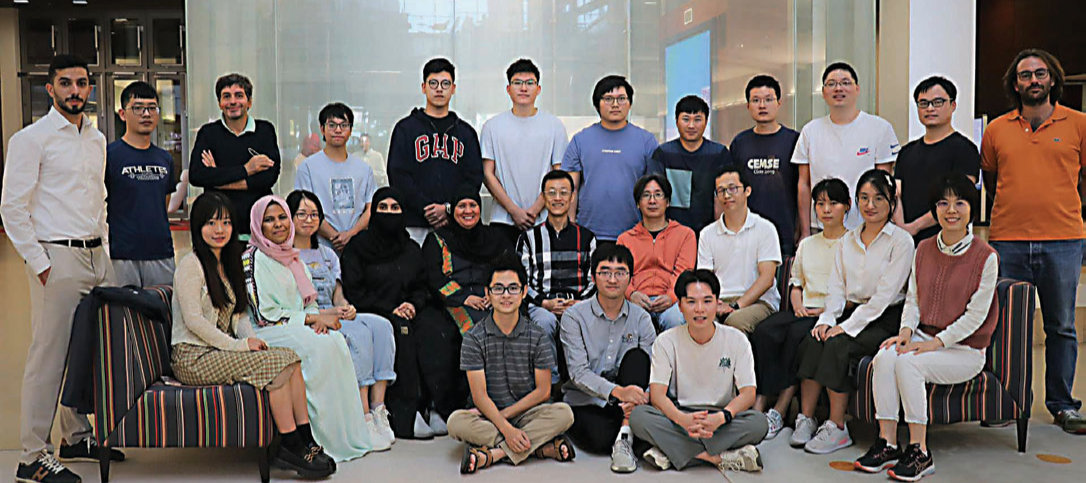
Gao and the KAUST team behind the AI dermatologist SkinGPT-4. (Supplied)
SkinGPT-4 diagnoses conditions that have distinct visual characteristics, such as acne, rosacea, melanoma, psoriasis, basal cell carcinoma, eczema, and many more.
Gao said that the development of SkinGPT-4 began with data collection and preprocessing, followed by model training and validation. “The team collected a large dataset of dermatological images and patient records to train the AI model,” he said.
“One of the significant challenges was integrating diverse data types, including images and text, which required collaboration between computer scientists and dermatologists. The multidisciplinary team worked together to ensure the AI could interpret and analyze skin disease images effectively.”
DID YOUKNOW?
• SkinGPT-4 diagnoses conditions that have distinct visual characteristics, such as melanoma, psoriasis, and eczema.
• It uses a combination of computer vision algorithms, large language models, and natural language processing.
• The technology could help doctors and patients in rural areas where there is often a shortage of trained dermatologists.
SkinGPT-4 uses a combination of computer vision algorithms, LLMs, and natural language processing (NLP), which enable programs to comprehend human languages.
“The model processes dermatological images using a vision transformer (ViT) to identify patterns and features indicative of different skin conditions,” Gao said.
“The ViT is aligned with an LLM named Llama-2-13b-chat on our dataset with a customized two-step training strategy. By doing so, the LLM Llama-2-13b-chat can understand the skin disease images and allow conversational diagnosis with the patient in natural language.”
Opinion
This section contains relevant reference points, placed in (Opinion field)
SkinGPT-4 could be particularly useful in diagnosing rare skin conditions that general practitioners may not easily recognize.
“A patient presenting with an uncommon rash could be quickly and accurately diagnosed using SkinGPT-4, which has been trained on a vast array of dermatological images, including rare conditions,” Gao said.
“Additionally, for managing chronic skin diseases like psoriasis, SkinGPT-4 can monitor the progression and response to treatment, providing continuous support and adjusting treatment plans as needed.”
Researchers hope SkinGPT-4 will be a gamechanger for remote or underserved areas where there is a shortage of dermatologists.
“For instance, in a rural community where the nearest dermatologist is hundreds of miles away, a patient presents with a suspicious lesion that could be a rare form of skin cancer,” Gao said.
Trained properly, AI can provide immense help to medical practitioners. (Shutterstock image)
“Using SkinGPT-4, a local health care provider can take a high-resolution image of the lesion and input the patient’s medical history into the system. SkinGPT-4 analyzes the image and the patient’s information, quickly providing a preliminary diagnosis and recommendations for further action.”
And as SkinGPT-4 develops, Gao said the system will learn from its own mistakes through continuous learning and feedback mechanisms.
“By analyzing misdiagnoses and incorporating corrections, the system can refine its algorithms and improve its accuracy over time,” he said. “This iterative learning process ensures that SkinGPT-4 evolves and adapts to new data and emerging trends in dermatology.”
However, Gao is keen to stress that SkinGPT-4 is not designed to replace dermatologists altogether. Rather, the program is designed to serve as an evolving and optimizing tool, functioning as an assistant in facilitating communication between patients and doctors.
“Our aspiration for SkinGPT-4 is to provide patients with more information about skin diseases, while also offering doctors valuable assistance in the diagnostic process.”


