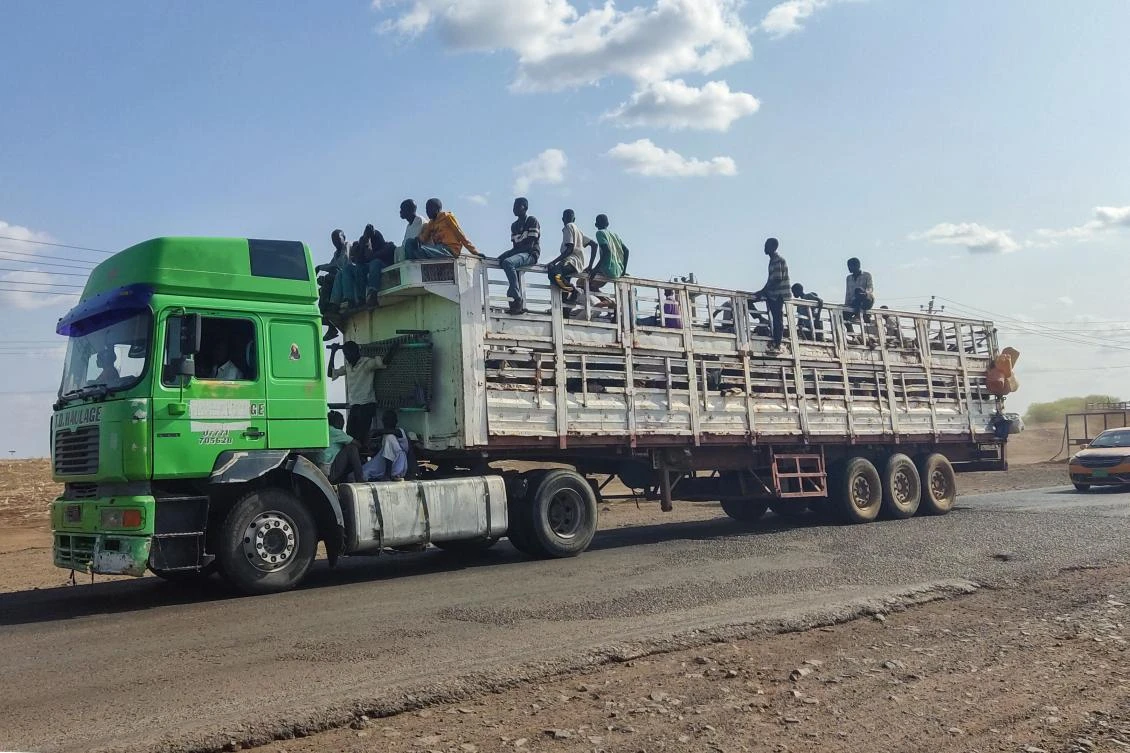
- They join nearly 10 million people driven from their homes since war broke out between the RSF and the regular army
- The UN’s International Organization for Migration said in a statement that since June 24, an estimated total of 136,130 people had been displaced in Sennar
CAIRO: More than 136,000 people have fled Sudan’s southeastern Sennar state since the paramilitary Rapid Support Forces began a series of attacks on towns, the United Nations said on Thursday, the latest wave of displacement caused by Sudan’s almost 15-month long war.
They join nearly 10 million people driven from their homes since war broke out between the RSF and the regular army. The war has sparked accusations of “ethnic cleansing” and warnings of famine, mainly in RSF-controlled areas across the country.
The RSF on June 24 began a campaign to seize the city of Sennar, a trading hub, but quickly turned to the smaller towns of Sinjah and Al-Dinder, prompting an exodus of civilians from all three, mainly to neighboring Al-Gedaref and Blue Nile states.
Images on social media showed people of all ages wading across the Blue Nile.
Activists in both states say there is little shelter or food aid for the incomers. In Gedaref, they faced an onslaught of heavy rain while stranded in the state capital’s main market with no tents or blankets after schools that had served as displacement centers were emptied by the government, the local resistance committee said.
The UN’s International Organization for Migration said in a statement that since June 24, an estimated total of 136,130 people had been displaced in Sennar.
The state was already home to more than 285,000 people displaced from Khartoum and Al-Gezira states, meaning that many of those leaving over the last two weeks were likely to have been displaced for the second or third time. It also said that villages in Gedaref state, one of several possible targets for the RSF campaign, had also seen an exodus.
To the west of the country, local activists said at least 12 people were killed by artillery fire on a livestock market on Wednesday in the city of Al-Fashir which has seen a months-long fight for control between the RSF and the army and allied armed groups.
It has caused an exodus of tens of thousands west to Tawila and Jebel Mara, areas controlled by one of Sudan’s largest rebel groups led by Abdelwahid Al-Nur, who on Thursday offered to use his troops to secure Al-Fashir if both sides withdraw.
In a statement, Nur said that Al-Fashir, which along with nearby Zamzam camp is one of 14 locations flagged by monitors as approaching famine, could then resume its role as a hub for humanitarian aid delivery.
The army did not comment on the offer when asked by Reuters, while an RSF source said that the force accepted the offer in principle and hoped that the army and allied forces would accept the offer and exit the city.