- PM Sharif holds trilateral summit with presidents of Turkiye, Azerbaijan at sidelines of SCO moot
- Calls for greater cooperation in energy, tourism, culture, education and technology sectors
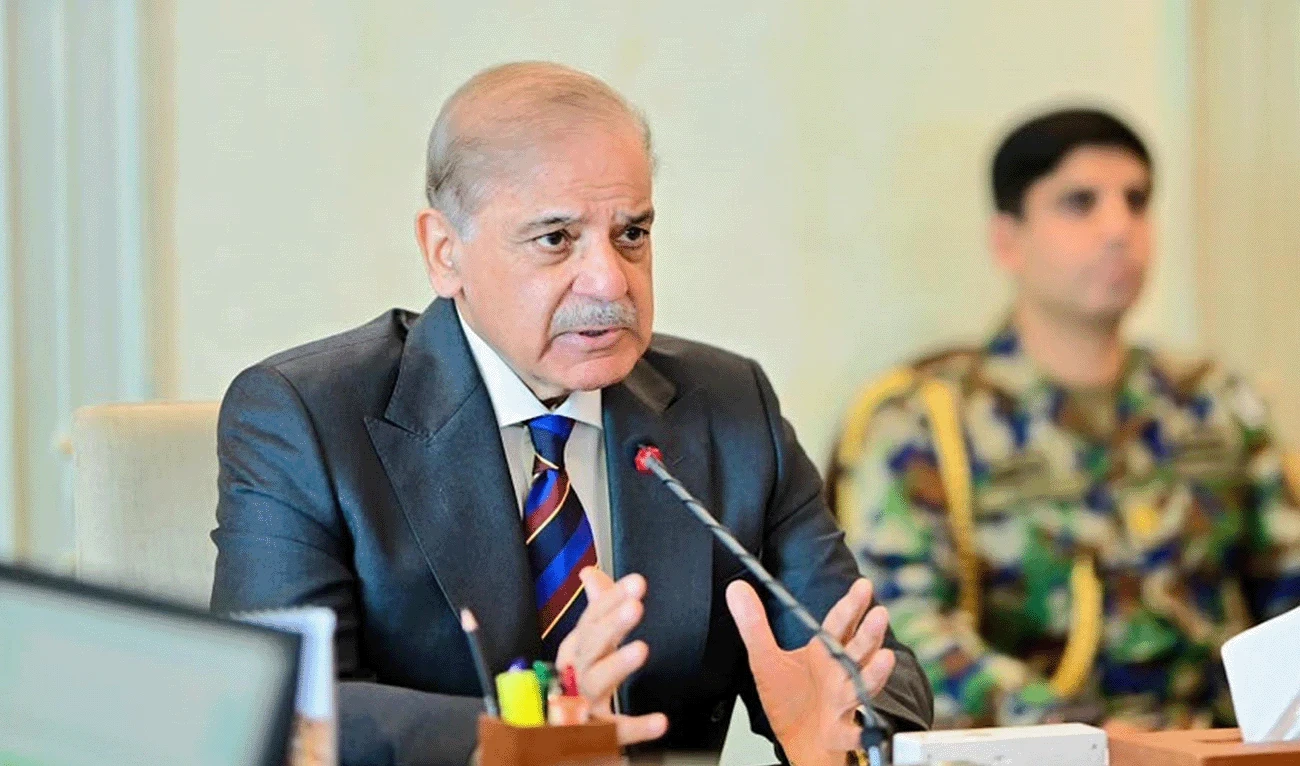
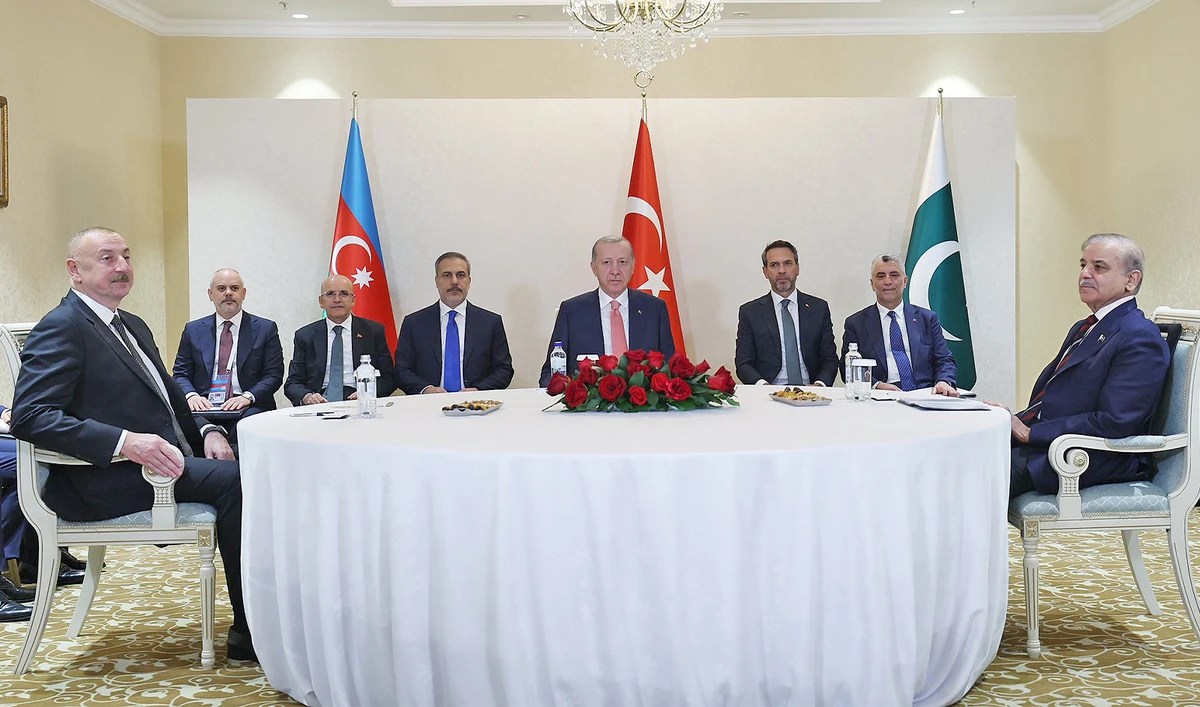
ISLAMABAD: Prime Minister Shehbaz Sharif on Wednesday stressed the need to promote trilateral economic cooperation between Pakistan, Azerbaijan and Turkiye, during a meeting of the leaders of the three countries on the sidelines of the Shanghai Cooperation Organization (SCO) summit in Astana.
Sharif is in Kazakhstan’s capital to attend the SCO summit where leaders and diplomats from China, India, Turkiye, Iran, Azerbaijan, Kazakhstan, Kyrgyzstan and other countries are present to review economic and security cooperation.
His visit takes place as Pakistan seeks to promote itself as a trade and transit hub that connects the landlocked Central Asian states to the rest of the world via the Arabian Sea. Troubled by a macroeconomic crisis, Islamabad has increasingly sought to attract investment and trade with regional allies in recent months.
The Pakistani prime minister attended the inaugural session of the Pakistan-Turkiye-Azerbaijan Trilateral Summit with Turkish President Recep Tayyip Erdogan and Azerbaijan President Ilham Heydar Aliyev in Astana.
“Prime Minister Muhammad Shehbaz Sharif on Wednesday proposed to establish tripartite institutional mechanisms, particularly in economic and investment areas to further strengthen Pakistan-Turkiye-Azerbaijan trilateral economic and commercial cooperation,” the state-run Associated Press of Pakistan (APP) said.
Sharif said Pakistan “deeply valued” its fraternal ties with Azerbaijan and Turkiye, saying that they were deep-rooted in cultural, historical and religious bonds.
He affirmed Pakistan’s commitment to working together with Turkiye and Azerbaijan to elevate the tripartite cooperation into a “strong multifaceted partnership” across the sectors of economy, energy, tourism, culture, education and technology, APP said.
SHEHBAZ MEETS PUTIN
Before taking part in the trilateral summit, Sharif met Russian President Vladimir Putin to discuss enhancing bilateral trade and diplomatic relations between the two countries.
“Your excellency, our relations stand on our own strength,” Sharif told Putin in a one-on-one meeting.
“Neither our relations are driven by any geopolitical contingency nor these are impacted by our relations with other countries.”
Sharif recalled that Pakistan and Russia used to engage in barter trade in the 1950s and 1960s, saying that more can be done to enhance bilateral trade between the two nations which currently stands at about $1 billion.
“I think today is the time we can overcome financial and other banking issues by renewing our trade and expanding our trade under barter that will be very beneficial for Pakistan and overcome many problems,” he said.