NAIROBI: Kenyan police said they have arrested more than 270 people masquerading as protesters who are suspected of going on a criminal rampage during anti-government rallies on Tuesday.
Widespread looting and property damage was reported during the youth-led demonstrations in various cities across the country, which some protesters said had been infiltrated by “goons.”
“Security forces across the country singled out suspects found engaging in criminal activities in the guise of protesting, and took them to custody,” the Directorate of Criminal Investigations said in a statement posted on X, formerly Twitter, late Tuesday.
It said a total of 204 suspects were arrested in the capital Nairobi and another 68 in various other areas of the country.
“The DCI has further deployed scrupulous investigators across the affected regions to pursue suspects captured on CCTV cameras and mobile phone recordings violently robbing, stealing and destroying properties and businesses of innocent citizens,” the statement added.
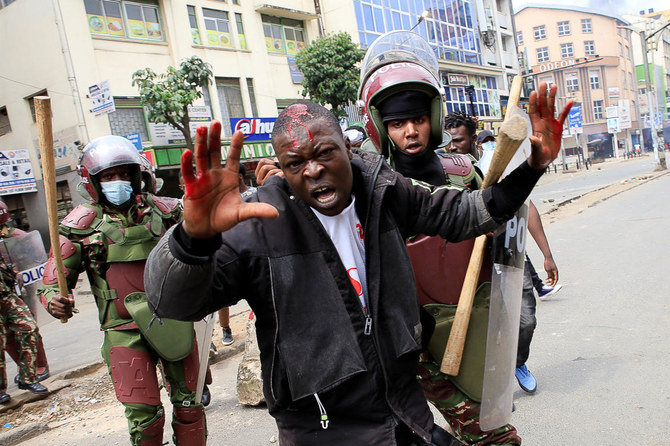
Tuesday’s demonstrations began in an atmosphere of calm but later degenerated into violence, with police firing tear gas at rock-throwing crowds in Nairobi and scenes of looting and property damage in the capital and other cities.
“Goons have infiltrated,” prominent Gen-Z protester Hanifa Adan posted on X on Tuesday.
Young Gen-Z Kenyans launched protests last month against a deeply unpopular finance bill that contained a raft of new taxes, adding to the hardship of people already suffering a cost of living crisis.
The Kenya National Commission on Human Rights (KNCHR) said on Monday that 39 people had been killed and 361 injured during two weeks of rallies — with the worst violence occurring in Nairobi on Tuesday last week — and condemned the use of force against demonstrators as “excessive and disproportionate.”
Although President William Ruto later abandoned the finance bill, the protesters are now calling for him to resign in a wider campaign against his rule under the hashtag “RutoMustGo.”
More demonstrations have been called for Thursday and Sunday.
It is the most serious crisis to confront Ruto since he took office in September 2022 in a nation often considered a beacon of stability in a turbulent region.
On Tuesday, Interior Minister Kithure Kindiki denounced what he described as an “orgy of violence,” warning that the government would take action against anyone engaging in “anarchic chaos and cruel plunder.”
“This reign of terror against the people of Kenya and the impunity of dangerous criminal gangs must end at whatever cost,” he said.
In a television interview on Sunday, Ruto denied he had “blood on my hands” after the protester deaths but his calls for dialogue with Kenyan youth about their grievances have not appeased the demonstrators.
Ruto also warned that following the scrapping of the finance bill, the cash-strapped government would now have to borrow more.
The government had said previously that the tax increases were necessary to fill its coffers and service a huge public debt of some 10 trillion shillings ($78 billion), or about 70 percent of GDP.


![]()

Kenya police say over 270 arrested for criminal acts during Tuesday protests
Short Url
https://arab.news/4a6p8
Kenya police say over 270 arrested for criminal acts during Tuesday protests
- Widespread looting and property damage was reported during the youth-led demonstrations in various cities across the country
- Demonstrations began in an atmosphere of calm but later degenerated into violence, with police firing tear gas at rock-throwing crowds in Nairobi


Latest updates





© 2026 SAUDI RESEARCH & PUBLISHING COMPANY, All Rights Reserved And subject to Terms of Use Agreement.