CAIRO: Egypt wants to accelerate the provision of renewable energy that could ease electricity shortages and supply green power to Europe, but faces challenges in funding updates to its grid and unlocking investments for new wind and solar plants.
Officials touted Egypt’s potential in wind and solar power as well as green hydrogen at a two-day Egypt-EU investment conference in Cairo at the weekend, hoping to secure financing and benefit from Europe’s efforts to diversify and decarbonize its energy supplies.
“I think this industry represents the future for both sides,” Egyptian Prime Minister Mostafa Madbouly told the conference, adding that Egypt should manufacture renewable components such as solar panels, wind turbines and electrolyzers.
Electricity Minister Mohamed Shaker said Egypt was reviewing its clean energy targets and would aim for a 58 percent share of renewables in power generation by 2040.
He said that since 2014, Egypt had spent more than 116 billion Egyptian pounds ($2.42 billion at current exchange rates) on upgrading its transmission network, as it looked to expand into renewables.
“We are ready with the infrastructure,” said Shaker, adding that the government was offering several incentives to investors and could get approvals from President Abdel Fattah El-Sisi to raise the maximum heights for wind turbines from the ground to the tip of their blades to 220 meters from 150 meters.
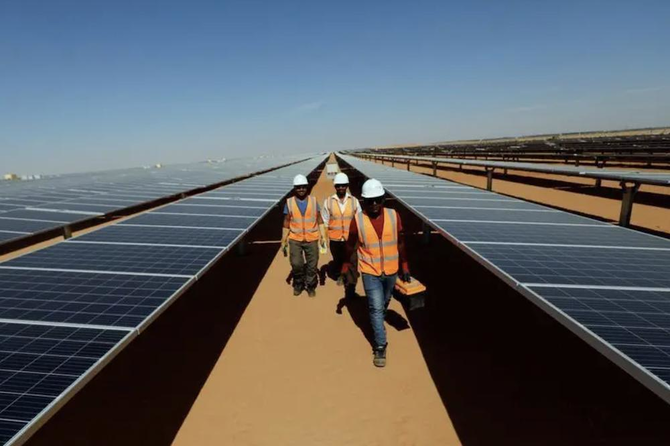
Expansion of installed renewable capacity largely plateaued after the inauguration of the major Benban solar plant in 2019, according to data from Egypt’s New and Renewable Energy Authority (NREA), putting in doubt an earlier target of 42 percent of power generation through renewables by 2030.
Less than 12 percent of Egypt’s installed capacity of nearly 60GW is from renewables, the data shows.
Most power is generated by gas, and a gas shortage has contributed to daily power cuts that were extended to three hours last week, as well as causing outages at fertilizer and chemicals factories.
Egypt has signed many MoUs for renewable energy and green hydrogen development since hosting the COP 27 climate summit in 2022. It has ambitions to export electricity to regional neighbors, as well as to Europe through a subsea cable to Greece.
But analysts say Egypt needs to adapt and extend its grid to the sites of potential projects to make them viable.
“We have a shortage in fuel today which means we have the power cuts, which makes more renewables the sensible way forward ... but these need to be connected (to the grid) and this is where the challenge is,” said Hamza Assad, Southern and Eastern Mediterranean climate strategy head for the European Bank for Reconstruction and Development (EBRD), which is helping finance Egypt’s energy transition.
When those connections, or transmission lines, might be built is unclear, partly because of a cap on public investments imposed this year to contain Egypt’s heavy debt burden, people with knowledge of the sector said. An Egyptian cabinet spokesman did not immediately respond to a request for comment.
Grid development would cost billions in the longer term if major scaling up and the needs of green hydrogen is included, though needs this year would be a fraction of this, said Heike Harmgart, EBRD’s managing director for the region.


![]()


Egypt’s renewable power ambitions face grid hurdle
Short Url
https://arab.news/pqz2a
Egypt’s renewable power ambitions face grid hurdle
- Officials touted Egypt’s potential in wind and solar power as well as green hydrogen at a two-day Egypt-EU investment conference


Israel’s Netanyahu expected to press Trump over Iran diplomacy
- Two leaders will meet for seventh time in nearly 13 months
- Netanyahu seeks broader US talks with Iran beyond nuclear issues
WASHINGTON/JERUSALEM: President Donald Trump will host Benjamin Netanyahu at the White House on Wednesday where the Israeli prime minister is expected to press him to widen US talks with Iran to include curbs on Tehran’s missile arsenal and other security threats that go beyond its nuclear program.
In his seventh meeting with Trump since the president returned to office nearly 13 months ago, Netanyahu will be looking to influence the next round of US discussions with Iran following nuclear negotiations held in Oman last Friday amid heightened Middle East tensions.
Trump has threatened to carry out strikes on Iran if an agreement is not reached, and Tehran has responded with vows to retaliate, fueling fears of a wider regional war. He has repeatedly voiced support for a secure Israel, long a close US ally in the Middle East and an arch-foe of Iran.
The president repeated his warning in a series of media interviews on Tuesday, saying while he believes Iran wants to make a deal, he would do “something very tough” if they refused.
Trump says no to Iranian nuclear weapons, missiles
Trump told Fox Business that a good deal with Iran would mean “no nuclear weapons, no missiles,” but did not elaborate, and he said in an interview with Axios he was considering sending a second aircraft carrier strike group as part of a massive buildup of US forces near Iran.
Israel is concerned that the US might pursue a narrow nuclear deal that does not include limitations on Iran’s ballistic missile program or an end to Iranian support for armed proxy groups such as Hamas and Hezbollah, according to people familiar with the matter.
“I will present to the president our perceptions of the principles in the negotiations,” Netanyahu told reporters before departing for the US
The two men could also discuss potential military action in the event that US-Iran diplomacy fails, according to one of the sources.
After arriving in Washington on Tuesday night, Netanyahu met US special envoy Steve Witkoff and Trump’s son-in-law Jared Kushner, who led the US team at the Iran talks, according to a post on X by Israel’s ambassador to Washington, Michael Leiter.
Gaza also on the agenda
Also on the agenda will be Gaza, with Trump looking to push ahead with a ceasefire agreement he helped to broker. Progress on his 20-point plan to end the war and rebuild the shattered Palestinian enclave has stalled with wide gaps remaining over complex steps it envisions, including Hamas disarming as Israeli troops withdraw in phases.
“We continue to work closely with our ally Israel to implement President Trump’s historic Gaza peace agreement and to strengthen regional security,” White House spokeswoman Anna Kelly said when asked about US priorities for the meeting.
Netanyahu’s visit, originally scheduled for February 18, was brought forward amid renewed US engagement with Iran. Both sides at last week’s Oman meeting said it was positive and further talks were expected soon.
US Secretary of State Marco Rubio said last week, ahead of the Oman meeting, that the talks would have to include the range of Iran’s missiles, its support for proxy groups and its treatment of its own people.
Iran, which has ruled out restrictions on its missiles, said Friday’s discussions had been limited to nuclear issues.
Trump has been vague about broadening the negotiations. He was quoted as telling Axios on Tuesday that it was a “no-brainer” for any deal to cover Iran’s nuclear program, but that he also thought it possible to address its missile stockpiles.
Iran says its nuclear activities are for peaceful purposes, while the US and Israel have accused it of past efforts to develop nuclear weapons.
Last June, the US joined Israel’s strikes on Iranian nuclear facilities during a 12-day war.
Israel also heavily damaged Iran’s air defenses and missile arsenal. But, according to two Israeli officials, there have been signs of a push to restore those capabilities, which Israel sees as a strategic threat.
Trump had threatened last month to intervene militarily during a bloody crackdown on nationwide anti-government protests in Iran, but ultimately held off.
Israel wary of a weakened Iran rebuilding
Tehran’s regional sway has been weakened by Israel’s attack in June as well as blows to Iranian proxies — from Hamas in Gaza to Hezbollah in Lebanon, the Houthis in Yemen and militias in Iraq — and by the ousting of Iran’s close ally, former Syrian President Bashar Assad.
But Israel has been wary of its foes rebuilding after they suffered heavy losses in the multi-front war sparked by Hamas’ October 2023 cross-border attack on southern Israel.
While Trump and Netanyahu have mostly been in sync and the US remains Israel’s main arms supplier, Wednesday’s discussions have the potential for tensions to surface.
Part of Trump’s Gaza plan holds out the prospect for eventual Palestinian statehood — which Netanyahu and his coalition, the most far-right in Israel’s history, have long resisted.
Netanyahu’s security cabinet on Sunday authorized steps that would make it easier for Israeli settlers in the occupied West Bank to buy land while granting Israel broader powers in what the Palestinians see as the heartland of a future state. The Israeli decision drew international condemnation.
“I am against annexation,” Trump was quoted as telling Axios, reiterating his stance on the issue. “We have enough things to think about now.”
In his seventh meeting with Trump since the president returned to office nearly 13 months ago, Netanyahu will be looking to influence the next round of US discussions with Iran following nuclear negotiations held in Oman last Friday amid heightened Middle East tensions.
Trump has threatened to carry out strikes on Iran if an agreement is not reached, and Tehran has responded with vows to retaliate, fueling fears of a wider regional war. He has repeatedly voiced support for a secure Israel, long a close US ally in the Middle East and an arch-foe of Iran.
The president repeated his warning in a series of media interviews on Tuesday, saying while he believes Iran wants to make a deal, he would do “something very tough” if they refused.
Trump says no to Iranian nuclear weapons, missiles
Trump told Fox Business that a good deal with Iran would mean “no nuclear weapons, no missiles,” but did not elaborate, and he said in an interview with Axios he was considering sending a second aircraft carrier strike group as part of a massive buildup of US forces near Iran.
Israel is concerned that the US might pursue a narrow nuclear deal that does not include limitations on Iran’s ballistic missile program or an end to Iranian support for armed proxy groups such as Hamas and Hezbollah, according to people familiar with the matter.
“I will present to the president our perceptions of the principles in the negotiations,” Netanyahu told reporters before departing for the US
The two men could also discuss potential military action in the event that US-Iran diplomacy fails, according to one of the sources.
After arriving in Washington on Tuesday night, Netanyahu met US special envoy Steve Witkoff and Trump’s son-in-law Jared Kushner, who led the US team at the Iran talks, according to a post on X by Israel’s ambassador to Washington, Michael Leiter.
Gaza also on the agenda
Also on the agenda will be Gaza, with Trump looking to push ahead with a ceasefire agreement he helped to broker. Progress on his 20-point plan to end the war and rebuild the shattered Palestinian enclave has stalled with wide gaps remaining over complex steps it envisions, including Hamas disarming as Israeli troops withdraw in phases.
“We continue to work closely with our ally Israel to implement President Trump’s historic Gaza peace agreement and to strengthen regional security,” White House spokeswoman Anna Kelly said when asked about US priorities for the meeting.
Netanyahu’s visit, originally scheduled for February 18, was brought forward amid renewed US engagement with Iran. Both sides at last week’s Oman meeting said it was positive and further talks were expected soon.
US Secretary of State Marco Rubio said last week, ahead of the Oman meeting, that the talks would have to include the range of Iran’s missiles, its support for proxy groups and its treatment of its own people.
Iran, which has ruled out restrictions on its missiles, said Friday’s discussions had been limited to nuclear issues.
Trump has been vague about broadening the negotiations. He was quoted as telling Axios on Tuesday that it was a “no-brainer” for any deal to cover Iran’s nuclear program, but that he also thought it possible to address its missile stockpiles.
Iran says its nuclear activities are for peaceful purposes, while the US and Israel have accused it of past efforts to develop nuclear weapons.
Last June, the US joined Israel’s strikes on Iranian nuclear facilities during a 12-day war.
Israel also heavily damaged Iran’s air defenses and missile arsenal. But, according to two Israeli officials, there have been signs of a push to restore those capabilities, which Israel sees as a strategic threat.
Trump had threatened last month to intervene militarily during a bloody crackdown on nationwide anti-government protests in Iran, but ultimately held off.
Israel wary of a weakened Iran rebuilding
Tehran’s regional sway has been weakened by Israel’s attack in June as well as blows to Iranian proxies — from Hamas in Gaza to Hezbollah in Lebanon, the Houthis in Yemen and militias in Iraq — and by the ousting of Iran’s close ally, former Syrian President Bashar Assad.
But Israel has been wary of its foes rebuilding after they suffered heavy losses in the multi-front war sparked by Hamas’ October 2023 cross-border attack on southern Israel.
While Trump and Netanyahu have mostly been in sync and the US remains Israel’s main arms supplier, Wednesday’s discussions have the potential for tensions to surface.
Part of Trump’s Gaza plan holds out the prospect for eventual Palestinian statehood — which Netanyahu and his coalition, the most far-right in Israel’s history, have long resisted.
Netanyahu’s security cabinet on Sunday authorized steps that would make it easier for Israeli settlers in the occupied West Bank to buy land while granting Israel broader powers in what the Palestinians see as the heartland of a future state. The Israeli decision drew international condemnation.
“I am against annexation,” Trump was quoted as telling Axios, reiterating his stance on the issue. “We have enough things to think about now.”
Latest updates



Recommended


© 2026 SAUDI RESEARCH & PUBLISHING COMPANY, All Rights Reserved And subject to Terms of Use Agreement.