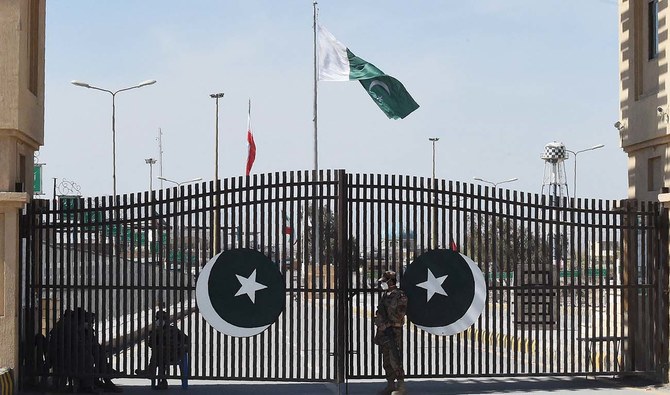
ISLAMABAD: Pakistan’s envoy to Iran, Ambassador Muhammad Mudassir Tipu, mentioned on Saturday enhanced trade and immigration facilities on the border crossing point between the two countries to facilitate increased movement of entrepreneurs and pilgrims, expressing optimism that their bilateral ties were on a positive trajectory.
Last month, the Pakistani diplomat announced that the two countries had decided to operate the Taftan-Gabd border between them 24/7 to improve the bilateral flow of goods and expand economic opportunities.
Pakistani people, including Zaireen or pilgrims and traders, frequently travel overland between the two countries, with religious devotees mostly visiting holy sites like Mashhad and Qom.
The movement of people and goods contributes to the cultural, economic and social ties between the neighboring states.
“Absolutely delighted to share that to facilitate Zaireen, business [community] & promote bilateral trade immigration facilities at Taftan-Gabd border terminals have been substantially beefed up,” the Pakistani envoy announced in a social media post. “Now 4-6,000 passengers can cross both points everyday. [Pakistan-Iran] ties to see promising future.”
https://x.com/AmbMudassir/status/1806987097867161837
Pakistan and Iran have intensified efforts to expand bilateral trade through initiatives like establishing border markets and implementing barter trade mechanisms.
These developments aim to facilitate smoother economic activities and are part of broader attempts to increase bilateral trade to $10 billion over the next five years.
Pakistan and Iran have also been working to develop closer political ties, the late Iranian President Seyyed Ebrahim Raisi visiting Pakistan earlier this year in April.


Pakistan’s envoy to Tehran announces enhanced border facilities to bolster ties with Iran
https://arab.news/2v8k4
Pakistan’s envoy to Tehran announces enhanced border facilities to bolster ties with Iran

- Last month, the two countries decided to operate the Taftan-Gabd border between them 24/7 for improved flow of goods
- Pakistan and Iran have also intensified efforts to expand trade by establishing border markets, implementing barter mechanism

Pakistan, ADB sign $730 loan agreements to boost SOE reforms, energy infrastructure
- Both sign $330 million Power Transmission Strengthening Project and $400 million SOE Transformation Program loan agreements
- Economic Affairs Division official says Transmission Project will secure Pakistan’s energy future by strengthening national grid’s backbone
KARACHI: Pakistan and the Asian Development Bank (ADB) on Thursday signed two loan agreements totaling $730 million to boost reforms in state-owned enterprises (SOEs) and energy infrastructure in the country, the bank said.
The first of the two agreements pertains to the SOE Transformation Program worth $400 million while the second loan, worth $330 million, is for a Power Transmission Strengthening Project, the lender said.
The agreements were signed by ADB Country Director for Pakistan Emma Fan and Pakistan’s Secretary of Economic Affairs Division Humair Karim.
“The agreements demonstrate ADB’s enduring commitment to supporting sustainable and inclusive economic growth in Pakistan,” the ADB said.
Pakistan’s SOEs have incurred losses worth billions of dollars over the years due to financial mismanagement and corruption. These entities, including the country’s national airline Pakistan International Airlines, which was sold to a private group this week, have relied on subsequent government bailouts over the years to operate.
The ADB approved the $400 million loan for SOE reforms on Dec. 12. It said the program seeks to improve governance and optimize the performance of Pakistan’s commercial SOEs.
Karim highlighted that the Power Transmission Strengthening Project will enable reliable evacuation of 2,300 MW from Pakistan’s upcoming hydropower projects, relieve overloading of existing transmission lines and enhance resilience under contingency conditions, the Press Information Department (PID) said.
“The Secretary emphasized that both initiatives are transformative in nature as the Transmission Project will secure Pakistan’s energy future by strengthening the backbone of the national grid whereas the SOE Program will enhance transparency, efficiency and sustainability of state-owned enterprises nationwide,” the PID said.
The ADB has supported reforms by Pakistan to strengthen its public finance and social protection systems. It has also undertaken programs in the country to help with post-flood reconstruction, improve food security and social and human capital.
To date, ADB says it has committed 764 public sector loans, grants and technical assistance totaling $43.4 billion to Pakistan.


