ISLAMABAD: The government described Afghanistan as its “top priority” on Thursday, saying a delegation was ready to participate in a tripartite conference in Doha that would focus on the situation in the neighboring state, amid concerns that Pakistan’s new administration was not focusing on Afghan affairs.
Pakistan launched a deportation drive against unregistered Afghan nationals amid a spike in suicide bombings last year, after blaming the proscribed militant network, Tehreek-e-Taliban Pakistan (TTP), for masterminding extremist violence in its cities from its sanctuaries in Afghanistan.
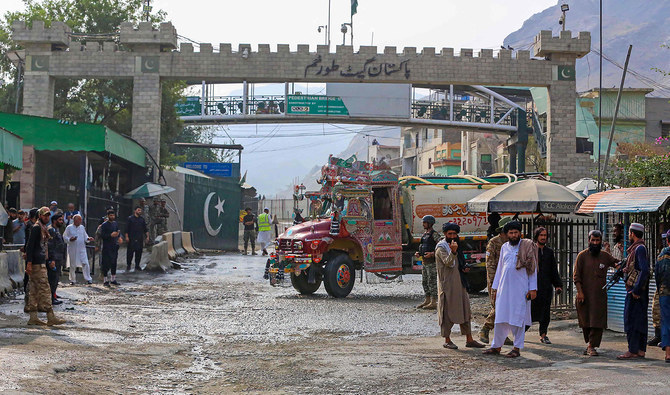
The situation intensified bilateral tensions between the two sides, which also witnessed occasional border skirmishes and closures, affecting the movement of people and the volume of trade between them.
“A summit is soon to be held in Doha within a few weeks,” Deputy Prime Minister Ishaq Dar said while addressing the National Assembly. “It will be a tripartite event involving Doha, Afghanistan, and us. The prime minister has given clearance to cooperate with Afghanistan on health issues, particularly polio eradication.”
Pakistan and Afghanistan are the last two countries in the world where polio remains endemic.
Dar said the foreign office of Pakistan was also making arrangements for his visit to Kabul.
“Let me assure you,” he continued. “Afghanistan remains on our priority agenda. Make no mistake. Afghanistan has not been ignored by this government. It would be top priority of this government. Let me be very clear and candid on this.”
The deputy prime minister noted Pakistan’s engagement with Afghanistan would also try to address the bilateral trade issues.


Pakistan cites Afghanistan as ‘top priority’ ahead of tripartite Doha talks
https://arab.news/n7zm5
Pakistan cites Afghanistan as ‘top priority’ ahead of tripartite Doha talks

- The deputy PM says Pakistan will engage with Afghan authorities on health issues, particularly polio eradication
- He tells the National Assembly the foreign office is also making arrangements for his visit to the Afghan capital

Pakistan PM speaks to UAE president, calls for enhanced cooperation
- Shehbaz Sharif lauds UAE’s economic support in challenging times
- Both leaders discuss a range of issues, agree to stay in close contact
ISLAMABAD: Prime Minister Shehbaz Sharif on Friday praised the United Arab Emirates for what he described as steadfast financial and political support during Islamabad’s recent economic crisis, as both sides signaled plans to deepen bilateral cooperation.
In a statement issued after Sharif spoke with UAE President Sheikh Mohamed bin Zayed Al Nahyan, the Prime Minister’s Office said the two leaders discussed matters of mutual interest and agreed to stay in close contact.
“The Prime Minister lauded the UAE’s consistent and unwavering support to Pakistan, that had helped the country navigate through difficult challenges,” the statement said, adding the two leaders “reaffirmed their shared desire to further enhance mutually beneficial cooperation between Pakistan and the UAE.”
The UAE, along with other friendly nations in the region, provided critical financial assistance to the South Asian country during a balance-of-payments crisis that strained Pakistan’s foreign exchange reserves and pressured its currency. Islamabad subsequently secured an International Monetary Fund program as part of broader stabilization efforts.
Sharif, in a post on X, described the exchange as positive.
“We fondly recalled our recent meetings and reaffirmed our shared resolve to further strengthen the historic, fraternal ties between Pakistan and the United Arab Emirates, and to expand mutually beneficial cooperation,” he wrote.
Millions of Pakistanis live and work in the UAE, forming one of the largest expatriate communities in the Gulf state.
Remittances from the UAE rank among Pakistan’s top sources of foreign currency inflows and play a significant role in supporting the country’s external accounts.
UAE-based companies are also investing in Pakistan, helping Islamabad develop its seaports to facilitate regional trade.