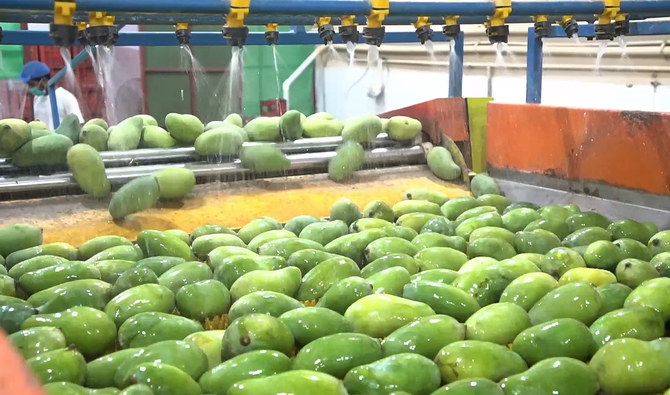

KARACHI: Pakistan is working to advance its hot water treatment facilities to disinfect mangoes from pests in a bid to boost exports, a Trade and Development Authority of Pakistan (TDAP) consultant said this week, as farmers blame climate change for the parasites and extreme weather ruining much of this season’s crop.
The All Pakistan Fruit and Vegetable Exporters Association said in May there was a “significant reduction” in mango production for a third consecutive year due to climate change, which meant the country may not be able to meet its export targets. This year, the export target has been set at 100,000 metric tons, whereas last year the export target was 125,000 metric tons but only 100,000 metric tons could be exported, according to the Association.
Pakistan is the world’s fourth-largest mango producer and agriculture accounts for almost a quarter of its GDP. But Pakistani mangoes have faced export challenges in recent years due to concerns over pests and fruit flies that can threaten the agricultural standards of importing countries.
Hot water treatment, which involves immersing mangoes in hot water at a regulated temperature, is employed to eradicate pests without harming the fruit. The method not only ensures compliance with stringent international health and safety regulations but also preserves the fruit’s quality, extends its shelf life and maintains market competitiveness.
Dr. Mubarik Ahmed, a consultant with the Trade and Development Authority of Pakistan, said Pakistan started the hot water treatment of mangoes in 2014.
“In the same year, India was banned by the European Union … and they [the EU] warned us that they were going to place the same ban on Pakistan,” Ahmed said. “In order to avoid that, we made it mandatory that all the mangoes that went to the European Union will be hot water treated.”
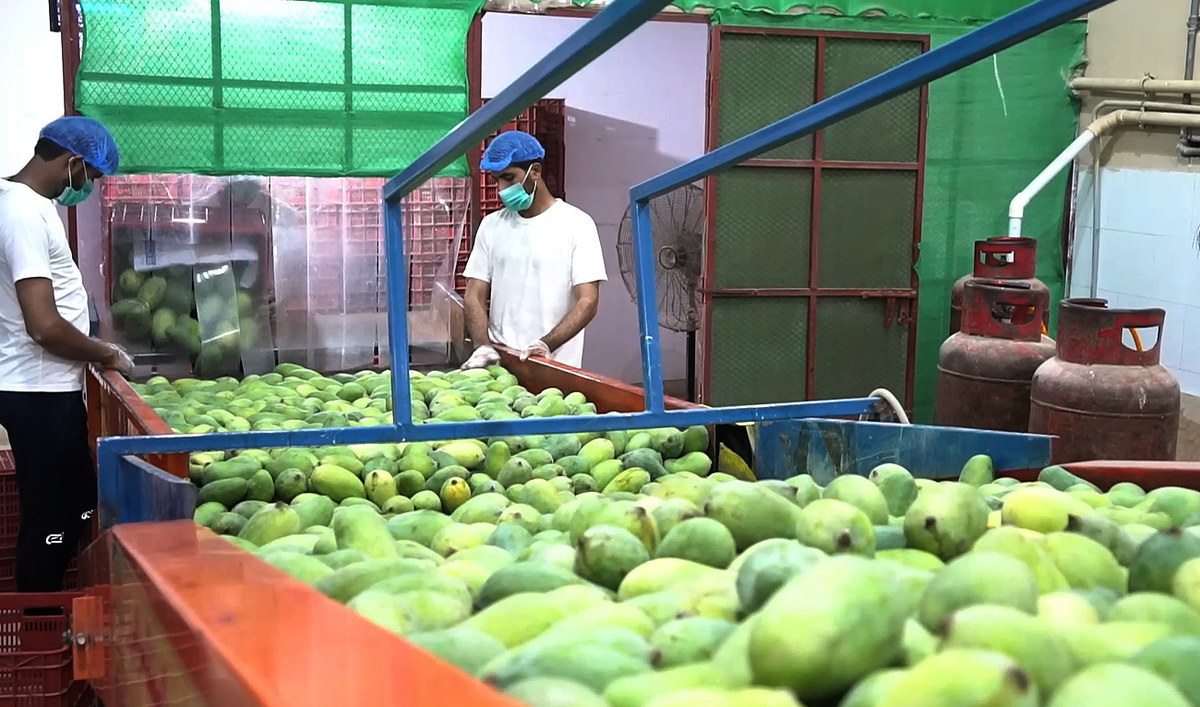
In this photo, taken on June 24, 2024, workers assemble mangoes for a disinfectant process at the Mango Hot Water Treatment Plant in Karachi, ahead of its exports to extend the shelf life. (AN Photo)
Ahmed said Pakistan had expanded its HWT facilities from one in 2014 to 26 in 2024 to meet phytosanitary requirements, ensuring that around 40 percent of the country’s mango exports went through hot water treatment, with the majority exported to the EU and Iran.
“If we talk in terms of numbers, we generally export around 40,000 tons of mangoes to Iran and similarly we export between 9,000 to 11,000 tons to the European Union,” he said. “So, this is the benchmark. But last year we had a bad mango crop and the exports declined.”
Imran Segal, the owner of Orangzaib & Brothers Hot Water Treatment Plant, said HWT was a “simple procedure.”
“We bring the temperature of the water in the water tank to 48.5 degrees Celsius,” he explained. “When we pass the mangoes through this water for 60 minutes, any fruit flies or diseases in it [fruit] are eliminated.”
He said two breeds of Pakistani mangoes – Sindhri and Chaunsa – were hot water treated.
“Sindhri is the first to arrive in the market, coinciding with the start of the mango season, which means that it dominates the market in terms of quantity due to its high demand,” Segal added. “Meanwhile, Chaunsa is highly prized for its excellent taste in Punjab ... Overall, their [hot water treatment] share is evenly split at 50-50.”
“CLIMATE INFLUENCES”
Pakistan produces around 1.8 million metric tons of mangoes annually, of which 70 percent are produced in Punjab province, 29 percent in Sindh and one percent in Khyber Pakhtunkhwa. Pakistan’s 20 varieties of mangoes come second only to oranges as the most-produced fruit in the country.
Ahmed said environmental conditions in the Punjab and Sindh provinces were conducive to the rapid multiplication of fruit flies, emphasizing the necessity of control measures, especially during years with high pest infestations.
Progressive farmers used techniques like pheromone traps to manage the pest population but there was a need for the wider adoption of effective control methods, the consultant advised.
“The punch line is that climate influences pest intensity,” he said. “I think climate is influencing the pest complex and the disease pattern in mangoes, as a result of climatic changes there may be some new diseases or there may be some of the disease that already exists, will finish off. So, the research institutes are working on it and we hope that they come up with a concrete pattern.”
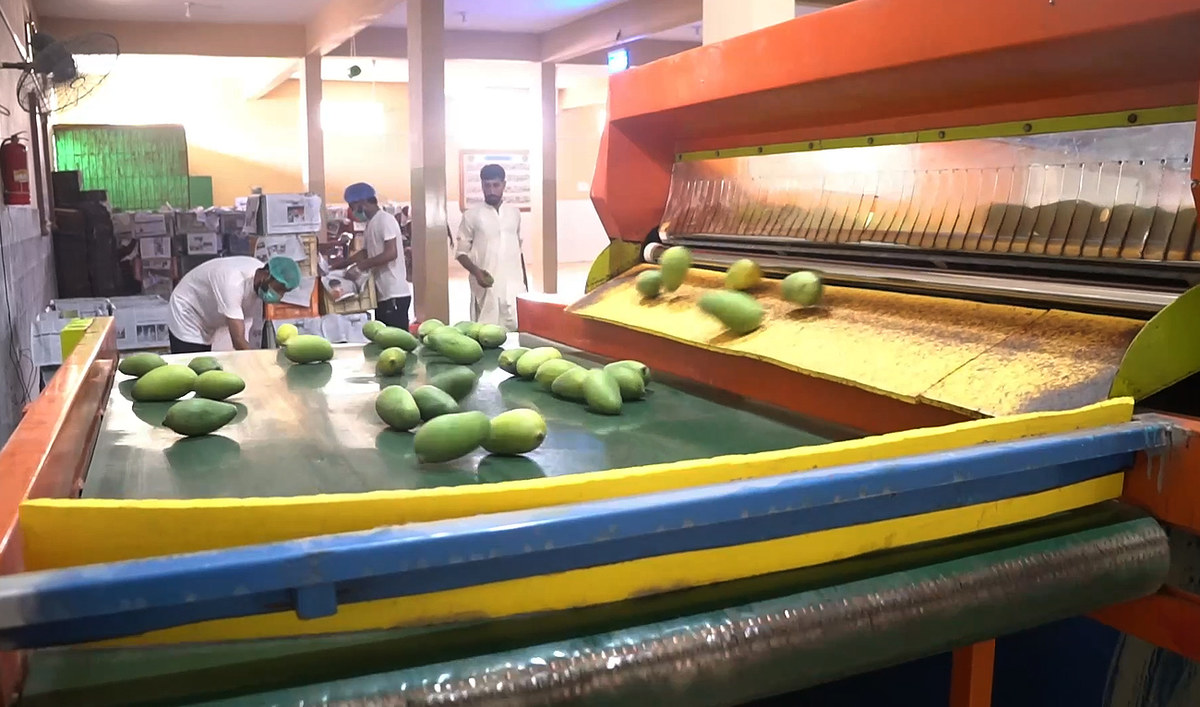
In this photo, taken on June 24, 2024, workers pack mangoes after a disinfectant process at the Mango Hot Water Treatment Plant in Karachi, ahead of its exports to extend the shelf life. (AN Photo)
In a statement in May, Waheed Ahmed, the patron-in-chief of the All Pakistan Fruit and Vegetable Exporters Association, lamented a constant climate-induced decrease in mango yields.
“This year, due to weather effects, the production of mangoes in Punjab is 35-40 percent, while in Sindh it is less than 20 percent and thus the total production is feared to be reduced by 0.6 million metric tons,” Waheen said.
“This estimate was made at the start of production and is likely to increase further as the season progresses.
“The effects of climate change have emerged as the biggest threat to mango production, which can well be gauged from the fact that mango production has declined for the third year in a row.”