LUXEMBOURG: The European Union on Tuesday kicked off accession negotiations with Ukraine and Moldova, setting the fragile ex-Soviet states on a long path toward membership that Russia has tried to block.
The landmark move signals in particular a vote of confidence in Kyiv’s future at a time when Moscow has momentum on the battlefield almost two and a half years into the Kremlin’s invasion.
“Dear friends, today marks the beginning of a new chapter in the relationship between Ukraine and the European Union,” Ukraine’s Prime Minister Denys Shmygal said via videolink at the start of the talks.
President Volodymyr Zelensky called it a “historic day” as officials from Kyiv and the EU’s 27 member states met in Luxembourg.
“We will never be derailed from our path to a united Europe and to our common home of all European nations,” the Ukrainian leader wrote on social media.
Ukraine and later Moldova lodged their bids to join the EU in the aftermath of Russia’s assault in February 2022.
The opening of the talks marks just the beginning of a protracted process of reforms in Ukraine that is strewn with political obstacles and will likely take many years — and may never lead to membership.
Standing in the way along that journey will be not just Russia’s efforts at destabilization but reticence from doubters inside the EU, most notably Hungary.
But European Commission chief Ursula von der Leyen called the opening of talks “very good news for the people of Ukraine, Moldova, and the entire European Union.”
“The path ahead will be challenging but full of opportunities,” she wrote on X on Tuesday.
So far, Ukraine has won plaudits for kickstarting a raft of reforms on curbing graft and political interference, even as war rages.
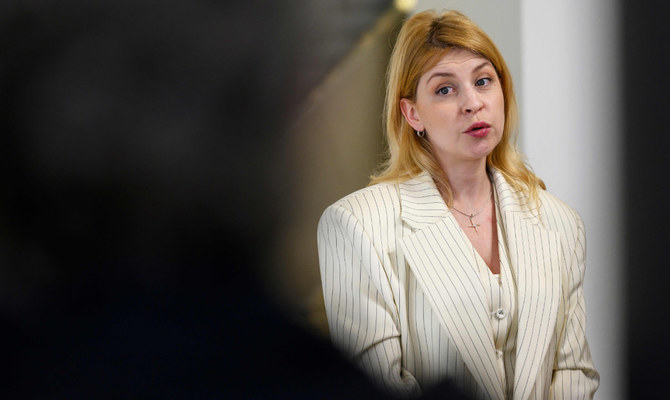
Ukraine’s lead negotiator, Deputy Prime Minister Olga Stefanishyna, vowed that Kyiv “will be able to complete everything before 2030” to join the bloc.
Russia’s war in Ukraine has reinvigorated a push in the EU to take on new members, after years in which countries particularly in the Western Balkans made little progress on their hopes to join.
The EU in December 2023 also granted candidate status to Georgia, another of Russia’s former Soviet neighbors.
It likewise approved accession negotiations with Bosnia and has talks ongoing with Serbia, Montenegro, Albania and North Macedonia.
The meetings with Ukraine and Moldova on Tuesday will set off a process of screening of how far laws in the countries already comply with EU standards and how much more work lies ahead.
Once that is done the EU then has to begin laying out conditions for negotiations on 35 subjects, ranging from taxation to environmental policy.
Stefanishyna said the next step should come in early 2025.
EU countries pushed to start the talks now before Hungary — the friendliest country to Russia in the bloc — takes over the EU’s rotating presidency next month.
Budapest has been opposed to pressing ahead with Kyiv’s membership bid, arguing that Ukraine was unfairly moving ahead for political reasons.
“From what I see here as we speak, they are very far from meeting the accession criteria,” Hungary’s Europe minister Janos Boka said on Tuesday.
Accepting Ukraine — a war-ravaged country of some 40 million people — would be a major step for the EU, and there are calls for the bloc to carry out reforms to streamline how it works before accepting new members.
The start of the talks resonates powerfully in Ukraine, as it was a desire for closer ties with the EU that sparked protests back in 2014 that eventually spiralled into the full-blown crisis with Russia.
The negotiations also come at a tense time in Moldova after the United States, Britain and Canada warned of a Russian “plot” to influence the country’s presidential elections in October.
Wedged between Ukraine and EU member Romania, Moldova’s pro-Western authorities frequently accuse the Kremlin of interfering in its internal affairs.
President Maia Sandu has accused Moscow, which has troops stationed in a breakaway region of the country, of aiming to destabilize Moldova ahead of the vote.
“Our future is within the European family,” Sandu wrote on X. “We are stronger together.”

EU launches ‘historic’ membership talks with Ukraine, Moldova
Short Url
https://arab.news/pub6e
EU launches ‘historic’ membership talks with Ukraine, Moldova
- Ukraine’s lead negotiator, Deputy Prime Minister Olga Stefanishyna, vowed that Kyiv “will be able to complete everything before 2030” to join the bloc
Zelensky says peace proposals to end the war in Ukraine could be presented to Russia within days
- But issues like the status of Ukrainian territory occupied by Russia remain unresolved. US-led peace efforts are gaining momentum
- But Russian President Vladimir Putin may resist some proposals including security guarantees for Ukraine
KYIV: Ukrainian President Volodymyr Zelensky says proposals being negotiated with US officials for a peace deal to end his country’s nearly four-year war with Russia could be finalized within days, after which American envoys will present them to the Kremlin before further possible meetings in the United States next weekend.
Zelensky told reporters late Monday that a draft peace plan discussed with the US during talks in Berlin earlier in the day is “very workable.” He cautioned, however, that some key issues — notably what happens to Ukrainian territory occupied by invading Russian forces — remain unresolved.
U.S-led peace efforts appear to be picking up momentum. But Russian President Vladimir Putin may balk at some of the proposals thrashed out by officials from Washington, Kyiv and Western Europe, including postwar security guarantees for Ukraine.
Kremlin spokesman Dmitry Peskov repeated Tuesday that Russia wants a comprehensive peace deal, not a temporary truce.
If Ukraine seeks “momentary, unsustainable solutions, we are unlikely to be ready to participate,” Peskov said.
“We want peace — we don’t want a truce that would give Ukraine a respite and prepare for the continuation of the war,” he told reporters. “We want to stop this war, achieve our goals, secure our interests, and guarantee peace in Europe for the future.”
American officials on Monday said that there’s consensus from Ukraine and Europe on about 90 percent of the US-authored peace plan. US President Donald Trump said: “I think we’re closer now than we have been, ever” to a peace settlement.
Plenty of potential pitfalls remain, however.
Zelensky reiterated that Kyiv rules out recognizing Moscow’s control over any part of the Donbas, an economically important region in eastern Ukraine made up of Luhansk and Donetsk. Russia’s army doesn’t fully control either.
“The Americans are trying to find a compromise,” Zelensky said, before visiting the Netherlands on Tuesday. “They are proposing a ‘free economic zone’ (in the Donbas). And I want to stress once again: a ‘free economic zone’ does not mean under the control of the Russian Federation.”
The land issue remains one of the most difficult obstacles to a comprehensive agreement.
Putin wants all the areas in four key regions that his forces have seized, as well as the Crimean Peninsula, which Moscow illegally annexed in 2014, to be recognized as Russian territory.
Zelensky warned that if Putin rejects diplomatic efforts, Ukraine expects increased Western pressure on Moscow, including tougher sanctions and additional military support for defense. Kyiv would seek enhanced air defense systems and long-range weapons if diplomacy collapses, he said.
Ukraine and the US are preparing up to five documents related to the peace framework, several of them focused on security, Zelensky said.
He was upbeat about the progress in the Berlin talks.
“Overall, there was a demonstration of unity,” Zelensky said. “It was truly positive in the sense that it reflected the unity of the US, Europe, and Ukraine.”
Zelensky told reporters late Monday that a draft peace plan discussed with the US during talks in Berlin earlier in the day is “very workable.” He cautioned, however, that some key issues — notably what happens to Ukrainian territory occupied by invading Russian forces — remain unresolved.
U.S-led peace efforts appear to be picking up momentum. But Russian President Vladimir Putin may balk at some of the proposals thrashed out by officials from Washington, Kyiv and Western Europe, including postwar security guarantees for Ukraine.
Kremlin spokesman Dmitry Peskov repeated Tuesday that Russia wants a comprehensive peace deal, not a temporary truce.
If Ukraine seeks “momentary, unsustainable solutions, we are unlikely to be ready to participate,” Peskov said.
“We want peace — we don’t want a truce that would give Ukraine a respite and prepare for the continuation of the war,” he told reporters. “We want to stop this war, achieve our goals, secure our interests, and guarantee peace in Europe for the future.”
American officials on Monday said that there’s consensus from Ukraine and Europe on about 90 percent of the US-authored peace plan. US President Donald Trump said: “I think we’re closer now than we have been, ever” to a peace settlement.
Plenty of potential pitfalls remain, however.
Zelensky reiterated that Kyiv rules out recognizing Moscow’s control over any part of the Donbas, an economically important region in eastern Ukraine made up of Luhansk and Donetsk. Russia’s army doesn’t fully control either.
“The Americans are trying to find a compromise,” Zelensky said, before visiting the Netherlands on Tuesday. “They are proposing a ‘free economic zone’ (in the Donbas). And I want to stress once again: a ‘free economic zone’ does not mean under the control of the Russian Federation.”
The land issue remains one of the most difficult obstacles to a comprehensive agreement.
Putin wants all the areas in four key regions that his forces have seized, as well as the Crimean Peninsula, which Moscow illegally annexed in 2014, to be recognized as Russian territory.
Zelensky warned that if Putin rejects diplomatic efforts, Ukraine expects increased Western pressure on Moscow, including tougher sanctions and additional military support for defense. Kyiv would seek enhanced air defense systems and long-range weapons if diplomacy collapses, he said.
Ukraine and the US are preparing up to five documents related to the peace framework, several of them focused on security, Zelensky said.
He was upbeat about the progress in the Berlin talks.
“Overall, there was a demonstration of unity,” Zelensky said. “It was truly positive in the sense that it reflected the unity of the US, Europe, and Ukraine.”
© 2025 SAUDI RESEARCH & PUBLISHING COMPANY, All Rights Reserved And subject to Terms of Use Agreement.


