WASHINGTON DC: Senior UN officials have warned Israel that they will suspend the world body’s aid operations across Gaza unless Israel acts urgently to better protect humanitarian workers, two UN officials said Tuesday. The ultimatum is the latest in a series of UN steps demanding Israel do more to safeguard aid operations from strikes by its forces and to curb growing lawlessness hindering humanitarian workers.
A UN letter sent to Israeli officials this month said Israel must provide UN workers with a way to communicate directly with Israeli forces on the ground in Gaza, among other steps, the officials said.
They spoke on condition of anonymity to discuss ongoing negotiations with Israeli officials. The UN officials said there has been no final decision on suspending operations across Gaza and that talks with Israelis were ongoing.
Israeli military officials did not respond to requests for comment. Israel has previously acknowledged some military strikes on humanitarian workers, including an April attack that killed seven workers with the World Central Kitchen, and has denied allegations of others.
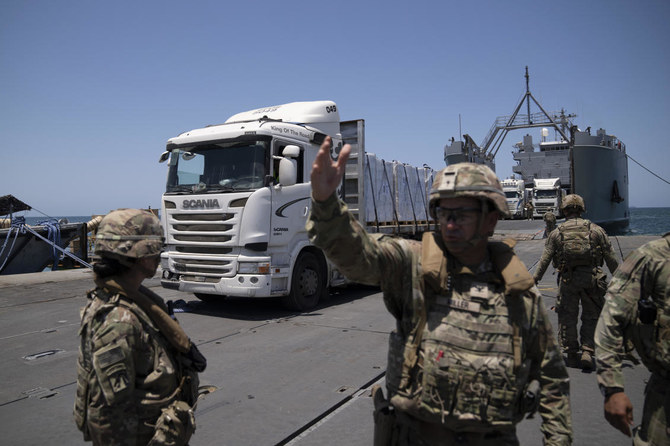
Citing security concerns, the UN World Food Program has already suspended aid delivery from a US-built pier designed to bring food and other emergency supplies to Palestinians who are facing starvation amid the eight-month war between Israel and Hamas in Gaza.
UN and other aid officials have complained for months that they have no way to communicate quickly and directly with Israeli forces on the ground, in contrast with the usual procedures — known as “deconfliction” — employed in conflict zones globally to protect aid workers from attack by combatants.
In its letter to Israeli officials, the UN cited communication and protective equipment for aid workers as among the commitments that it wanted Israel to make good on for its aid operations to continue in Gaza overall, the two UN officials say.
The UN said in April that about 30 humanitarian workers have been killed in the line of duty in Gaza since the war between Israel and Hamas began in October.
The UN and other humanitarian organizations also complain of increasing crime in Gaza and have urged Israel to do more to improve overall security for their operations from attack and theft. The lawlessness has stymied what Israel said was a daily pause in fighting to allow a new safe corridor to deliver aid into southern Gaza, with humanitarian officials saying groups of gunmen are regularly blocking convoys, holding drivers at gunpoint and rifling through their cargo.
On top of that, “missiles hit our premises, despite being deconflicted,” said Steve Taravela, a spokesman for the World Food Program, one of the main organizations working on humanitarian delivery in Gaza. He was not one of those confirming the UN threat to suspend operations across the territory. “WFP warehouses have been caught in the crossfire twice in the past two weeks.”
Humanitarian officials said conditions for civilians and aid workers have worsened further since early May when Israel launched an offensive in the southern city of Rafah, where many aid groups had their base. The operation has crippled what had been a main border crossing for food and other aid.
Aid workers trying to get shipments through the main remaining crossing, Kerem Shalom, face risks from fighting, damaged roads, unexploded ordnance and Israeli restrictions, including spending five or more hours a day waiting at checkpoints, Taravela said.
“Restoring order is crucial for an effective humanitarian response to meet soaring needs. UN agencies and others need a safe environment to be able to access people and scale up,” he said.
Israeli officials say the problems at Kerem Shalom are a matter of poor UN logistics.
Separately, the United Nations has also suspended cooperation with the US-built pier since June 9, a day after the Israeli military used the area around the pier in a hostage rescue that killed more than 270 Palestinians.
While US and Israeli officials said no part of the pier itself was used in the raid that rescued four hostages taken by Hamas, UN officials said any perception in Gaza that the project was used in the Israeli military operation may endanger their aid work.
The UN has finished a security assessment of the pier operation following the raid but has not yet made a decision on resuming any delivery of supplies from the US-built structure, according to a humanitarian official who spoke on condition of anonymity to discuss details that have not yet been released publicly.
Speaking to reporters traveling with a US delegation to a gathering of defense chiefs in Botswana on Tuesday, an official with the US Agency for International Development expressed optimism that aid deliveries from the pier would eventually resume.
“I think it’s a question of when the IDF (Israeli Defense Forces) can provide, and the government of Israel can provide, the assurances that the UN is seeking on deconfliction and security right now,” said Isobel Coleman, deputy administrator of USAID, which has been working with the World Food Program on aid distribution from the pier.


![]()

UN tells Israel it will suspend aid operations across Gaza without improved safety
Short Url
https://arab.news/9y8uq
UN tells Israel it will suspend aid operations across Gaza without improved safety
- UN and other aid officials have complained for months that they have no way to communicate quickly and directly with Israeli forces on the ground


Latest updates


© 2026 SAUDI RESEARCH & PUBLISHING COMPANY, All Rights Reserved And subject to Terms of Use Agreement.