

Saudi university secures X-ray film patent

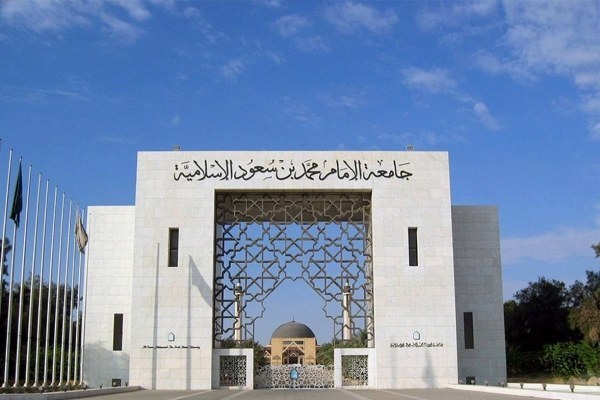
Imam Mohammed Ibn Saud Islamic University in Riyadh. (Supplied)
Short Url
Updated 24 June 2024
Follow

Saudi university secures X-ray film patent

  • The patent details the creation of biodegradable organic nanomembranes designed to replace synthetic membranes currently used in laboratories

RIYADH: Imam Mohammad ibn Saud Islamic University has been granted a new patent by the US Patent and Trademark Office for a pioneering X-ray film made from bio-materials.

This innovation, developed by a team of researchers including Sharif Hussein, Mohammed Saad Al-Issa, Hassan Ahmed Rudaini, Nasser Adam Ibrahim, Mohammed Mousa Al-Zahrani, and Salem Ali Al-Yami, represents a significant advancement in the field of biological sciences.

The patent details the creation of biodegradable organic nanomembranes designed to replace synthetic membranes currently used in laboratories, surgeries, biomedical engineering, bioengineering, and dentistry.

These innovative membranes are not only biodegradable but also environmentally friendly, offering a sustainable alternative to conventional synthetic films.

This accomplishment is a result of the university’s Innovation and Entrepreneurship Center’s Patent Deposit and Registration Program, an initiative aimed at supporting and enhancing patent registrations by university staff, thereby safeguarding the institution’s intellectual assets.


Musaned confirms mandatory salary transfers for domestic workers via official channels

Updated 9 sec ago
Follow

Musaned confirms mandatory salary transfers for domestic workers via official channels

  • Move aims to protect wage-related rights, enhance transparency

RIYADH: All employers in Saudi Arabia have been informed they must transfer domestic workers’ salaries through official channels, starting from Jan. 1, 2026.

The move, confirmed through Musaned platform’s X account, aims to protect wage-related rights, enhance transparency and simplify employer-worker relationships.

The electronic payment service provided through Musaned will use approved digital wallets and participating banks to ensure reliability, security and consistency in wage transfers.

Lawyer Majed Garoub told Arab News that the new regulation would help tackle persistent issues in employer-worker relationships, especially disputes over unpaid wages.

He said: “This regulation will significantly help resolve many problems that arise when domestic workers leave the country without proper verification of receiving their full rights.”

Garoub explained that informal salary payments were common in the past, often made without proper documentation or signatures.

This, he added, made it challenging for Saudi employers to prove they had paid all wages if workers later filed claims after returning to their home countries.

The new regulation, which has been rolled out in stages, began with domestic workers newly arriving in the Kingdom on July 1, 2024.

It was then extended to employers with four or more domestic workers in January 2025, followed by those employing three or more by July 2025.

The latest stage, which took effect on Oct. 1, applies to employers with two or more domestic workers. This phased approach has ensured a smooth adoption of the system for all employers.

Garoub said the regulation would bring broader legal and security benefits. He explained that informal salary payments had, at times, enabled illegal practices.

He added: “Workers might have falsely claimed unpaid wages or engaged in activities outside their employment.”

Such funds, he added, could even have contributed to crimes like money laundering or the financing of terrorism.

He said: “By mandating official payment channels, this regulation protects the Saudi economy, national security, and international financial systems.”

The Musaned platform offers significant advantages for both employers and workers. Employers gain a reliable salary verification mechanism that simplifies end-of-contract and travel-related procedures, while workers benefit from consistent, secure and timely payments.

The system also allows domestic workers to transfer their earnings to family members abroad through trusted channels.

For those who prefer cash withdrawals, a Mada card will be issued for secure and convenient access to salaries.

According to Musaned, salary transfers for workers covered under the Wage Protection System must be made through authorized channels.

This regulatory change marks a significant step forward in protecting the rights of domestic workers, ensuring transparency in employer-employee relationships, and bolstering the Kingdom’s economic and security interests.