Saudi Arabia’s FDI soars to $65bn post-pandemic, among top in West Asia: report

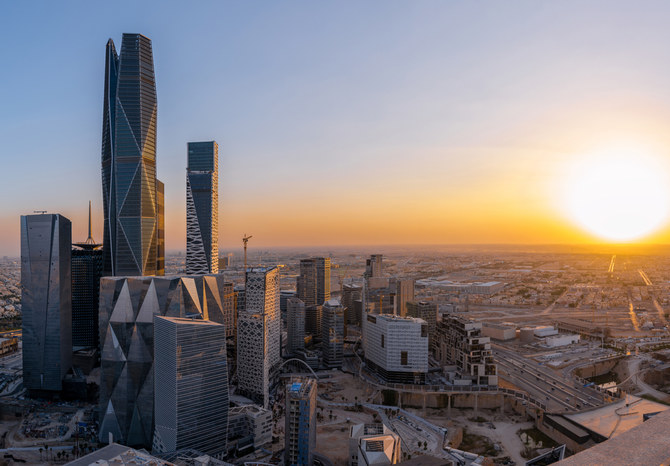
According to the latest World Investment Report by the UN Conference on Trade and Development, the Kingdom's FDI outflows totaled $73.1 billion over the same period, with $16 billion recorded last year alone. Shutterstock
Short Url
Updated 23 June 2024
Follow

Saudi Arabia’s FDI soars to $65bn post-pandemic, among top in West Asia: report

RIYADH: Saudi Arabia attracted $65.1 billion in foreign direct investment in the three years post-pandemic until 2023, placing it among West Asia’s top recipients, according to new data.  

According to the latest World Investment Report by the UN Conference on Trade and Development, the Kingdom's FDI outflows totaled $73.1 billion over the same period, with $16 billion recorded last year alone. This places Saudi Arabia among the top 20 economies globally for FDI outflows, ranking 16th. 

In accordance with the goals set out in the National Investment Strategy and Vision 2030 targets, Saudi Arabia has enacted substantial legal, economic, and social reforms aimed at stimulating inflows of foreign direct investment.

Launched in 2021, NIS looks to develop comprehensive investment plans across various sectors such as manufacturing, renewable energy, transport and logistics, tourism, digital infrastructure, and healthcare.

Furthermore, it aims to increase annual FDI flows to over $103 billion and boost annual domestic investment to more than $453 billion by 2030.

The UN report also noted a 55 percent annual increase in the value of international project finance deals in Saudi Arabia in 2023, reaching $22 billion. 

Last year, the nation witnessed 19 deals, marking a 90 percent growth compared to the previous year. 

Additionally, Saudi Arabia saw 389 announced greenfield projects in 2023, totaling $29 billion, reflecting a 108 percent annual increase in value. 

On a global level, FDI experienced a marginal yearly decline of 2 percent in 2023, dropping to $1.3 trillion.  

The analysis highlighted that the overall figure was significantly influenced by substantial financial flows through a few European conduit economies. 

Excluding the impact of these conduits, global FDI flows were more than 10 percent lower than in 2022. 

Conduit economies refer to countries that act as intermediaries for financial flows, especially foreign direct investment. 

These economies attract multinational corporations with favorable tax laws and regulatory environments, allowing funds to pass through on their way to final investment destinations, often for tax optimization and regulatory benefits. Examples include the Netherlands, Luxembourg, and Switzerland, as well as Cyprus and Ireland.  

The challenges  

UNCTAD stated that the global landscape for international investment remains challenging in 2024. Factors such as declining growth prospects, economic fragmentation, and trade and geopolitical tensions are influencing FDI patterns. Industrial policies and the diversification of supply chains also present limitations.  

These factors have prompted many multinational enterprises to adopt a cautious approach to overseas expansion.  

“However, MNE profit levels remain high, financing conditions are easing and increased greenfield project announcements in 2023 will positively affect FDI. Modest growth for the full year appears possible,” the report stated.  

International project finance and cross-border mergers and acquisitions were particularly weak in 2023.  

M&As, which predominantly impact FDI in developed countries, fell in value by 46 percent, while project finance, a crucial factor for infrastructure investment, was down 26 percent.  

According to the report, the principal causes of this decline included tighter financing conditions, investor uncertainty, volatility in financial markets, and increased regulatory scrutiny for M&As.  

In developed countries, the 2023 trend was significantly influenced by MNE financial transactions, partly driven by efforts to implement a minimum tax on the largest MNEs.  

Regional deep dive  

Due to volatility in conduit economies, FDI flows in Europe shifted dramatically from negative $106 billion in 2022 to positive $16 billion in 2023.  

Inflows to the rest of Europe declined by 14 percent, while inflows in other developed countries stagnated, with a 5 percent decline in North America and significant decreases elsewhere.  

FDI flows to developing countries fell by 7 percent to $867 billion, primarily due to an 8 percent decrease in developing Asia.  

Flows fell by 3 percent in Africa and 1 percent in Latin America and the Caribbean. The number of international project finance deals dropped by a quarter.  

Although greenfield project announcements in developing countries increased by over 1,000, these initiatives were highly concentrated in specific regions.  

Greenfield project announcements refer to the initiation of new investment undertakings where companies build operations from scratch on undeveloped land, leading to the construction of new facilities and infrastructure.  

South-East Asia accounted for almost half of these projects, West Asia for a quarter, while Africa saw a small increase, and Latin America and the Caribbean attracted fewer initiatives.  

FDI inflows to Africa declined by 3 percent in 2023 to $53 billion. Despite several megaproject announcements, including Mauritania’s largest worldwide green hydrogen project, international project finance in Africa fell by a quarter in the number of deals and half in value, negatively affecting infrastructure investment prospects.  

In developing Asia, FDI fell by 8 percent to $621 billion. China, the world’s second-largest FDI recipient, experienced a rare decline in inflows, with significant decreases recorded in India and West and Central Asia.  

The report stated that only South-East Asia held steady, with industrial investment remaining buoyant despite the global downturn in project finance.  

FDI flows to Latin America and the Caribbean were down 1 percent to $193 billion.  

The number of international project finance and greenfield investment announcements fell, but the value of greenfield projects increased due to large investments in commodity sectors, critical minerals and renewable energy as well as green hydrogen, and green ammonia.  

Conversely, FDI flows to structurally weak and vulnerable economies increased. FDI inflows to least developed countries rose to $31 billion, accounting for 2.4 percent of global FDI flows, the report stated.  

“Landlocked developing countries and small island developing states also saw increased FDI. In all three groups, FDI remains concentrated among a few countries,” the report added.  

The global downturn in international project finance disproportionately affected the poorest countries, where such finance is relatively more important.  

Industry trends showed lower investment in infrastructure and the digital economy but strong growth in global value chain-intensive sectors such as manufacturing and critical minerals.  

Weak project finance markets negatively impacted infrastructure investment, and digital economy sectors continued to slow down after the boom ended in 2022.  

The report further stated that global value chain-intensive sectors, including automotive, electronics, and machinery industries, grew strongly, driven by supply chain restructuring pressures. Investment in critical minerals extraction and processing nearly doubled in project numbers and values. 


How lifestyle-led real estate is reshaping Saudi Arabia’s urban future

Updated 25 January 2026
Follow

How lifestyle-led real estate is reshaping Saudi Arabia’s urban future

  • Government spending, regulatory changes, and incentives for foreign investors are fueling development

RIYADH: Saudi Arabia’s real estate sector is entering a new phase, one defined by lifestyle, experience, and quality of life rather than sheer housing volume.

Driven by Vision 2030, lifestyle-focused developments are set to outperform traditional residential projects, reshaping how people live, work, and connect across the Kingdom.
Government spending, regulatory changes, and incentives for foreign investors are also fueling development. Rising demand across residential, commercial, and logistics sectors, along with the push for smart cities and sustainability, is reshaping the market.
Saudi Arabia’s real estate market was valued at $77.2 billion in 2025 and is projected to grow to $137.8 billion by 2034, with a compound annual growth rate of 6.7 percent from 2026 to 2034, according to IMARC Group.

Lifestyle-focused real estate market 
Saudi Arabia’s real estate landscape has evolved beyond conventional housing. Guided by Vision 2030, it now plays a key role in enhancing quality of life, boosting tourism, and driving economic diversification.
According to Sally Menassa, partner at Arthur D. Little, what stands out today is a clear shift from volume-driven residential supply to lifestyle-led, experience-based development.
“As a result, the lifestyle-focused segment is expected to outperform conventional residential real estate, growing at around 8 percent annually over the next five years. This growth is being driven by changing consumer expectations, population growth, rising incomes, and the scale of public investment shaping new urban environments,” Menassa said.
She added that demand in the Kingdom’s real estate is rising across four key segments: mixed-use districts near urban hubs such as King Salman Park; wellness-focused communities prioritizing walkability and services; coastal living along the Red Sea with branded residences; and heritage-driven districts like Diriyah and Al Balad that blend culture, hospitality, and long-term value.
“Overall, this marks a fundamental shift in the Kingdom. Real estate is no longer an end in itself and about delivering buildings; it is becoming a platform for place-making, economic diversification, and sustained value creation,” the ADL partner explained.
From another perspective, Houssem Jemili, senior partner at Bain and Co. Middle East said: “Saudi’s real estate market is forecast at roughly 7–8 percent CAGR to 2030; ‘lifestyle’ demand is being pulled most by amenity-led mixed-use communities plus higher-spec, greener and wellness-leaning homes.”
A report from PwC Middle East released in 2025 focused on the future of sustainable real estate in Saudi Arabia, and  showed that the sector is shifting toward livability-focused, high-quality urban developments. Giga-projects are driving demand for mixed-use, wellness-focused, and socially connected communities that enhance quality of life.
Imad Shahrouri, cities sector lead partner, consulting, in Riyadh at PwC Middle East said: “By placing livability and human experience at the foundation of its urban agenda, Saudi Arabia is shaping a market where lifestyle-led developments will play an increasingly influential role in driving demand and investment.”

Core lifestyle elements developers are prioritizing  
Saudi developers are shifting from the traditional “build and sell” model to creating integrated lifestyle communities focused on long-term value and everyday living.
Menassa from ADL highlighted that the shift centers on enhancing public spaces — with walkable areas, parks, and wellness facilities — to promote healthier, more social lifestyles, especially for a younger, health-focused population.
“Convenience is also playing a bigger role in shaping residential districts. Schools, childcare centers, clinics, co-working spaces and a wide range of food and beverage options are increasingly located within walking distance of homes, reducing commuting time and making everyday life more efficient and connected,” she said.
The partner added: “Equally important is the role of culture and social activity. Many developments now incorporate cultural venues, entertainment spaces and destination dining, ensuring that neighborhoods remain active throughout the day and week rather than becoming dormant outside working hours.”
Menassa went on to stress that real estate in Saudi Arabia is evolving into a strategic tool for quality of life, tourism, and talent attraction. Driven by Vision 2030, developments now integrate smart infrastructure and global lifestyle standards, while staying rooted in local culture to meet the needs of a young, urban population.

FASTFACT

Driven by Vision 2030, lifestyle-focused developments are set to outperform traditional residential projects, reshaping how people live, work, and connect across the Kingdom.

From Bain’s lens, Jemili said: “Developers are prioritizing livable neighborhoods. Walkability, parks and sport, culture and entertainment access, and everyday convenience, shaped by Vision 2030’s Quality of Life agenda and the 70 percent homeownership-by-2030 push.”
Shahrouri from PwC shed light on how developers in the Kingdom prioritizing livability, wellbeing, and inclusive, community-focused spaces are, aligning with Vision 2030’s push to enhance daily life and promote social integration while reflecting local identity.
“As a result, lifestyle-led elements such as walkable neighborhoods, activated public spaces and integrated community facilities are becoming central to new destinations, ensuring future developments foster more connected, resilient and experience-rich ways of living,” he said.

Regions, cities key hubs for experiential development 
Several Saudi cities are emerging as prominent centers for lifestyle-focused, experiential development, each defined by its unique urban and economic character.
From ADL’s perspective, Riyadh is leading this shift as it positions itself as a global capital. The city is seeing strong demand for integrated, mixed-use districts that support live-work-play lifestyles.
“Developments such as KAFD, Diriyah, and areas surrounding King Salman Park reflect a growing preference for urban living that combines employment, culture, green space, and entertainment in close proximity,” Menassa said.
“Jeddah’s appeal is different, but equally compelling. Its strength lies in its coastal character, historic fabric, and more relaxed urban rhythm. Waterfront regeneration and heritage-led districts, particularly around Al Balad, are driving interest in developments that blend walkability, culture, and sea-facing lifestyles — attracting residents, investors, and tourists alike,” she added.
The partner continued to underline that destination developments along the Red Sea coast focus on sustainable, low-density communities blending hospitality, nature, and residential living, promoting wellness and eco-tourism.
Menassa noted that secondary cities like Abha and AlUla are emerging as hubs for outdoor living, culture, and heritage, supported by government policies and investments. 
These lifestyle-driven districts appeal to residents for livability and job access, and to investors for scale and stability, offering resilience through everyday services and cultural experiences.
From Bain’s side, Jemili explained that Riyadh and Jeddah stand out as the main hubs because they combine jobs, population growth, liquidity and are where “integrated community” formats scale fastest.
“We’re seeing the same in Makkah and Madinah; the focus is shifting from delivering more units to delivering higher-quality development and standards,” he said.
From PwC’s perspective, Shahrouri noted that regions across Saudi Arabia are becoming hubs for lifestyle-driven development, with large-scale regeneration creating sustainable, well-designed environments that enhance urban living and attract global investment.
“Flagship projects are reshaping their surroundings by focusing on the character and feel of place, bringing together community elements, environmental responsibility, and integrated urban design.”

 Their growing appeal comes from the balance they strike between modern infrastructure and a human-centered approach to planning, creating destinations where daily life feels more seamless and connected,” he said.

Next phase of Saudi real estate evolution
The next phase of Saudi Arabia’s real estate evolution is likely to be defined by integration, intelligence, and regeneration.
From ADL’s lens, Menassa explained that  Riyadh is set to feature highly vertical, dense urban environments designed for land efficiency and sustainability, with fully integrated live-work-play ecosystems that reduce commuting, boost productivity, and enhance social cohesion.
“The real shift, however, is toward AI-enabled and data-driven communities, where energy, mobility, and services are actively managed rather than passively consumed. Real estate will increasingly be judged not by how much is sold, but by how well places perform — in terms of livability, productivity, and environmental outcomes,” she said.
The partner noted that Saudi Arabia is boosting private sector involvement, public-private partnerships, and institutional investments to develop public spaces and social infrastructure. The focus is shifting from just constructing cities to designing lifestyles, using real estate as a key driver for economic growth and social transformation.
Jemili from Bain said: “The next phase is more about operating districts like platforms, digital twins, and real-time data to optimize energy, maintenance, mobility, and resident experience, creating tighter live-work-play loops. Rather than ‘building more.’”
From PwC’s side, Saudi Arabia is building a strong foundation for future cities by focusing on resilient, resource-efficient developments and adaptable infrastructure, paving the way for smart, connected urban models like vertical districts and digital neighborhoods.
“These emerging environments are set to respond more naturally to the needs of their communities. As the quality and experience of urban life continue to rise, our cities are poised to become more intelligent, enriching and future ready, evolving with their residents and reflecting the ambition of a nation transforming at pace,” Shahrouri concluded.