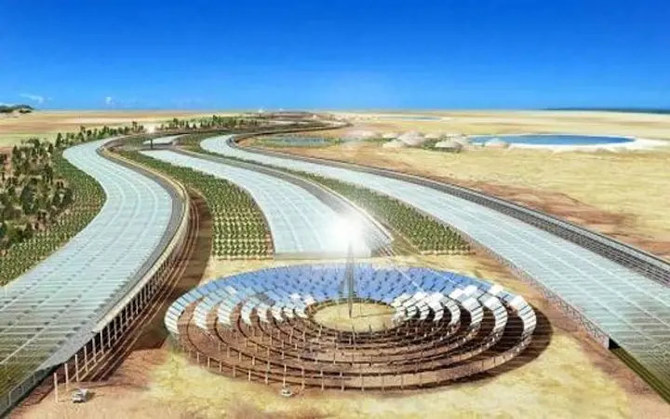

RIYADH: In regions with limited rainfall, desalination is a practical means of sourcing plentiful water for farming and human consumption. However, the process of turning seawater into freshwater is notoriously energy intensive.
Indeed, desalination is a significant contributor to carbon emissions in the water-scarce Arabian Peninsula. That is why Saudi Arabia has been investing in green energy sources to power its desalination plants.
“Using renewable energies for desalination is crucial as it contributes to reducing the operation’s carbon footprint and water production costs,” Sultan Al-Rajhi, spokesperson for the Saudi Water Authority, told Arab News.


Due to the scarcity of freshwater resources in a region with a rapidly growing population, seawater desalination is essential to keep pace with demand, he added.
“Saudi Arabia depends on desalination of seawater due to the nature of the desert climate, in which the presence of surface water and natural rivers is rare,” Al-Rajhi said.
In fact, desalination accounts for about 75 percent of the Kingdom’s water supply.
“Therefore, investment is being made in desalination of seawater to meet the demand for population and economic growth witnessed in the Gulf region as a whole.”
Each year, the Kingdom requires an average of 5.5 billion cubic meters of freshwater. The need for water is especially high during the Hajj and Umrah seasons, when well over a million pilgrims arrive from around the world.
Home to more than 37 million people, the Kingdom is the world’s third-largest consumer of water per head of population. Agriculture alone accounts for around 84 percent of total water consumption.
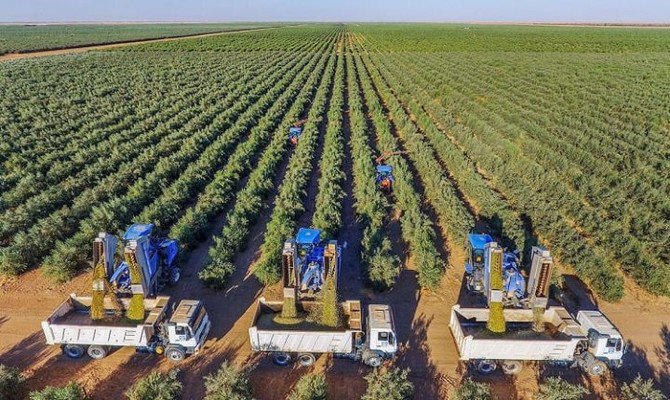
An alfalfa farm in Riyadh region's Wadi Ad-Dawasir governorate. (Supplied)
Desalination is a complex process that involves removing salt and other impurities from seawater. Since the process requires a significant amount of energy, adopting renewables such as solar to power these facilities has become a top priority.
“To develop climate-resilient infrastructure for sustainable desalination, Saudi Arabia should prioritize innovative and renewable technologies,” Abdulaziz Daghestani, area sales director of water utilities and country director at Grundfos, told Arab News.
Grundfos is a Danish company that is working with regional states to provide innovative pumping solutions for water supply, wastewater management, heating and cooling, and industrial processes.
According to Daghestani, integrating advanced monitoring systems can help optimize desalination operations and enhance efficiency.
“Using real-time data and analytics, we can improve water management practices and make timely adjustments to meet the varying increasing demand for human consumption and agriculture,” he said.
The Qatrah program, which means “droplet” in Arabic, was launched by the Ministry of Environment, Water, and Agriculture in 2020, and aims to reduce excess water usage by eliminating waste, and encouraging the conservation and reuse of existing freshwater.
Its objective is to lower daily per-capita water consumption from 263 liters to 150 liters by 2030. To do this, the ministry has created a unified framework, known as the National Water Strategy, for the country.
However, despite these efforts to improve the sustainability of water systems, desalination remains a crucial means of meeting water demand, making the adoption of clean energy sources and efficient production techniques a critical priority.
DID YOUKNOW?
• In 2023, Saudi Arabia had a desalination capacity of 13.2m cubic meters per day.
• 7 million cubic meters of desalinated water have been generated by the Al-Khafji plant.
• Desalination accounts for 60 percent of the urban water supply in Saudi Arabia.
• Agriculture makes up 84 percent of the Kingdom’s water needs.
Al-Khafji Desalination Plant, located in the Kingdom’s Eastern Province, is the world’s largest solar-powered water desalination project, providing the region’s water requirements through an innovative and environmentally friendly approach.
The plant can generate up to 90,000 cubic meters of freshwater per day using innovative technology created by the King Abdulaziz City for Science and Technology.
Its new Solar Saline Water Reverse Osmosis method uses a process known as ultra-filtration during the pre-treatment phase.
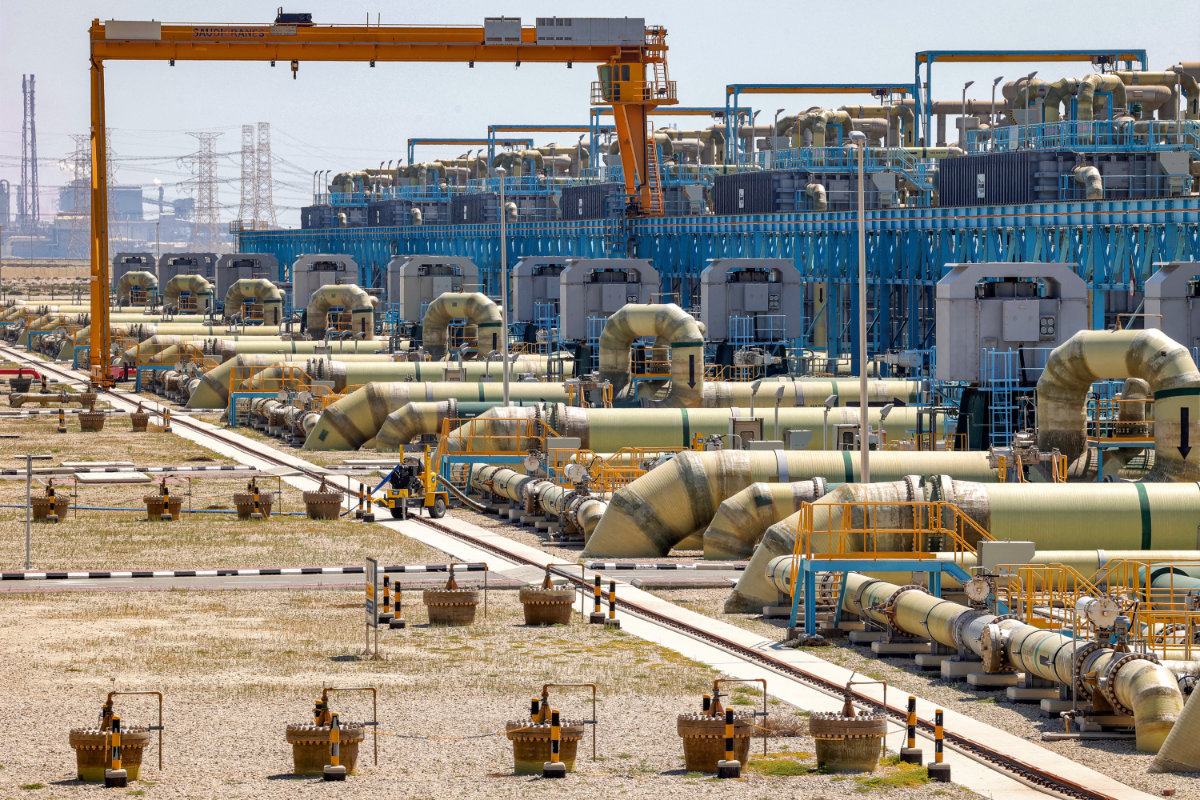
A view of the Ras al-Khair water desalination plant, owned by the Saudi government's Saline Water Conversion Corporation, along the Gulf coast in eastern Saudi Arabia. (AFP)
The method involves forcing seawater through a semipermeable membrane that only allows water molecules to pass, while blocking the salt and other contaminants. The resulting purified water is then collected for distribution.
Since its launch in 2018, more than 7 million cubic meters of freshwater produced by the plant have already been utilized.
“Using reverse osmosis technology is considered to have the lowest rates of carbon emissions as a result of the increase in energy efficiency through the development of this field in recent years,” said Al-Rajhi.
“The rate of carbon emissions per cubic meter in some desalination systems has been reduced to 91 percent compared with thermal desalination systems.”
Opinion
This section contains relevant reference points, placed in (Opinion field)
Solar is not the only source of renewable energy that can be adopted to power the desalination process.
“This is in addition to the prospective use of hydraulic turbines to convert the kinetic energy resulting from the flow of water into electricity to generate clean energy,” said Al-Rajhi.
This shift toward renewables not only addresses the high energy costs associated with desalination but also supports Saudi Arabia’s commitment to sustainable development.
Inger Andersen, executive director of the UN Environment Programme, has praised the Kingdom’s water conservation agenda, which is part and parcel with its environmental mission, the Saudi Green Initiative.
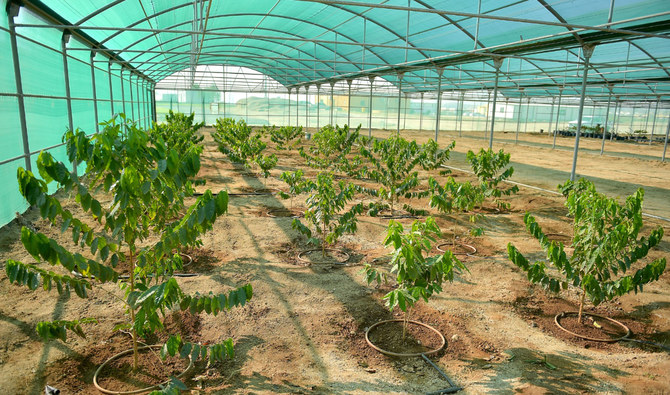
A farm in Wadi bin Hashbal, Saudi Arabia, was recently recognized by the Guinness World Records as the largest sustainable farm in the world. (Supplied)
Saudi Arabia is correct to prioritize “not over-extracting and being very wise around environmental management.”
“That is why we are quite impressed by the Saudi Green Initiative,” she told Arab News.
This transition to cleaner energy sources reflects a strategic decision to enhance the Kingdom’s energy efficiency and reduce its dependence on fossil fuels, while simultaneously addressing the challenges posed by climate change.
Integrating renewable energy into desalination processes marks a significant step toward achieving a more sustainable and environmentally-conscious approach to water production.