
RIYADH: Saudi Arabia has achieved remarkable global leadership in doubling its desalinated water production, signaling its unwavering commitment to meeting daily water demands, stated Abdulrahman Al-Fadley, Saudi minister of environment, water, and agriculture.
Al-Fadley highlighted the Kingdom’s exceptional progress in expanding strategic storage capacities and extending water transmission lines. Moreover, he emphasized significant advancements in wastewater treatment and reuse in agriculture and industry, reducing reliance on non-renewable groundwater and advancing integrated water resources management objectives.
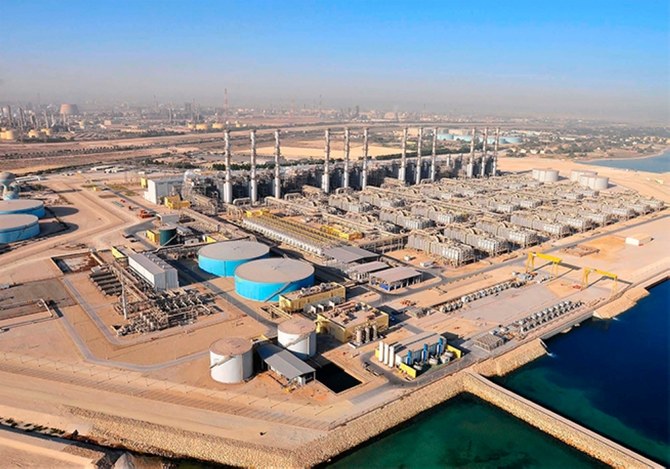
According to German online data platform Statista, the Kingdom produced 2.9 billion cubic meters of desalinated water in 2022, with the state-owned Saline Water Conversion Corp. contributing over 2 million m3.
Al-Fadley further underscored Saudi Arabia’s ongoing efforts to enhance water sustainability during the 3rd High-Level International Conference on “Water for Sustainable Development 2018-2028” in Dushanbe, Tajikistan.
Al-Fadley highlighted the government’s dedication to reducing energy consumption and carbon emissions in seawater desalination operations.
“In 2018, the government launched the National Water Strategy and achieved global leadership in the desalination system by setting nine Guinness World Records in the fields of production, transportation, and strategic storage,” the minister said.
In 2023, Saudi Arabia achieved a significant milestone in water security by increasing its daily water production capacity to 11.5 million m3, establishing itself as the world’s leading producer of desalinated water.
At the 10th World Water Forum in Bali, Abdullah Al-Zuwaid of the Saudi Water Authority announced the Kingdom’s ambition to reach a desalinated water capacity of 13.3 million m3 per day by the end of 2024. This expansion will be facilitated by 43 desalination plants utilizing eco-friendly technology and renewable energy sources.
Given the scarcity of freshwater resources, seawater desalination has become indispensable in meeting Saudi Arabia’s water demands. SWCC’s primary responsibilities include supplying water to cities, provinces, and addressing the water needs during Haj and Umrah seasons. The corporation operates 30 desalination plants with a combined production capacity of approximately 7.5 million m3 per day, alongside 139 purification stations generating about 4 million m3 per day.
In September 2023, Crown Prince Mohammed bin Salman announced the establishment of a Global Water Organization headquartered in Riyadh, aiming to coordinate global efforts in ensuring water sustainability. Al-Fadley affirmed the Kingdom’s commitment to enhancing its global role in addressing sustainable development challenges, allocating funds exceeding $6 billion to several countries worldwide.
According to the International Trade Organization, the Saudi Ministry of Environment, Water, and Agriculture aims to fulfill 90 percent of the country’s water demand through desalinated water and 10 percent through ground and surface water by 2030. New urban desalination plants are deemed necessary to overcome a projected water shortage of 4.5 million m3 per day.
In its January report overviewing water in Saudi Arabia, the organization highlighted that the country’s water reuse market, valued at $4.69 billion by the Washington-based geopolitical risk consulting firm Gulf State Analytics, ranks as the third largest globally, following China and the US.
It also noted that Saudi Arabia operates around 200 wastewater treatment plants, with a significant portion of the treated non-potable wastewater utilized as “grey water.” This water is employed for purposes such as watering urban green spaces, irrigating crops, or supporting industrial processes.
During the Tajikistan conference, Al-Fadley reiterated Saudi Arabia’s focus on global water concerns, emphasizing active involvement in the G20 and hosting various local and international forums. These platforms promote research, innovation, and international collaboration to ensure responsible and sustainable water resource utilization.
Al-Fadley expressed optimism that outcomes from the conference would support the objectives of the 11th World Water Forum, scheduled to be hosted by Saudi Arabia in 2027 under the theme “Action for a Better Future.”