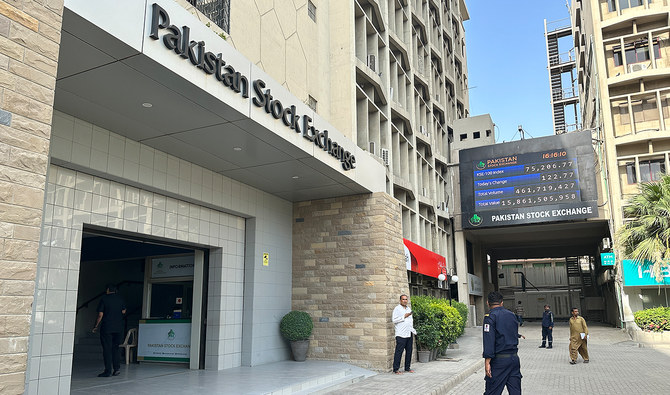
KARACHI: Pakistan’s key stock index hit an all-time high of 80,000 points on Friday, with data showing the benchmark index posted a growth of nearly 100 percent in a year, as analysts attributed the recent surge to optimistic investors confident Islamabad will extract another bailout package from the International Monetary Fund (IMF).
The benchmark KSE 100 index crossed the key psychological barrier of 80,000 points to hit an all-time high of 80,059.87 points. This is an almost 100 percent increase recorded in the benchmark index since June 21, 2023.
However, following the profit-taking at higher levels— a situation where buyers sell shares at higher prices to gain maximum profit— the index dropped to 78,169 points during trading and closed at 78,810.49 points.
The index figure at the close shows that the benchmark has posted a growth of 96 percent in a year, according to the Pakistan Stock Exchange’s (PSX) data.
“Positive sentiments, led by a tax-laden budget which investors feel will help in getting IMF’s long-term loan, have tossed the index above the 80,000 level which was 40,000 a year back,” Muhammad Sohail, CEO of Topline Securities, told Arab News.
Pakistan’s Finance Minister Muhammad Aurangzeb presented the $67.76 billion federal budget for the fiscal year 2024-25 in parliament on June 12. Analysts expect the budget will play a pivotal role in Pakistan’s negotiations with the IMF to unlock yet another loan from the international lender.
Islamabad has set an ambitious tax revenue generation target of about Rs13 trillion ($46.55 billion) for the year fiscal year 2025 in the budget. The tax collection target has been increased more than 40 percent from the target for the current fiscal year, which ends on June 30.
Pakistan equity investors also celebrated the government’s move to refrain from an anticipated increase in capital gains tax (CGT) and tax on dividend income. In addition, the taxes imposed on the real estate sector will also make the stock market an attractive destination for investment, analysts said.
“Before the budget, there was a rumor in the Pakistan stock market that capital gains tax and tax on dividends is going to be increased,” Shehryar Butt, portfolio manager at Darson Securities said. “But after the budget, those taxes were not imposed. That was positive for the market.”
Butt said the budget presented by the incumbent government seemed to be as per the IMF’s directions and expectations.
“It is very likely that Pakistan will get a longer program of IMF after presentation of the budget and it has also been marked by international rating agencies including Fitch,” Butt noted, adding that global financial institutions are optimistic about Pakistan achieving its revenue collection target.
Analysts hope the stock market will continue to perform strongly and the KSE 100 index will add another 10,000 points in the coming days.
“Factors that would support the bullish sentiments at the stock market in coming days include inflation and the monetary policy easing,” Tahir Abbas, head of research at Arif Habib Limited, said.
Abbas said average annual inflation is expected to be around 12-12.5 percent while interest rates are expected to decline from the current 20.5 percent figure to around 16 percent in a year.
“Based on these factors we expect that the KSE 100 index would hover around the 88,000 level by the end current year,” he said.


![]()

Pakistan’s benchmark index posts nearly 100% growth in a year, hits 80,000 barrier
Short Url
https://arab.news/9a9v5
Pakistan’s benchmark index posts nearly 100% growth in a year, hits 80,000 barrier
- Benchmark KSE 100 index hits all-time high at 80,059.87 level during intraday trading
- Analysts say surge due to investors’ optimism about Pakistan securing another IMF loan
Latest updates




© 2026 SAUDI RESEARCH & PUBLISHING COMPANY, All Rights Reserved And subject to Terms of Use Agreement.