LONDON: The global vaccine organization Gavi wants $9 billion from governments and foundations to fund immunization efforts in the world’s poorest countries over five years, it said on Thursday.
The amount was finalized at a meeting in Paris, where donors also began announcing commitments for the organization’s plan for 2026-2030. Gavi said it had already raised $2.4 billion of the total with months more fundraising to go, including $1.58 billion from the United States.
A separately funded $1.2 billion scheme to boost vaccine production in Africa, the African Vaccine Manufacturing Accelerator, also launched.
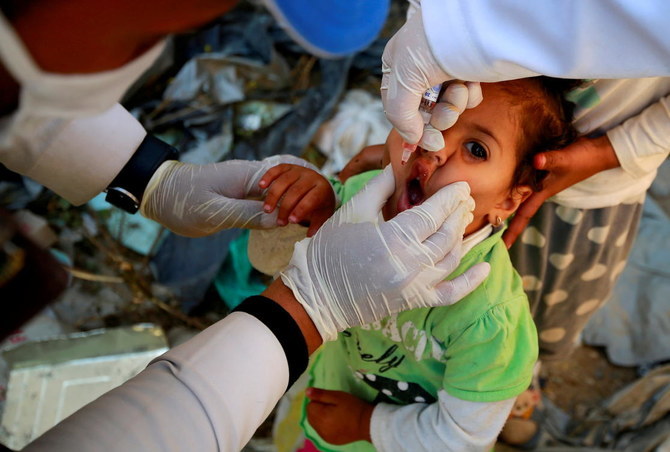
Gavi helps low-income countries buy vaccines to protect against killer diseases. Around one billion children have been immunized as a result of Gavi’s work since 2020.
Gavi Chief Executive Sania Nishtar said the group aims to move more quickly and offer more vaccines. This will include expanding a malaria vaccine roll-out, which began in Cameroon this year, as well as catching up on routine programs for diseases like measles, which were set back by the COVID-19 pandemic.
The global vaccine alliance wants to reach “the highest number of children, covering them against the widest number of diseases ... in the shortest possible time,” Nishtar told Reuters in an interview on Wednesday, ahead of the meeting.
The organization wants to reach 500 million children in the next five years, including 50 million children with the malaria vaccine.
Gavi board documents had suggested the alliance needs up to $11.9 billion for its work from 2026 on. The remaining money will come from leftover COVID-19 financing and some financial instruments the organization has in place, Nishtar said, although she acknowledged it was a very challenging time for global health, with aid budgets stretched worldwide by demands from conflicts to climate change.
“Gavi has never had to make trade-offs,” she said. “On the one hand, there is a wide portfolio of vaccines available. On the other hand, we’re looking at an environment where donors are resource constrained.”
But she said she was cautiously optimistic that the organization would raise the amount needed.
Gavi also plans to further expand its work in the coming years, for example by setting up an mpox vaccine stockpile. It is also likely to add a dengue vaccine to its program as climate change puts more countries at risk of outbreaks. It will also establish a “day zero” $500 million pandemic response fund for quick action on major outbreaks.


![]()

Vaccine group Gavi seeks $9 billion to immunize world’s poorest children
Short Url
https://arab.news/pcdey
Vaccine group Gavi seeks $9 billion to immunize world’s poorest children
- A separately funded $1.2 billion scheme to boost vaccine production in Africa, the African Vaccine Manufacturing Accelerator, also launched
- Gavi helps low-income countries buy vaccines to protect against killer diseases


Latest updates


Recommended


© 2026 SAUDI RESEARCH & PUBLISHING COMPANY, All Rights Reserved And subject to Terms of Use Agreement.