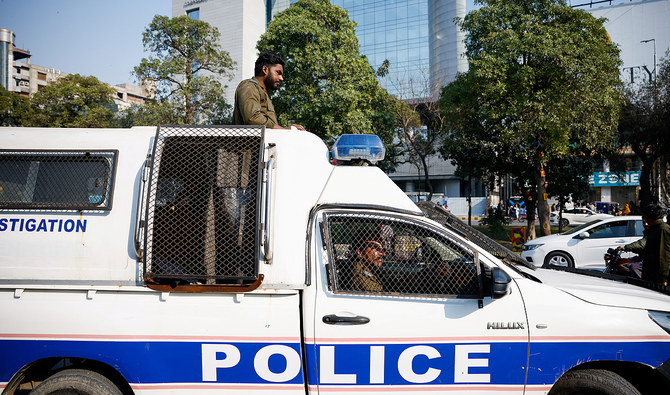
ISLAMABAD: Pakistan’s Punjab government imposed a ban on all kinds of public gatherings throughout the province on Friday after jailed former prime minister Imran Khan’s Pakistan Tehreek-e-Insaf (PTI) party called for nationwide protests to demand his release.
In a video statement earlier this week, PTI leader and former National Assembly speaker Asad Qaiser urged Khan supporters to come out on the streets across the nation on Friday to demand Khan’s release from prison.
The former prime minister has been in jail since August 2023 after he was convicted by a local court on corruption charges. Khan denies the allegations, saying they are politically motivated to keep him and the PTI away from Pakistani politics.
“It has been observed that in view of the prevailing law and order situation and security threats, any gathering/ assembly is likely to provide soft targets to terrorists and miscreants,” a notification issued by the Punjab Home Department said.
“Which not only pose serious security threats but is also likely to cause threat to public at peace and order as well as inconvenience to public at large.”
The notification said the government was imposing Section 144, which empowers the administration to ban any activity in the general interest of the public for a specific time period, across Punjab for a period of seven days.
The notification said assemblies, gatherings, sit-ins, rallies, processions, demonstrations, protests and other such activities have been prohibited across the province effective immediately.
PTI leader Raoof Hasan criticized Punjab government’s “shameful” decision in a post on social media platform X.
“It reflects how mortified they are of the person of @ImranKhanPTI & his vision of an independent & sovereign Pakistan where its people would become the true arbiters of their fate,” Hasan wrote.
Khan’s tensions with the government and Pakistan’s powerful military came to a head on May 9 2023 when angry supporters took to the streets and attacked government and military installations following his brief detention in a land corruption case.
The move sparked a nationwide crackdown launched by the government against Khan’s party which saw several PTI leaders and supporters rounded up in jails. Many Khan aides announced parting ways with him following the crackdown on his party. Pakistan’s military announced it would try those involved in the May 9 violence in military courts.
Khan initially said the protests were a natural reaction by his supporters but later distanced himself from it, blaming Pakistan’s intelligence agencies for instigating the riots. Pakistan’s military and government rubbished his allegations.


![]()

Pakistan bans public gatherings in largest province as ex-PM Khan’s party announces protests
Short Url
https://arab.news/n552h
Pakistan bans public gatherings in largest province as ex-PM Khan’s party announces protests
- Khan’s Pakistan Tehreek-e-Insaf party called for nationwide protests on Friday to demand his release from prison
- Punjab government imposes ban on public gatherings, rallies, protests, sit-ins and demonstrations for seven days
Latest updates


Recommended


© 2026 SAUDI RESEARCH & PUBLISHING COMPANY, All Rights Reserved And subject to Terms of Use Agreement.