

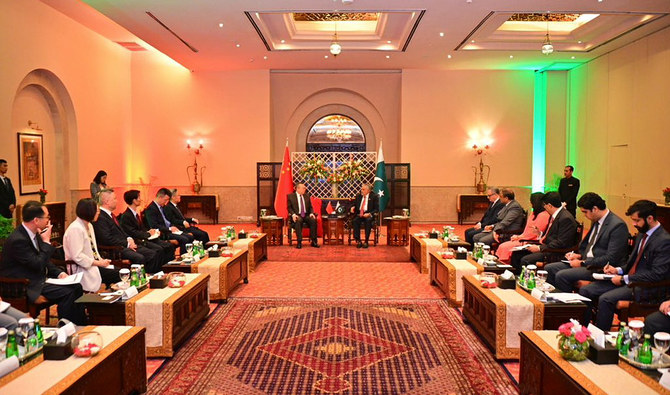

ISLAMABAD: A senior Chinese official on Friday identified Pakistan’s internal security deficit as a major challenge undermining investor confidence while addressing the 3rd Meeting of the Pakistan-China Joint Consultative Mechanism (JCM), which brought together representatives of all major Pakistani political parties.
Liu Jianchao, a prominent Chinese political figure, serves as the Minister of the International Liaison Department of the Communist Party of China, a key position that involves managing relationships with various political organizations around the world.
He arrived in Pakistan on Thursday night to co-chair the JCM meeting, focusing on the progress and future direction of the China-Pakistan Economic Corridor (CPEC).
Liu voiced concern over Pakistan’s internal security situation, as militant groups in the region have targeted Chinese nationals working on various CPEC projects around the country in recent years.
“We need to improve security and the business environment,” he said while addressing the forum. “Security threats are the main hazards to CPEC cooperation. As people often say, confidence is more precious than gold. In case of Pakistan, the primary factor shaking the confidence of Chinese investors is the security situation.”
“Without security, the business environment cannot really improve,” he continued, adding this may undermine development in the longer run.
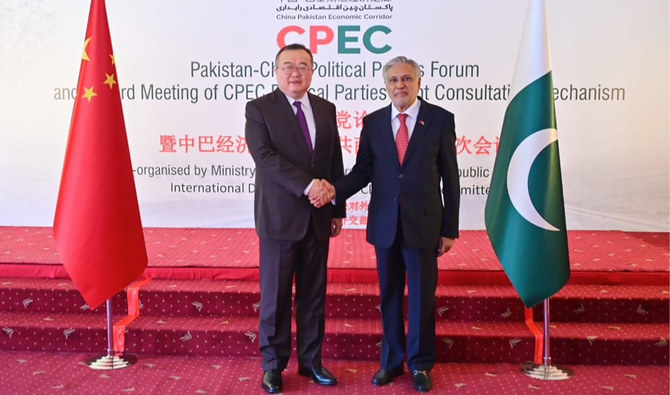
Pakistan's Deputy Prime Minister Ishaq Dar (right) meets a senior Chinese Communist Party leader Liu Jianchao in Islamabad, Pakistan on June 21, 2024. (@ForeignOfficePk/X)
Earlier, Pakistan’s Deputy Prime Minister Ishaq Dar told the meeting the CPEC enjoyed full political support in his country while members of several rival political factions sat around the conference table.
However, the Chinese official also urged Pakistani politicians to work together to deal with the complex challenges facing the country.
“In the turbulent world of rising uncertainties, stability within a country is essential for the development of that country,” he noted. “Faced with complex internal and external challenges, Pakistan is navigating carefully the turbulent rivers and treacherous shores. Only when all political parties in a country join hands to ensure political and social stability can there be sustainable development.”
Liu also mentioned the “Western social media,” saying it had a huge impact on younger generation and was eroding the foundations of China-Pakistan friendship.
He pointed out the strategic nature of relationship between the two countries had yet to translate into mutual understanding and affinity between their people, emphasizing exchange programs on multiple levels to foster greater friendship.
The Chinese official said his country wanted to upgrade CPEC and take it to the next level of development to benefit the people of the region.
He praised Pakistani law enforcement agencies for capturing suspects who have “so badly sabotaged” the security situation in the country.
He also expressed optimism that the two sides would continue to cooperate with each other, adding that Pakistan would remain a major destination for Chinese businesses and investors in the coming years.
JIANCHAO MEETS PM SHARIF
The Chinese official met Prime Minister Shehbaz Sharif in Islamabad to discuss bilateral relations and the ongoing progress of CPEC projects, the Prime Minister’s Office (PMO) said in a statement.
Sharif noted it was a matter of “great satisfaction” that there was complete political consensus in both countries about CPEC.
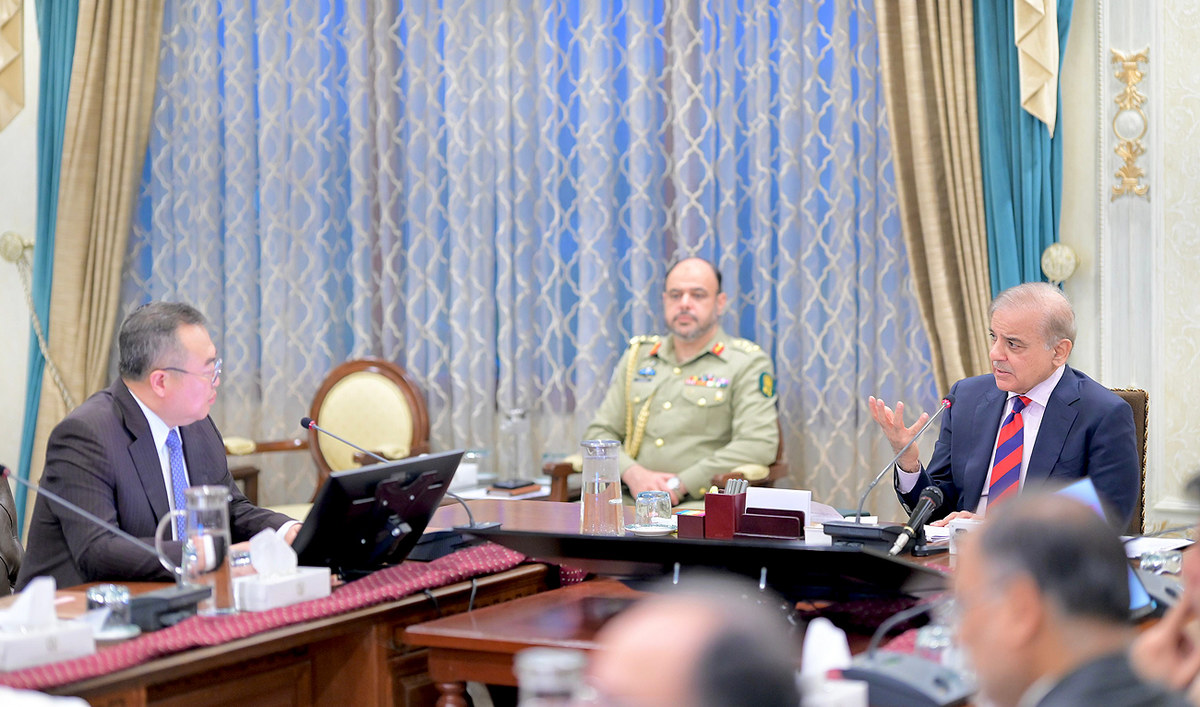
Pakistan Prime Minister Shehbaz Sharif (right) meets a senior Chinese Communist Party leader Liu Jianchao in Islamabad, Pakistan on June 21, 2024. (Photo courtesy: PMO)
“The Prime Minister underlined that early completion and implementation of all ongoing, as well as new CPEC projects, would contribute significantly toward Pakistan’s economic growth and inclusive development,” the PMO said.
Sharif also stressed the importance of enhanced exchanges between Pakistan’s and China’s political parties to share experiences, build capacity in various sectors and adopt people-centered governance structures, the PMO said.
Sharif later hosted a banquet in Jianchao’s honor and for the Chinese delegation, which was also attended by representatives of major Pakistani political parties.
ARMY PLEDGES FULL SUPPORT FOR CPEC
Liu separately met Pakistan’s Army Chief General Syed Asim Munir at the General Headquarters (GHQ) in the eastern city of Rawalpindi, the state-run Associated Press of Pakistan (APP) said.
The two discussed matters of mutual interest, including regional peace and stability, and reviewed progress on CPEC, the state-run media said.
“The COAS reaffirmed Pakistan’s unwavering commitment to the strategic partnership with China and pledged full support for the successful implementation of CPEC, a flagship project of China’s Belt and Road Initiative (BRI),” APP said.
Liu commended Pakistan’s efforts in maintaining regional peace and stability, acknowledging the support of the country’s armed forces in providing security to Chinese nationals and projects in Pakistan, APP reported.
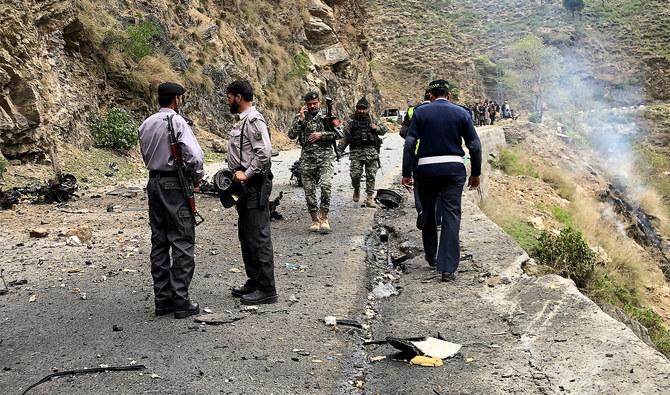
Security personnel inspect the site of a suicide attack near Besham city in the Shangla district of Khyber Pakhtunkhwa province on March 26, 2024. (AFP)
The Chinese official expressed satisfaction regarding the overall progress on CPEC projects, reiterating Beijing’s commitment to its timely completion, the state-run media added.
Liu’s trip to Islamabad comes only days after Prime Minister Shehbaz Sharif concluded his five-day visit to China where he met with the top political leadership along with a number of investors and representatives of top technology companies.
The two countries principally agreed to usher CPEC into its second phase, expanding beyond the initial focus on infrastructure and energy to include broader economic and social development goals.
The new phase emphasizes rural revitalization, agricultural modernization, industrialization and green development, among other things.


