RIYADH: Like every Dul Hijjah, the last month of the Islamic calendar, millions of Muslims from all over the world have gathered in Saudi Arabia to take part in the ritual of Hajj, one of the world’s largest annual congregations.
Though this massive influx of pilgrims poses a challenge to the limits of the infrastructure and social services of the holy cities of Makkah and Madinah, the Kingdom was well prepared to handle this year’s Hajj.
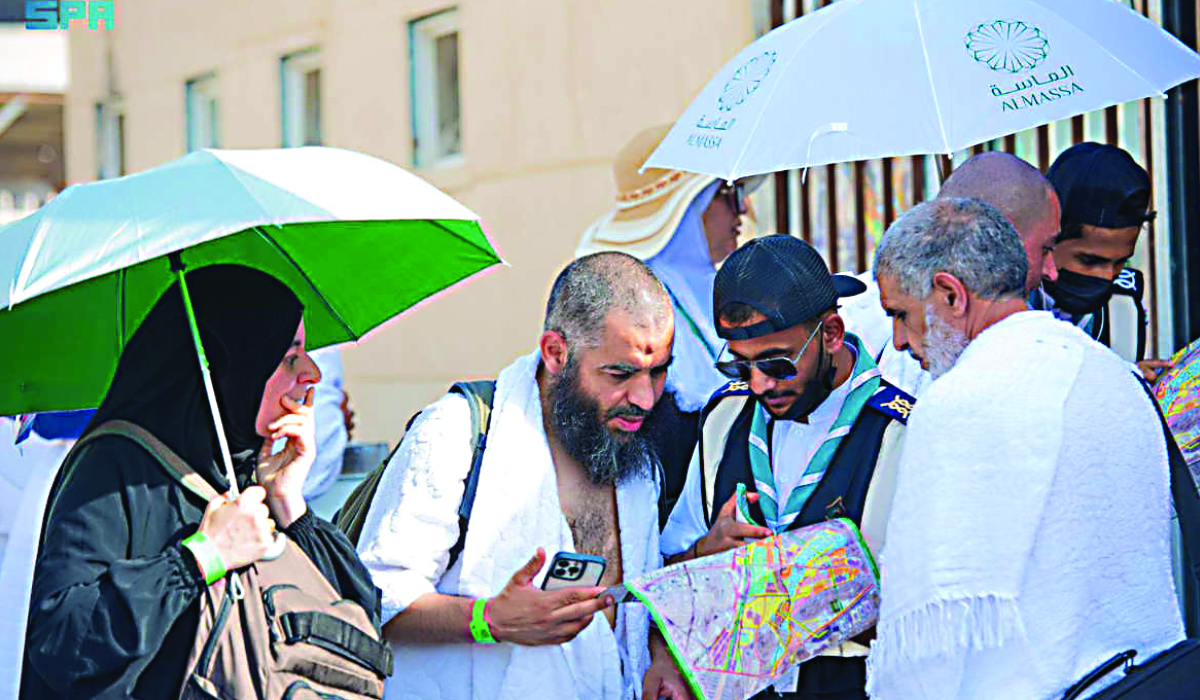
Social workers whose job it is to make the Hajj experience better for visitors, are a staple of the pilgrimage. (SPA)
As Saudi Arabia’s technological capabilities steadily expand, the country’s authorities have taken to using robotic social workers to make this spiritual experience of a lifetime unforgettable.
An estimated 1,845,045 pilgrims, 90 percent of whom came from outside the country, participated in Hajj last year, according to the Saudi General Authority for Statistics.
FASTFACT
Saudi Arabia has extensive experience with the use of tech during Hajj, particularly during the challenging post-COVID-19 seasons.
Social workers whose job it is to help make the Hajj experience better for visitors have long been a staple of the pilgrimage at every relevant location in Makkah and Madinah.
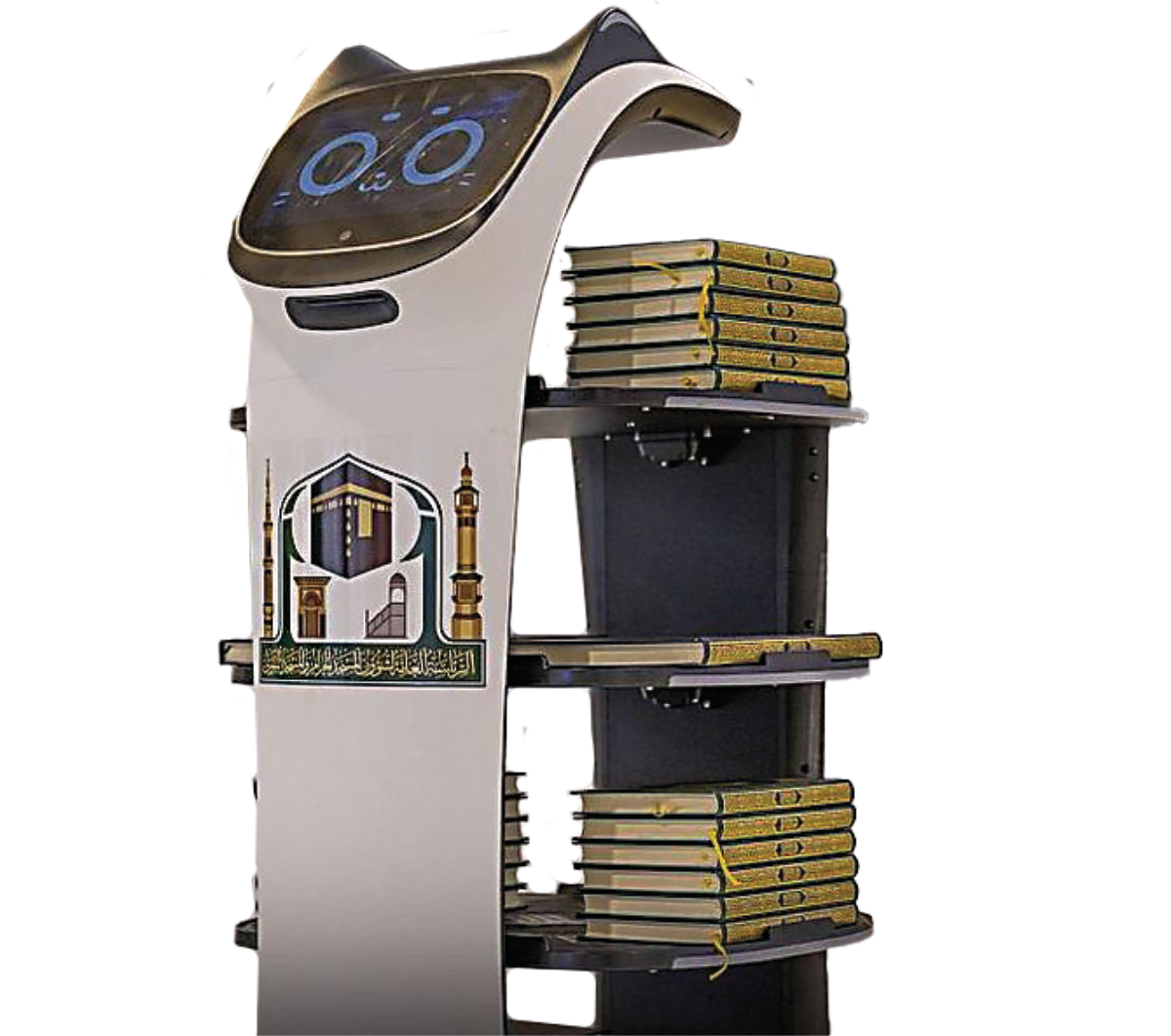
The amount of tech integrated into Hajj has been growing year on year. (SPA)
They play a vital role in supporting and assisting a pilgrim’s needs. However, the sheer scale of the event has some wondering whether artificial intelligence could complement, and even replace, certain social work functions.
Saudi Arabia has extensive experience with the use of technology during Hajj, particularly during the challenging post-COVID-19 seasons. Last year, the Kingdom’s Tourism Authority launched the Nusuk platform to streamline planning and booking for the entire Hajj experience.
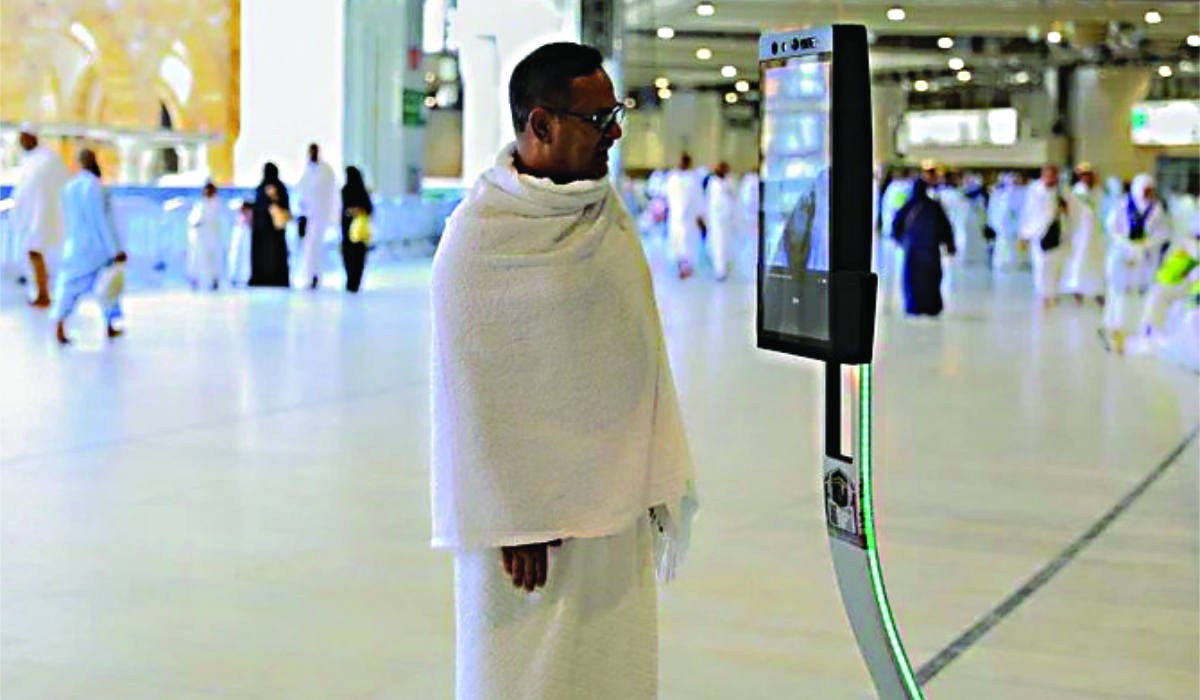
The amount of tech integrated into Hajj has been growing year on year. (SPA)
Smart robots have been used for several years, working in the fields of disinfection and sterilization and the distribution of Zamzam water.
Last year’s Hajj also saw the use of AI-enabled robots which communicated with pilgrims in 11 languages to guide them through the performance of religious rituals and offer assistance. A number of advanced technologies have already been introduced this Hajj season.
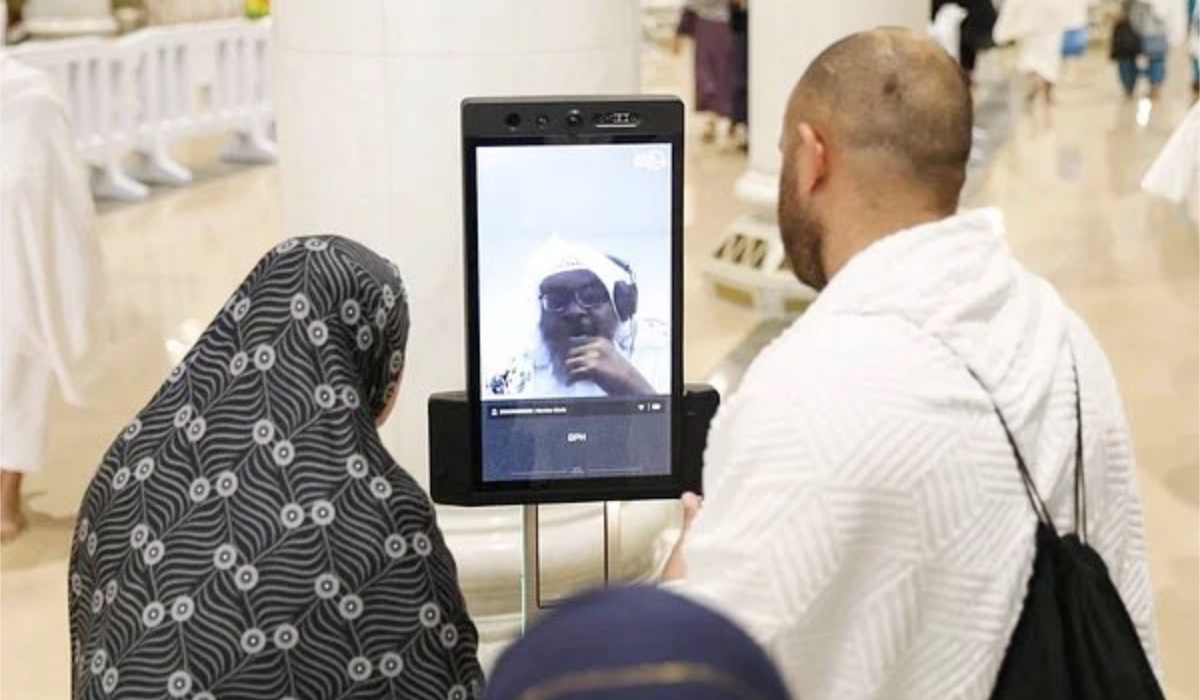
The amount of tech integrated into Hajj has been growing year on year. (SPA)
On June 12, several officials from the Saudi Ministry of Transport and Logistic Services and the General Authority of Civil Aviation witnessed the launch of a self-driving — or, rather, self-flying — aerial taxi service in Makkah.
The Saudi Authority for Data and Artificial Intelligence has also deployed AI technology to improve the entry process for pilgrims, equipping more than a dozen entry points in the country.
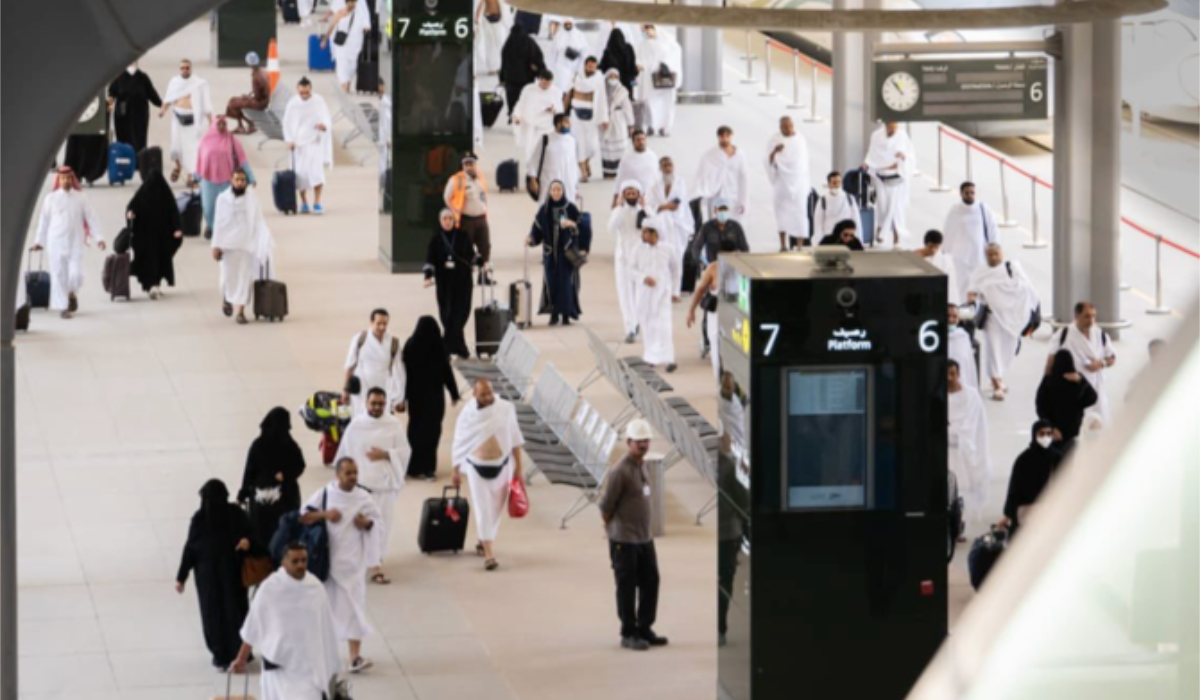
Pilgrims arriving to take part in the ritual of Hajj, one of the world’s largest annual congregations. (File/@haramainrailway)
Drones have been monitoring the flow of pilgrims in Makkah around the clock to ensure a smooth experience, and field monitors wearing augmented reality glasses are overseeing transportation and traffic patterns.
For the elderly and those with disabilities, the new technologies are a welcome improvement. Smart golf carts and electric scooters for those with mobility issues can be reserved by pilgrims; their use has improved the flow of traffic in the holy cities.
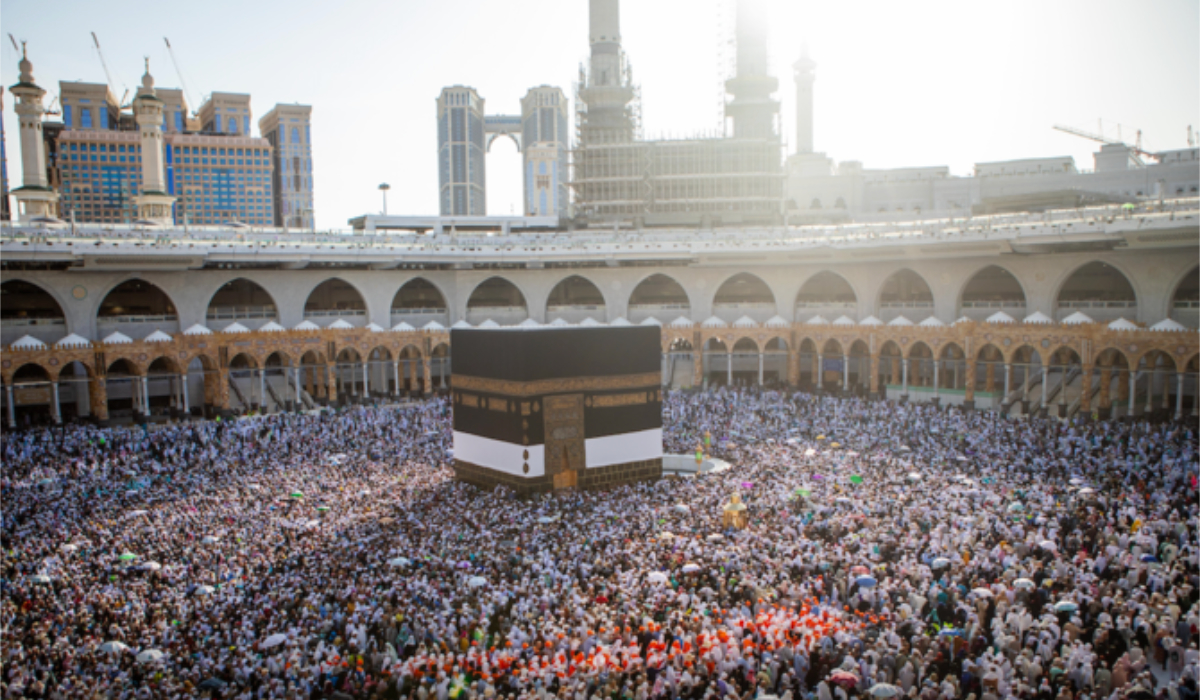
Last year, Saudi Arabia welcomed more than 1.8 million pilgrims — some 90 percent of them from overseas. (@HajMinistry)
Saudi technology to benefit pilgrims has expanded even outside of the typical social services. For instance, this season an elderly Chinese pilgrim received a lifesaving, highly advanced wireless pacemaker at the King Abdullah Medical City in Makkah after experiencing arrhythmia.
AI-powered systems can optimize the scheduling and flow of pilgrims, manage crowd control, and ensure efficient distribution of resources.
With the amount of technology integrated into Hajj growing year after year, some may wonder what is in store for the use of AI during the pilgrimage. As in previous years, the Kingdom has continued to ensure that social services are readily available to all pilgrims.
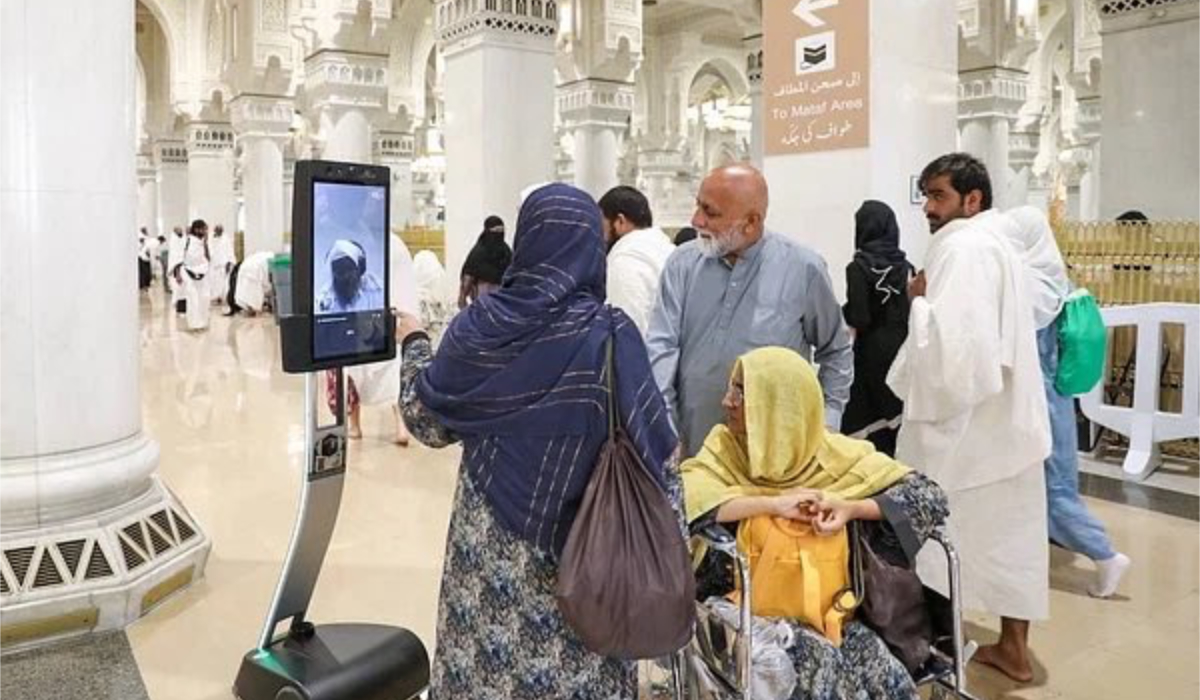
The amount of tech integrated into Hajj has been growing year on year. (SPA)
Saudi Arabia’s Ministry of Human Resources and Social Development announced this year the launch of Ajeer Al-Hajj, a service that enables businesses to hire seasonal workers specifically for the Hajj period.
The service allows facilities working during the Hajj season to cover the number of workers needed and contributes to serving pilgrims.
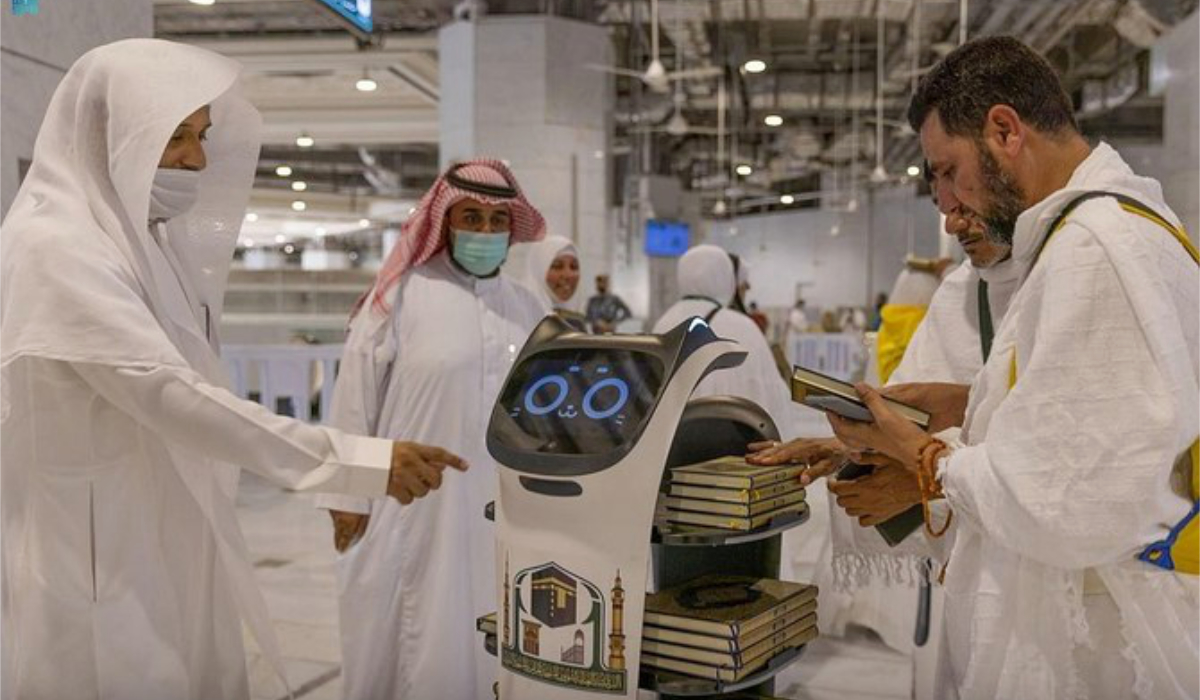
The amount of tech integrated into Hajj has been growing year on year. (SPA)
Social workers are entrusted with a variety of duties including helping pilgrims navigate their religious journey, assisting in emergency help with medical staff such as giving medical and psychological support to people at sites, reuniting separated or lost family members, and guiding pilgrims through crowded places.
These tasks require organization skills, language proficiency, cultural sensitivity, and quick responses to orders — all of which AI has the potential to excel at.
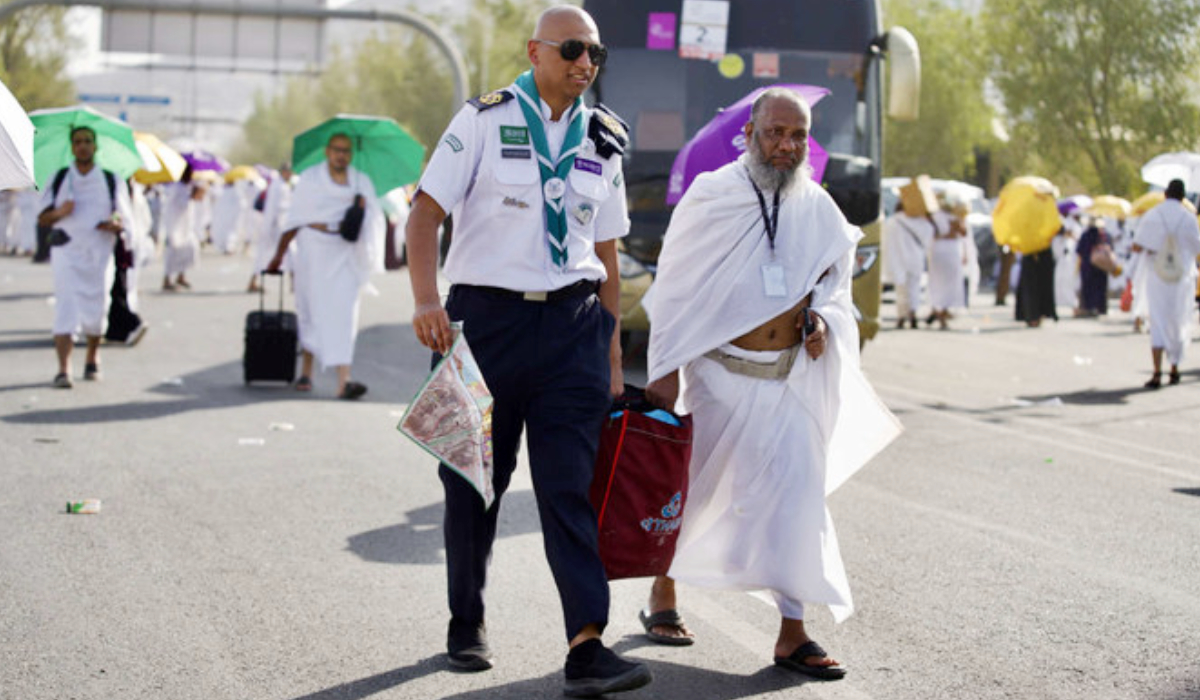
One of the services the Kingdom has been providing for decades for its visitors during this religious holiday is social service. At every location, there are social workers to ensure that pilgrims receive safe and best quality experience during Hajj. (AN photo by Huda Bashatah)
Abeer Alomrani, a Saudi AI consultant, says that while it has the potential to significantly support and enhance the efficiency of operations during Hajj, AI cannot replace human creativity, complex moral judgment and deep cultural sensitivity.
“AI can excel in tasks that require data management and logistical planning. For instance, AI-powered systems can optimize the scheduling and flow of pilgrims, manage crowd control, and ensure efficient distribution of resources,” she said.
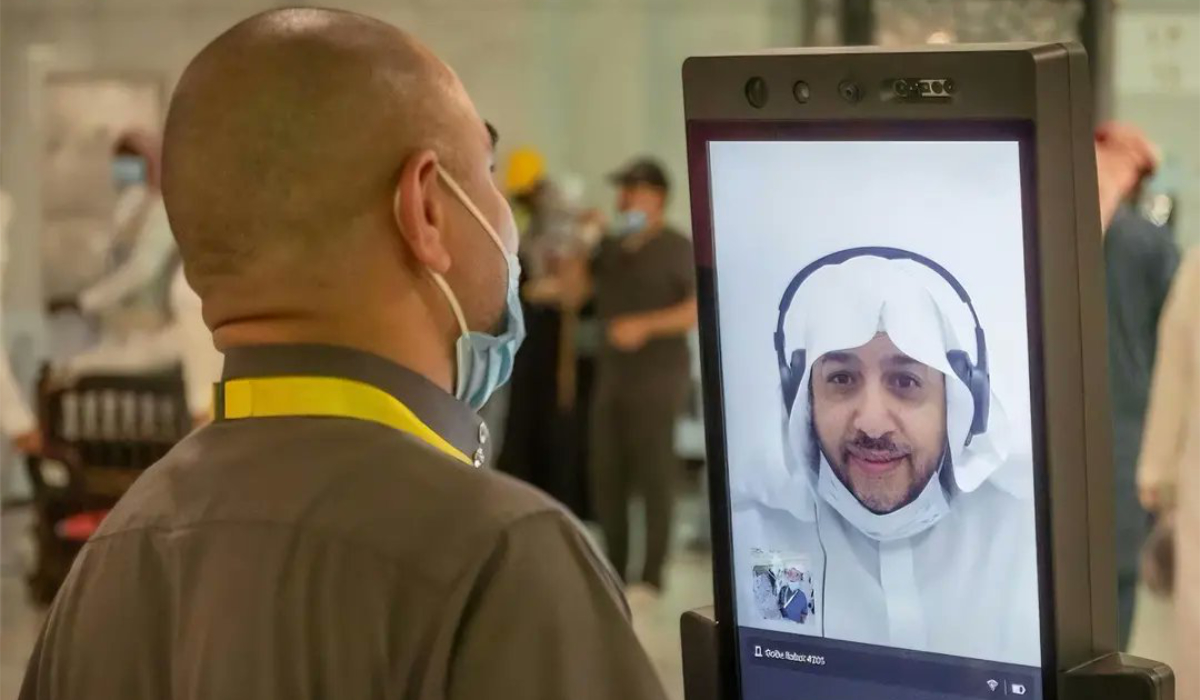
The amount of tech integrated into Hajj has been growing year on year. (SPA)
“These systems can analyze real-time data to adjust plans dynamically, helping to prevent bottlenecks and manage emergency situations efficiently.”
AI and virtual assistants have already been used to help pilgrims with accessing information and assist in locating missing people. Computer vision and natural language processing algorithms could also help with communication to serve pilgrims who may not speak the local language.
“AI-powered translation tools and natural language processing systems are highly adept at breaking down language barriers. These tools can provide real-time translation services to assist pilgrims from diverse linguistic backgrounds, ensuring that communication is clear and effective,” Alomrani said.
However, there have been concerns regarding AI and whether it can compare with humans in terms of creating genuine experiences for pilgrims. After all, computers cannot offer the empathy or emotional support that human social workers can provide.
Dr. Amal Salamah, a family medicine consultant, explained to Arab News the necessity of human interactions to solve health problems between patients and doctors.
“Some medical rules cannot be replaced, especially the ones that have direct contact with patients,” she said. “Empathy can’t be provided by robots. In our career, one plus one does not necessarily equal two. You might need to provide more. We always need to work by equity.”
Others believe that a hybrid approach, where AI can perform routine tasks and process large amounts of data while social workers focus on complex duties that require emotional intelligence, could be a promising way forward for the future of Hajj.
Alomrani strongly supports the use of a hybrid model and describes it as “the best approach.”
Through a hybrid method, social workers would feel comfortable and would have the time to “focus on the personal, empathetic interactions and decision-making that require a human touch,” she said.
“This synergy could ensure that the spiritual and logistical elements of Hajj are both honored and efficiently managed.”
As technology advances, AI will undoubtedly play a larger role in social services during Hajj season in the future.
Special care is needed to ensure that the new technologies being introduced operate with suitable cultural and religious context for the religious ritual.
While AI may never be able to replace human workers, it can contribute to Saudi Arabia’s ultimate goal of improving the quality of services and offering exceptional experiences to the millions of Hajj pilgrims every year.