



MAKKAH: Hajj pilgrims, hailing from various corners of the globe, embarked on a profound journey from Muzdalifah to Jamarat on Sunday, culminating in a joyous celebration of Eid Al-Adha.
The diversity of languages, cultures, and backgrounds present at Jamarat showcased the universal appeal of Islam and the importance of coming together in shared faith.
Eid Al-Adha, or the Feast of Sacrifice in English, has its roots in the story of the Prophet Ibrahim, who God instructed in a dream to sacrifice his son, Ismail, as a test of faith.
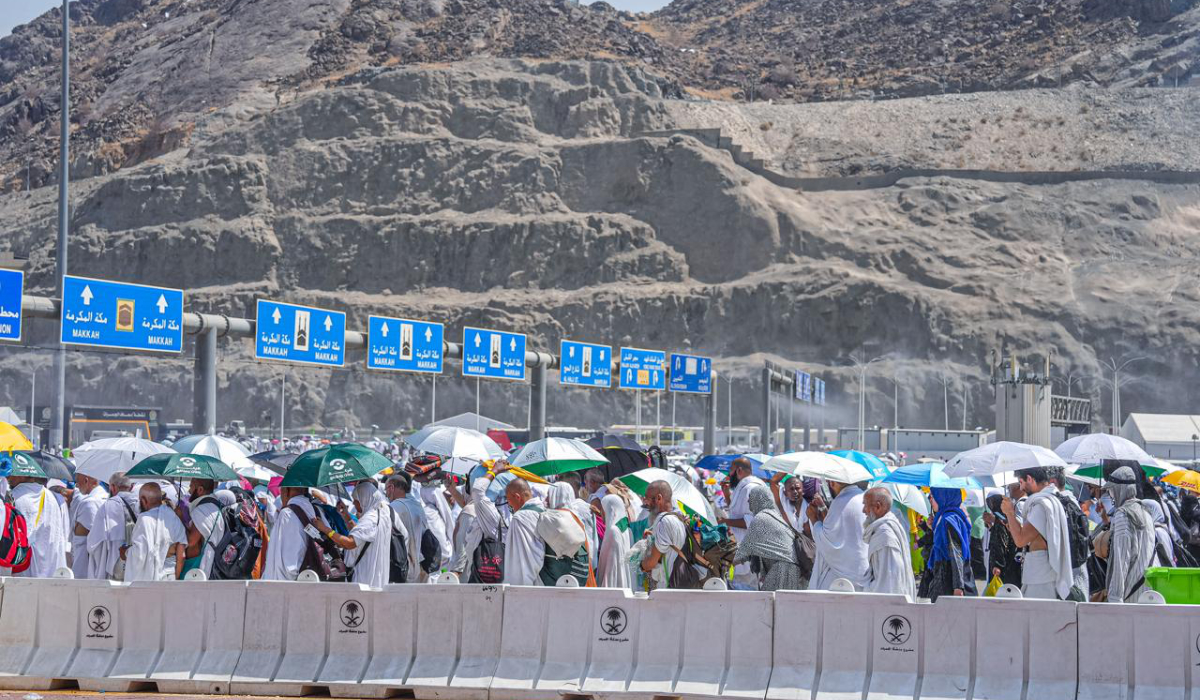
The diversity of languages, cultures, and backgrounds present at Jamarat showcase the universal appeal of Islam. (AN photo by Huda Bashatah)
As he was about to make the sacrifice, God intervened and sent the Angel Gabriel with a ram to be sacrificed instead.
Devoted individuals, who traversed vast distances to partake in the sacred pilgrimage, unite in shared reverence and harmony to mark the significant occasion.
Abdullah, a pilgrim from Egypt, told Arab News: “Praise be to God, this is our first hajj and thankfully it went smoothly.”
Abdullah said that he and his mother went to Arafat, and from Arafat to Muzdalifah, then on to Mina. “We came to Jamarat here, and thank God everything went well.
“Honestly, it is an indescribable feeling for someone experiencing it for the first time. It is a blessing from God that he brought us here, and may he grant us this opportunity every year,” he said.
As his son was cutting his hair, Suleiman Ali, a 70-year-old pilgrim from Indonesia, told Arab News that he is blessed to be spending Eid Al-Adha in Makkah with his family.
“The first time I performed Hajj was in 1993, and I never thought God would bless me with another chance but with my family this time.”
Asma, a pilgrim from India, told Arab News it is her first time in Saudi Arabia and performing Hajj.
“I am happy to be here with my parents, my husband, my brother-in-law, and his wife,” she said.
“It is a very emotional journey for us because we always dreamed of celebrating Eid Al-Adha here.”
Asma said that they still have not performed their animal sacrifice but they are excited to do so.
The annual pilgrimage to Makkah and the holy sites brings together people from all walks of life, breaking down barriers and fostering a sense of unity among believers.
The diversity and unity among pilgrims serve as a poignant reminder of the universal bond that transcends geographical borders and cultural differences.


