

Mashaer metro system transports thousands of pilgrims from Mina to Arafat

1 / 6
2 / 6
3 / 6
4 / 6
5 / 6
6 / 6
Short Url
Updated 16 June 2024
Follow

Mashaer metro system transports thousands of pilgrims from Mina to Arafat

  • There are 17 trains in the Mashaer metro fleet, each capable of carrying 3,000 passengers

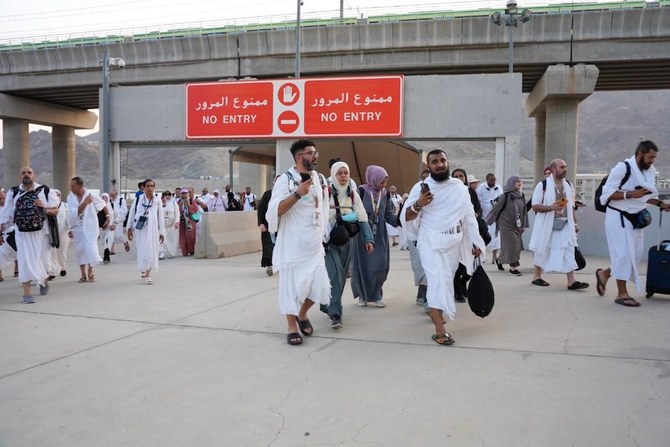
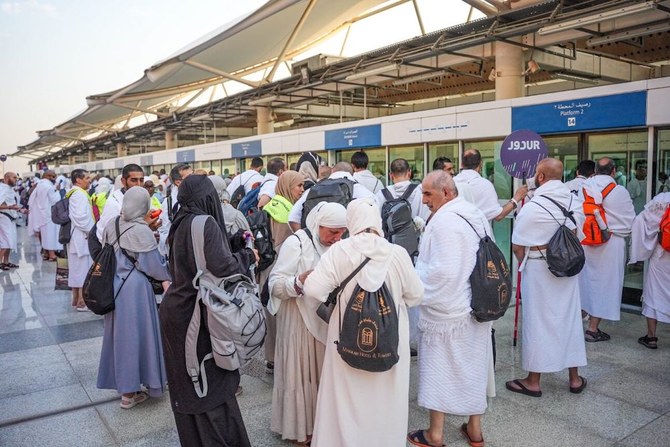
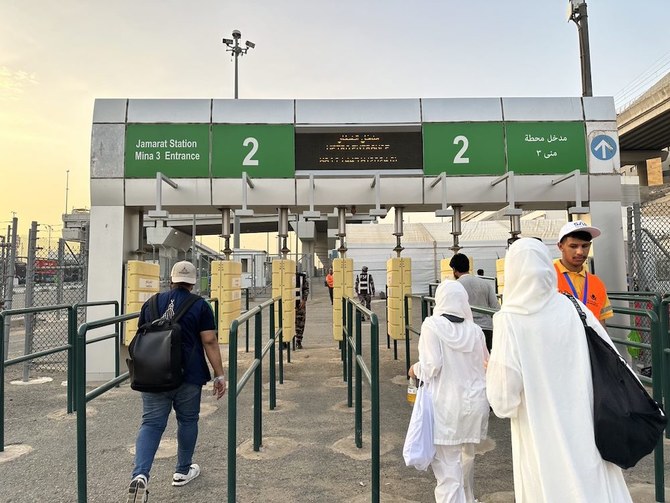
MAKKAH: Hundreds of thousands of pilgrims used the Mashaer metro system to travel from Mina to Arafat on Saturday, as they began the most important day of the Hajj pilgrimage.

The metro system consists of nine stations located across the holy sites, connected by an 18-kilometer double-track railway, and is capable of accommodating 72,000 passengers per hour in one direction. The journey from Mina to Arafat takes just 20 minutes, with the train traveling at 80 km per hour, according to a report by the Saudi Press Agency.

There are 17 trains in the Mashaer metro fleet, each capable of carrying 3,000 passengers. The eco-friendly electric trains significantly reduce traffic congestion and carbon emissions by replacing approximately 50,000 passenger buses during the Hajj season.

The trains are managed the Facilities Security Forces, under the supervision of the Ministry of Interior.

Khalil Hasan, an Egyptian pilgrim, said he is performing Hajj for the second time.

“The first time I performed Hajj was nearly 30 years back when I was a schoolteacher in Yanbu. Everything here has unbelievably changed, including the Jamarat Bridge.“Seeing the metro travelling between stations in the holy sites was a wonderful scene that added great glamor to the place and substantial enhancement to the many services provided by the kingdom,” Hasan said.

Previously, he added, he could not have imagined that a pilgrim would be able to reach Arafat from Mina within minutes.

Hasan’s lifelong friend, AbdulTawab, who is accompanying him on the spiritual journey, said that it is his first Hajj experience, and he was amazed by the metro service.

“It is wonderful, and I am grateful to the Kingdom for this metro that has facilitated the movement of pilgrims, especially the elderly, making it easy and comfortable to move from one place to another within the holy places,” he said.


Prince Sattam University to showcase innovative solutions, emerging technologies at World Defense Show

Updated 07 February 2026
Follow

Prince Sattam University to showcase innovative solutions, emerging technologies at World Defense Show

  • The university’s participation is expected to enhance integration between scientific research and defense industries

RIYADH: Prince Sattam bin Abdulaziz University is to take part in the World Defense Show, organized by the General Authority for Military Industries, which takes place from Feb. 8-12 at the Riyadh International Convention and Exhibition Center.

The university’s participation in this international event marks a strategic step aimed at strengthening the role of Saudi academic institutions in the national research and development ecosystem.

The university is capable of achieving that by highlighting its applied research outputs and emerging technologies in the fields of defense and security in a way that enhances the efficiency of national industries and provides innovative, actionable solutions to address security and technological challenges.

The university will showcase at its exhibition pavilion a range of distinguished innovations developed within its premises, including artificial intelligence and robotics technologies, advanced control and monitoring systems, and intelligent surveillance systems.

The achievements reflect the university’s commitment to leveraging scientific research to serve vital national sectors, aligning with the objectives of Saudi Vision 2030 in developing national human capabilities and supporting the transition to a knowledge-based and innovation-driven national economy.

The university’s participation is expected to enhance integration between scientific research and defense industries, open new channels of collaboration with global and local institutions and companies, attract attention to the applied research produced by the university, and encourage researchers and students to engage in major national projects.