ISLAMABAD: Pakistan’s ruling party this week vowed it would win over the support of its major coalition partner, the Pakistan Peoples Party (PPP) on the federal budget before voting on it takes place, despite differences between the two over the key document.
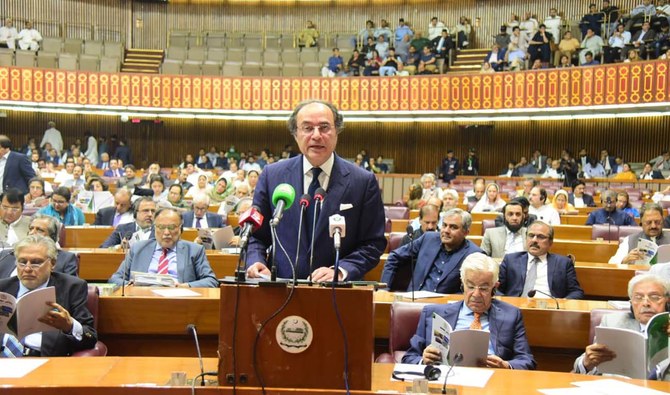
Finance Minister Muhammad Aurangzeb unveiled the much-awaited Rs18.877 trillion ($67.76 billion) federal budget for the fiscal year 2024-25 on Wednesday in parliament. The tax-heavy budget is expected to play a pivotal role in Pakistan’s negotiations with the International Monetary Fund (IMF) for a fresh financial assistance program with the global lender.
The PPP is a major coalition ally of Prime Minister Shehbaz Sharif’s Pakistan Muslim League-Nawaz (PML-N) party. A day before the budget was presented, the PPP accused the government of ignoring its recommendations for the annual document. The party initially announced it would boycott the budget session but later, a handful of its leaders attended it.
“We are a major coalition partner of the government but they completely ignored us in the pre-budget consultations and meetings,” PPP lawmaker Sehar Kamran told Arab News.
“Shehbaz Sharif’s government wants to use us as a rubber stamp in parliament to pass the budget but we won’t do it if our reservations are not addressed.”
Kamran said the government has proposed a tax-heavy budget without consulting the PPP, adding that there were also disagreements between the two parties over the distribution of development funds and various projects related to Pakistan’s provinces.
The PPP, which voted Sharif into power after the contentious national election in February, is not part of the federal government but has its government in Pakistan’s southern Sindh province. Sharif’s government needs PPP’s votes to pass the budget in parliament.
“If the government needs our votes in parliament to pass the budget, then it will have to listen to us first to address our grievances,” she said.
Aqeel Malik, a government spokesperson, admitted the “real issues” between the PPP and the PML-N were related to the Public Sector Development Programme (PSDP) for provinces.
However, he said the government cannot take all of the PPP’s suggestions into consideration regarding provinces where the party was not in government, such as Khyber Pakhtunkhwa (KP) and Punjab.
“In Sindh, we have consulted them there and there is absolutely no issue with regards to this,” Malik told Arab News, emphasizing that the government held meetings with the PPP leadership before finalizing the budget.
He said this was the reason why a few PPP leaders had attended the budget session symbolically.
“We have had meaningful consultation with them,” Malik explained. “We have taken them on board and we consulted them.”
The government is committed to resolving the PPP’s issues regarding the budget, Malik said, hoping the party would “come around” once voting takes place.
“If there is any tweaking in the budget with regards to their suggestions or recommendations, we will certainly consider them favorably and will try to include them before the voting takes place,” he said.
PM Sharif’s coordinator, Rana Ihsan Afzal, confirmed the government was ready to address the PPP’s reservations on the budget before it is voted upon.
“We are engaging with them [the PPP] thoroughly,” Afzal told Arab News.
As per media reports, the general debate on the budget will begin on June 20 while voting on it is expected to take place on June 24.


![]()

Amid differences, Pakistan’s ruling party vows to win major ally’s support on budget
Short Url
https://arab.news/23gr6
Amid differences, Pakistan’s ruling party vows to win major ally’s support on budget
- Pakistan Peoples Party, a key government ally, has accused ruling party of ignoring its budget recommendations
- Will consider PPP’s recommendations “favorably” and try to include them in the budget before voting, says official
Latest updates



Recommended


© 2026 SAUDI RESEARCH & PUBLISHING COMPANY, All Rights Reserved And subject to Terms of Use Agreement.