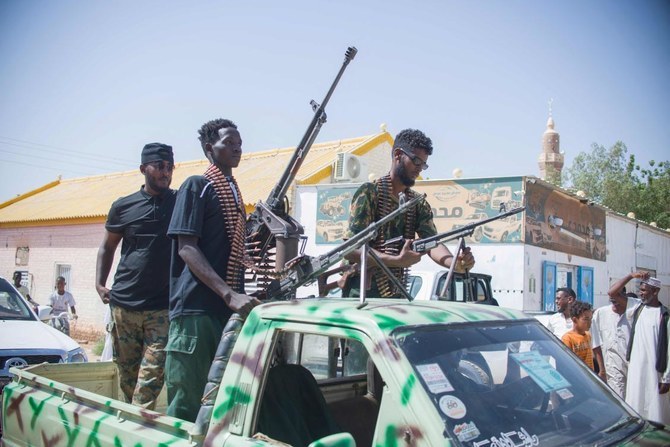
UNITED NATIONS: Sudanese paramilitary forces are using the Central African Republic as a “supply chain,” including for recruitment of fighters, according to a report published Friday by UN experts, who are concerned about a “spillover effect.”
Sudan descended into war in April 2023 when the generals in charge of the army and the paramilitary Rapid Support Forces (RSF) took up arms against each other in a fight for control, rejecting a plan to integrate.
“The spillover effect of the conflict in the Sudan has significantly affected the situation in the Central African Republic,” said the expert committee, formed by the UN Security Council to monitor sanctions on Central Africa.
They highlighted in particular the humanitarian situation, as the country sees an influx of millions of Sudanese refugees, as well as incursions by the two warring Sudanese parties — plus air raids by the Sudanese army in and around the Umm Dafog border post, where the RSF is present.
This “continues to constitute a security threat to civilians and an impediment to humanitarian activities in the area,” the experts said.
They insist the paramilitaries are also using the Am Dafok area in the Central African Republic on the border “as a key logistical hub.”
Because the RSF can “move between the two countries easily through a long-standing network” they have been able to recruit “from among armed groups in the Central African Republic.”
“Opposition armed groups from the Central African Republic have been reported to have actively recruited for, and sent members of their own groups to fight in, the Sudan under RSF,” the experts said.
They noted in particular fighters in Sudan since as early as August 2023 from the Central African rebel group Popular Front for the Rebirth of Central Africa (FPRC).
The experts said they are aware that this armed group and others “are still able to cross between the Sudan and the Central African Republic at will and use Sudanese territory to launch attacks.”
The experts thus called on Central African authorities to “counteract the surge in arms trafficking from neighboring countries, particularly given the current conflict situation in the Sudan.”
They also asked the leaders to combat “the infiltration of foreign fighters into the Central African Republic, which poses a significant long-term threat to the region.”


![]()

UN experts say Sudan paramilitaries recruiting in Central Africa
Short Url
https://arab.news/cdhpt
UN experts say Sudan paramilitaries recruiting in Central Africa
- “The spillover effect of the conflict in the Sudan has significantly affected the situation in the Central African Republic,” said the expert committee
- This “continues to constitute a security threat to civilians and an impediment to humanitarian activities in the area“


Latest updates


© 2026 SAUDI RESEARCH & PUBLISHING COMPANY, All Rights Reserved And subject to Terms of Use Agreement.