

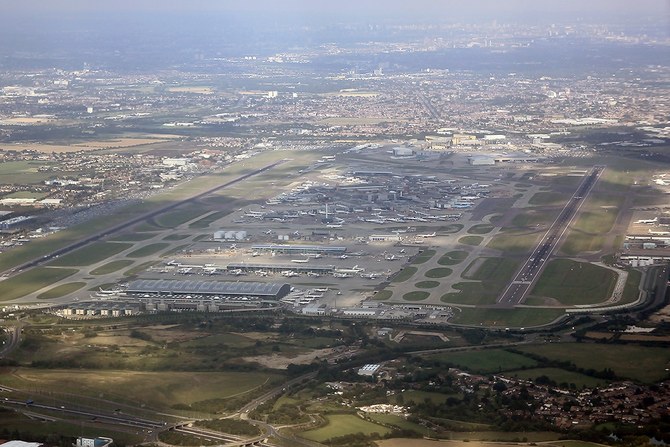

LONDON: Saudi Arabia’s sovereign wealth fund and a French private equity group will acquire a 38 percent stake in Britain’s busiest airport, Heathrow, officials announced on Friday.
Dutch-based transport company Ferrovial SE said the Public Investment Fund and Ardian had made a revised offer to acquire shares representing 37.62 percent of the share capital of FGP Topco, the parent company of Heathrow Airport Holdings Ltd, for more than £3.2 million ($4.1 million).
Under the new agreement, Ferrovial, which operates in more than 15 countries, will remain as a shareholder with shares representing 5.25 percent of the issued share capital of FGP Topco.
Following the sale, the Topco shareholders and Ferrovial will together hold shares “representing 10 percent of the issued share capital,” while PIF and Ardian will buy 22.6 percent and 15 percent respectively of FGP Topco through separate vehicles, Ferrovial said.
“The parties have been working toward satisfaction of the condition for the sale of the Tagged Shares to be sold alongside Ferrovial’s shares by exploring different options to satisfy the same,” the statement added.
The deal remains subject to regulators’ approval, Ferrovial said.
In November, Ferrovial had said it was planning to offload its stake, with PIF taking 10 percent and Ardian taking 15 percent, but the deal has been amended to allow FGP Topco shareholders to sell their shares on the same terms under so-called “tag-along rights.”
“Ardian is pleased to have worked closely with the parties to find this revised agreement and reiterates its strong commitment to investing in the UK,” the French company said in a separate statement.
The private investment house, which manages or advises $166 billion of assets on behalf of more than 1,600 clients globally, added that it “actively supports its assets to accelerate their transformation by leveraging data and new technologies to reduce emissions, creating new, more sustainable revenue sources, becoming more independent and resilient to external shocks, and improving their impact on both local and global environments.”


