

Pakistan unlikely to buy spot LNG in summer despite simmering heat

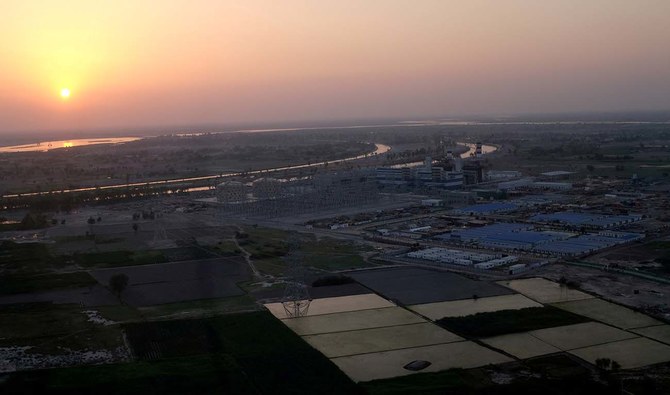
An aerial view of the Haveli Bahadur Shah LNG power plant in Jhang, Pakistan July 7, 2017. (Reuters/File)
Short Url
Updated 12 June 2024
Follow

Pakistan unlikely to buy spot LNG in summer despite simmering heat

  • Pakistan unlikely to buy LNG cargoes until November due to oversupply, high prices
  • Countries seek more LNG cargoes due to extreme heat, driving spot prices to high levels

KARACHI: Pakistan is unlikely to buy liquefied natural gas (LNG) cargoes on the spot market until at least the beginning of winter in November due to oversupply and high prices, its petroleum minister told Reuters.

Extreme temperatures across Asia have pushed countries to seek more cargoes of LNG to address higher power demand, driving spot prices to their highest since mid-December. Asia spot LNG last traded at $12.00 per million British thermal units (mmBtu) on Friday.

However, LNG demand in the second largest South Asian LNG buyer was “subordinate to supplies,” the minister told Reuters, despite heatwaves baking the country of 300 million people with temperatures surging to a near-record.

“The question of getting more LNG when we can’t sell the amount of LNG that we already are obtaining from our long-term contracts, it does not apply,” Musadik Masood Malik, Pakistan’s petroleum minister, told Reuters in an interview.

Annual power use in Pakistan, which gets over a third of its electricity from natural gas, is expected to fall consecutively for the first time in 16 years, due to higher tariffs curbing household consumption.

Poor and middle-class households are still feeling the impact of the International Monetary Fund’s (IMF) bailout of Pakistan last year, which contributed to higher retail prices. A series of power tariff hikes over 12 months was a key part of the IMF program which ended in April.

Industrial demand has also remained tepid due to a cloudy economic outlook.

Pakistan, which last bought a spot LNG cargo in late 2023, canceled its spot LNG tender for delivery in January. Malik attributed the cancelation to oversupply, adding that there were “not a lot of customers” at current LNG spot prices.

Malik said Pakistan was keen to adopt more renewable energy to cut its import bill and exposure to geopolitical shocks. The country suffered widespread power outages due to its inability to buy expensive LNG after prices surged due to Russia’s invasion of Ukraine.

“Any country that is importing $15-18 billion of fuel, how can it be sustainable when the total exports are south of $30 billion? So we have to move away from the imported elements such as LNG,” he said.

Pakistan was also trying to access less expensive natural gas by building a pipeline with Iran, but was wary of sanctions, he said.

“We basically are trying to work out the solution whereby we can have access to less expensive gas, but in a manner which does not invoke any sanctions on Pakistan. It all depends on legal interpretations,” he said.

“From our perspective, we don’t want to get into litigation and we don’t want to get sanctioned.” 


Pakistan regulator amends law to facilitate capital raising by listed companies

Updated 19 January 2026
Follow

Pakistan regulator amends law to facilitate capital raising by listed companies

  • The amendments address challenges faced by listed companies when raising further capital from existing shareholders through a rights issue
  • Previously, listed companies were prohibited from announcing a rights issue if the company, officials or shareholders had any overdue amounts

KARACHI: The Securities and Exchange Commission of Pakistan (SECP) has notified amendments to the Companies (Further Issue of Shares) Regulations 2020 to facilitate capital raising by listed companies while maintaining adequate disclosure requirements for investors, it announced on Monday,

The amendments address challenges faced by listed companies when raising further capital from existing shareholders through a rights issue. Previously, listed companies were prohibited from announcing a rights issue if the company, its sponsors, promoters, substantial shareholders, or directors had any overdue amounts or defaults appearing in their Credit Information Bureau (CIB) report.

This restriction constrained financially stressed yet viable companies from raising capital, even in circumstances where existing shareholders were willing to support revival, restructuring, or continuation of operations, according to the SECP.

“Under the amended framework, the requirement for a clean CIB report will not apply if the relevant persons provide a No Objection Certificate (NOC) regarding the proposed rights issue from the concerned financial institution(s),” the regulator said.

The notification of the amendments follows a consultative process in which the SECP sought feedback from market stakeholders, including listed companies, issue consultants, professional bodies, industry associations, law firms, and capital market institutions.

The amendments are expected to enhance market confidence, improve access to capital for listed companies, and strengthen transparency within the rights issue framework, according to the SECP.

“To ensure transparency and protect investors’ interests, companies in such cases must make comprehensive disclosures in the rights offer document,” the regulator said.

“These disclosures must include details of any defaults or overdue amounts, ongoing recovery proceedings, and the status of any debt restructuring.”

The revised regulations strike an “appropriate balance” between facilitating corporate rehabilitation and enabling investors to make informed investment decisions, the SECP added.