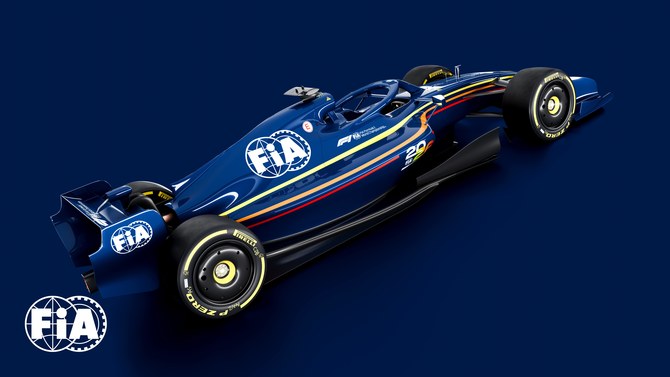
CANADA: The Federation Internationale de l’Automobile showcased on Friday a more competitive, safer and sustainable future for the F1 World Championship with the presentation of the technical regulations that will define the sport from 2026 onwards.
“Today, the FIA is defining a hugely exciting future for the pinnacle of motorsport with the launch of a comprehensive new set of regulations for the 2026 FIA Formula One World Championship and beyond,” FIA President Mohammed Ben Sulayem said.
Developed in consultation with the FIA Formula 1 technical working groups and formulated in collaboration with F1, the sport’s 10 teams, original equipment manufacturers and power unit manufacturers, the regulations were revealed in Montreal ahead of this weekend’s 2024 FIA Formula 1 Canadian Grand Prix.
The 2026 regulations are set to be officially ratified by the World Motor Sport Council on June 28, 2024.
“Following the publication of 2026 power unit regulations two years ago we have taken the opportunity to redefine the chassis regulations to match the energy requirement of the new power units,” Ben Sulayem said.
“Collaborating with our partners at Formula 1 and with the assistance of the sport’s 10 teams and all our stakeholders, this represents a unique revision that will ensure our premier championship is even more relevant to what is happening in the world,” he said.
The power unit regulations had resulted in a record number of PU manufacturers committing to the sport, according to the FIA president.
“And now, in tandem with chassis regulations that provide for lighter, more agile cars featuring innovative aerodynamic solutions, we have created a set of regulations designed to not only improve racing but also to make the championship even more attractive to PU manufacturers, OEMs and existing competitors.
“The key features of the 2026 F1 Regulations are advanced, sustainability technology and safety. Our aim, together with Formula 1, was to produce a car that was right for the future of the sport’s elite category. We believe we have achieved that goal,” he said.


![]()

FIA showcases future-focused F1 regulations for 2026 and beyond
Short Url
https://arab.news/gja4a
FIA showcases future-focused F1 regulations for 2026 and beyond
- “Today, the FIA is defining a hugely exciting future for the pinnacle of motorsport,” FIA President Mohammed Ben Sulayem said
- The 2026 regulations are set to be officially ratified by the World Motor Sport Council on June 28


Latest updates


© 2026 SAUDI RESEARCH & PUBLISHING COMPANY, All Rights Reserved And subject to Terms of Use Agreement.