SAN FRANCISCO: Apple is expected to make the case next week that it is not being left behind as tech world rivals blaze ahead with artificial intelligence.
AI and perhaps even a partnership with ChatGPT-maker OpenAI will likely be a driving theme at the Monday kickoff of Apple’s annual WWDC developers’ conference in Silicon Valley, according to analysts.
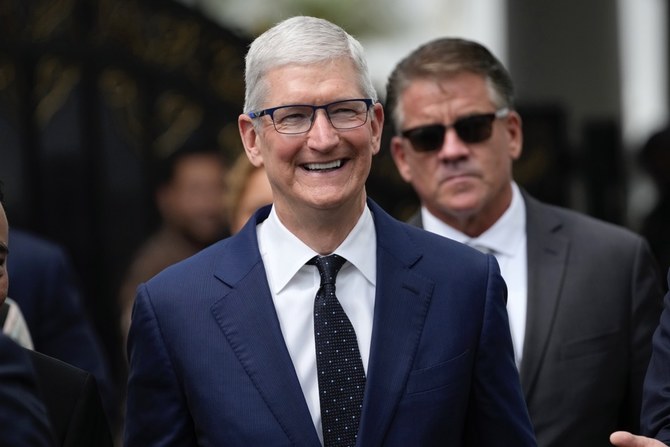
The conference is an annual jamboree for developers who create apps and software for Apple’s ecosystem, and CEO Tim Cook will work hard to persuade them that the company is a key AI player as rivals Microsoft and Google roll out innovations in rapid-fire succession.
While Apple has been quietly including AI features in its iPhones, iPads, and Mac computers for years, it has yet to solidify its overall strategy or embrace ChatGPT-style generative AI that took the world by storm in late 2022.
Apple’s share price has been on a roller coaster ride since the spark of the AI revolution, but the company’s Wall Street believers see next week’s announcements as the beginning of a new chapter for the iPhone-maker.
“WWDC represents the most important event for Apple in over a decade as the pressure to bring a generative AI stack of technology for developers and consumers is front and center,” Wedbush Equities senior analyst Daniel Ives told AFP.
At the heart of the announcements will almost certainly be an update to Apple’s iPhone operating system that is expected to see AI given a central role, according to Ives.
He also predicts a “flagship” OpenAI partnership involving an exclusive chatbot, which could be part of an upgrade to the much-derided virtual assistant Siri.
Since Apple makes most of its money from selling iPhones and other hardware, AI integrations will likely focus on its devices and services working more seamlessly together, said Creative Strategies analyst Carolina Milanesi.
“At the end of the day for Apple, it is about getting people to upgrade their iPhone,” Milanesi said.
“We will see if Apple gives them a compelling reason to do that.”
Apple’s rival Microsoft has “thrown down the gauntlet” by injecting generative AI features into Windows-powered computers to challenge MacBook laptops, according to Techsponential analyst Avi Greengart.
“The timing is critical for Apple,” said Emarketer senior analyst Gadjo Sevilla.
Announcements at WWDC will be a “litmus test” for Apple’s ability to integrate ChatGPT-like generative AI into all its devices and services, he said.
“Any misstep by Apple at this juncture could see it lose its place as a technology leader, especially as it is now sandwiched between two AI giants with actual products and release roadmaps that go well into the next two years.”
Early this year, Apple lost its spot as the world’s biggest company by market capitalization to Microsoft, with AI-chip leader Nvidia quickly closing in.
CEO Cook and his teams have already indicated their intention to answer the AI challenge by putting more powerful and AI-ready chips in recent iPad and MacBook releases.
But the big challenge for Apple is how to infuse the technology into its products without weakening its heavily promoted user privacy and security, according to analysts.
ChatGPT-style AI voraciously feeds off data and Apple will be at pains to fight the AI race while living up to its traditional position on safeguarding data privacy.
“Being too controlling of an AI ecosystem could cause Apple to lose ground or fall behind while other companies are moving fast and breaking things,” Sevilla said.
As it moves forward, Apple has little other choice than to enter the race.
Market-tracker Canalys forecasts that 16 percent of smartphones shipped globally this year will be AI-capable, with that share growing to 54 percent by 2028.


![]()

Apple faces pressure to deliver on AI at developer conference
Apple faces pressure to deliver on AI at developer conference
Latest updates


© 2026 SAUDI RESEARCH & PUBLISHING COMPANY, All Rights Reserved And subject to Terms of Use Agreement.