ISLAMABAD: Prime Minister Shehbaz Sharif emphasized his country’s resolve to fight climate change on Wednesday, urging the global community to recognize the shared responsibility to protect the planet by taking the right steps while moving forward.
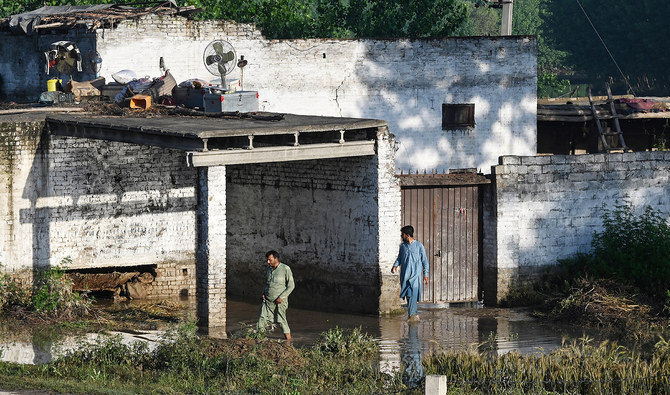
Pakistan ranks among the top ten countries most vulnerable to climate change, having experienced severe droughts, floods and heat waves in recent years.
The catastrophic floods of 2022 particularly underscored this susceptibility, inflicting over $38 billion in damages to homes, farmlands and public infrastructure across the nation.
The prime minister, who is currently on a five-day China visit, issued the message on World Environment Day, which is commemorated annually on June 5.
“Today, on the occasion of #WorldEnvironmentDay, let us join hands to safeguard and preserve our environment, not only for the well-being of people but also for the survival of our planet,” he wrote in a social media post.
“Though we cannot turn back time, we can certainly make a significant impact on the health and sustainability of our environment by taking proactive steps toward endeavors to nurture and cultivate forests, revive and replenish dwindling water sources, and rehabilitate and revitalize exhausted soils,” he added.
In a detailed statement issued by his office in Islamabad, Sharif said his country had a firm resolve to combat environmental challenges and stands committed for contributing to global efforts toward sustainability.
“Initiatives such as the Green Pakistan Programme, Living Indus Initiative, and National Adaptation Plan, underscore our commitment to reforestation and ecosystem restoration, tackling issues of deforestation and biodiversity loss head-on,” he said.
The prime minister noted Pakistan’s climate diplomacy efforts, particularly its role in establishing a Loss and Damage Fund during COP27, had been widely recognized.
He maintained on the domestic front, Pakistan was actively working on developing sustainable long-term low-carbon development strategies with assistance from United Nations Development Program and the World Bank.

PM Sharif calls for global unity in climate action, highlights Pakistan’s commitment
https://arab.news/p3npp
PM Sharif calls for global unity in climate action, highlights Pakistan’s commitment
- PM issues the message on World Environment Day for the well-being of people and survival of the planet
- He calls for ‘proactive steps’ to nurture and cultivate forests, revive and replenish dwindling water sources
Pakistan, UK sign £35 million Green Compact to strengthen climate resilience
- Pakistan ranks among nations most vulnerable to climate change and has seen erratic changes in its weather patterns
- UK will help Pakistan mobilize climate finance, strengthen regulatory frameworks and develop bankable climate projects
ISLAMABAD: Pakistan and the United Kingdom (UK) have formalized a comprehensive climate partnership with the launch of a Green Compact that aims to enhance climate resilience, accelerate clean energy transition and scale up nature-based solutions, including mangrove conservation, Pakistani state media reported on Sunday.
The agreement, signed in Islamabad by Federal Minister for Climate Change and Environmental Coordination Dr. Musadik Malik and UK Minister for International Development Jennifer Chapman, unlocks £35 million in targeted support for green development and long-term climate action, according to Radio Pakistan broadcaster.
Pakistan ranks among nations most vulnerable to climate change and has seen erratic changes in its weather patterns that have led to frequent heatwaves, untimely rains, storms, cyclones, floods and droughts in recent years. In 2022, monsoon floods killed over 1,700 people, displaced another 33 million and caused over $30 billion losses, while another 1,037 people were killed in floods this year.
Mohammad Saleem Shaikh, a spokesperson for Pakistan’s Ministry of Climate Change, described the compact as a “decisive move toward action-oriented climate cooperation,” noting that its implementation over the next decade will be critical for Pakistan which regularly faces floods, heatwaves and water stress.
“The Compact is structured around five core pillars: climate finance and investment, clean energy transition, nature-based solutions, innovation and youth empowerment, and adaptation and resilience,” the report read.
“Under the agreement, the UK will work with Pakistan to mobilize public and private climate finance, strengthen regulatory frameworks for green investment, and develop bankable climate projects.”
Clean energy forms a central component of Pakistan’s transition, with Islamabad planning to expand solar and wind generation to reduce fossil fuel dependence, improve energy security and stabilize power costs, according to Shaikh.
“Renewable energy is now economically competitive, making the transition both environmentally and financially viable,” he was quoted as saying.
“Nature-based solutions, particularly large-scale mangrove restoration, will protect coastal communities from storm surges and erosion while enhancing biodiversity and carbon sequestration.”
Under the Compact, technical support, mentoring and access to investors will be provided to climate-smart startups and young innovators, reflecting Pakistan’s recognition of youth-led initiatives as central to future climate solutions.
On the occasion, Chapman, on her first official visit to Pakistan, underscored the urgency of climate action, highlighting the UK’s support for renewable energy, mangrove and ecosystem restoration, early-warning systems, climate budgeting and international investment flows into Pakistan.
Shaikh described the Green Compact as “a strategic turning point” in Pakistan–UK relations on climate change, saying its effective implementation is essential for Pakistan to meet its national climate targets.