



JERUSALEM: Deeply aggrieved by the images and stories of suffering emerging from Gaza and the West Bank since violence erupted in the occupied territories on Oct. 7, George and Sara Salloum, a Christian couple from North Carolina, were motivated to act.
George is an American-Palestinian man whose family emigrated to the US before he was born. Guided by their Christian faith, he and his wife Sara have long-held ties with the Middle East, particularly the Palestinian refugee community.
“We have been following the situation in Palestine for years and have lived among Palestinians who were displaced to Jordan,” Sara told Arab News.
“On our first visit to the West Bank, we were heartbroken by all we saw and heard. The most painful realization was learning that the church in Palestine felt unseen and abandoned by the global church and especially by the American church.”
While monitoring the reports of death and destruction in Gaza in Israeli military retaliation for the Oct. 7 Hamas-led attack on southern Israel, George and Sara were shocked by how few Christians in the US were willing to acknowledge or share their grief.
“No one understood or was willing to acknowledge the situation in Palestine,” George told Arab News. “We felt isolated even as Christians knowing that fellow Christians in Palestine were being oppressed.”
When the Salloums heard about a conference organized by the Bethlehem Bible College titled “Christ at the checkpoint,” they resolved to travel to the birthplace of Jesus to take part, even though, acccording to George, “many friends and relatives were extremely worried about us and our safety.”
Nevertheless, George and Sara were determined to go and used the opportunity to encourage Christian friends to see things from the Palestinian perspective.
“Many evangelicals in America have lost their focus on the gospel,” George told conference attendees. “They have moved so far away from the message of our Lord that we feel ashamed of what is being done and said in the name of Christ.
“We feel that we need to challenge the far-right evangelical Christians who unquestioningly support Zionism. Most are surprised to learn that the Israeli occupation forces are oppressing Palestinian Christians.
“We have a mailing list of nearly 700 friends and churches across many denominations with whom we communicate regularly. We have been trying to educate them about their brothers and sisters in Christ who are living under oppression.”
Three weeks before traveling to Bethlehem for the May 22 to 25 conference, the couple invited their friends and the wider church community to write messages of solidarity for their fellow Christians.

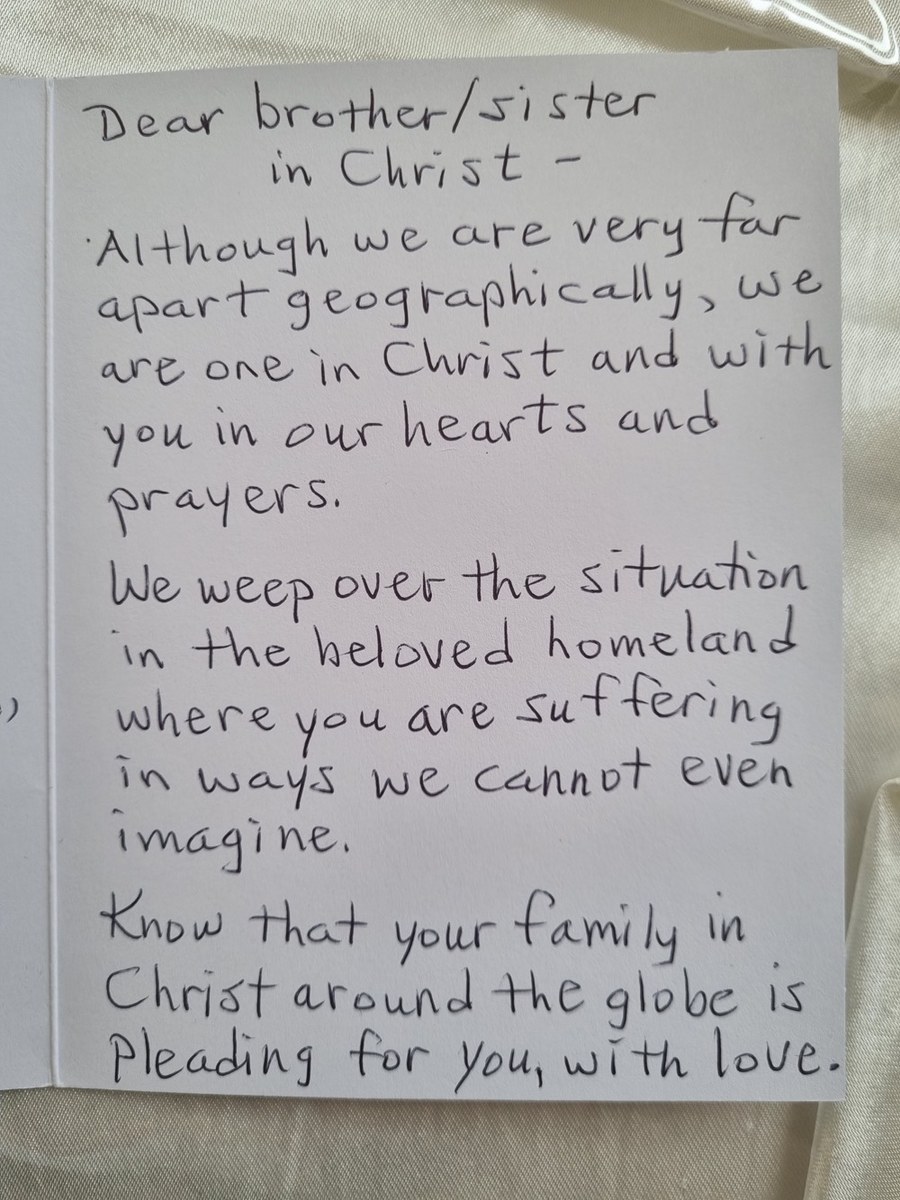
“Write words of encouragement to the church in Palestine and the people in Gaza and we will personally hand-deliver them,” Sara said. For authenticity purposes, the Salloums insisted that the correspondence be handwritten and not in the form of SMS, WhatsApp, or email messages.
Sara was not sure what to expect. “I thought maybe we would get one or two cards or letters,” she told Arab News. Instead, the couple were overwhelmed by the level of support they received.
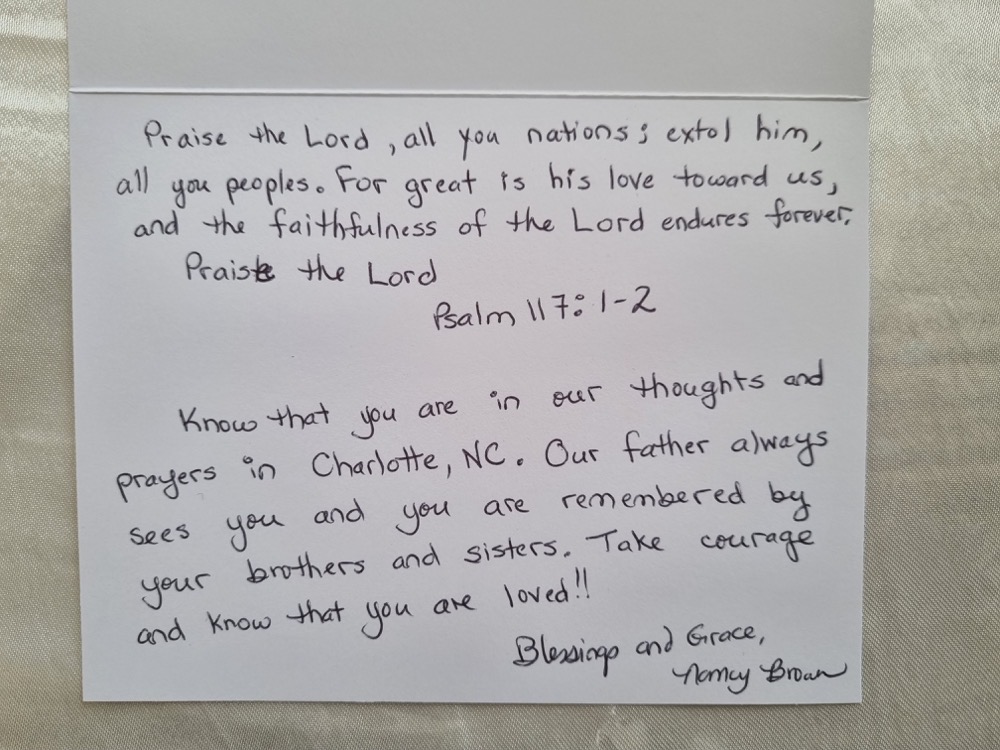
Every day, the mail would arrive with stacks of handwritten notes. By the time they packed to travel, they had in their possession more than 100 personalized messages of support and words of comfort and healing.
INNUMBERS
• 50,000 Estimated number of Christian Palestinians in the West Bank and Jerusalem.
• 1,300 Estimated number of Christian Palestinians residing in Gaza prior to the war.
Source: US State Department, 2022
During the conference, the letters from both Carolinas, New York and California, and other US states were displayed at the entrance of the Bethlehem Bible College. Photos of the messages were sent to churches in Gaza, which responded with gratitude.
One of the notes, penned by a well-wisher named Rebecca, stated: “Greetings from New York. I am sorry for the destruction, death, and loss you and your community have suffered. Please know that there are many of us here praying for your protection and sustenance and of course for a ceasefire.”
A letter from “your brethren in the US” stated: “We send our love and prayers for the churches in Palestine.”
Another included stylized calligraphy of the word salaam (peace in Arabic) in the shape of a flag. Below it was written: “Dear brothers and sisters, I can’t imagine the suffering and isolation you are feeling.
“Take heart and know you are not forgotten. I mourn as you mourn but one day we will rejoice together.”
Another read: “Although we are far apart geographically, we are one with Christ and you are in our prayers. We weep over the situation in your beloved homeland where you are suffering in ways we cannot imagine.”
In Arabic, another wrote: “I send you hope.”
“My family and I pray for lasting peace and an end to the violence throughout Gaza,” the person added.
An estimated 50,000 Christian Palestinians live in the West Bank and Jerusalem, and 1,300 in Gaza, according to the US State Department’s International Religious Freedom Report for 2022.
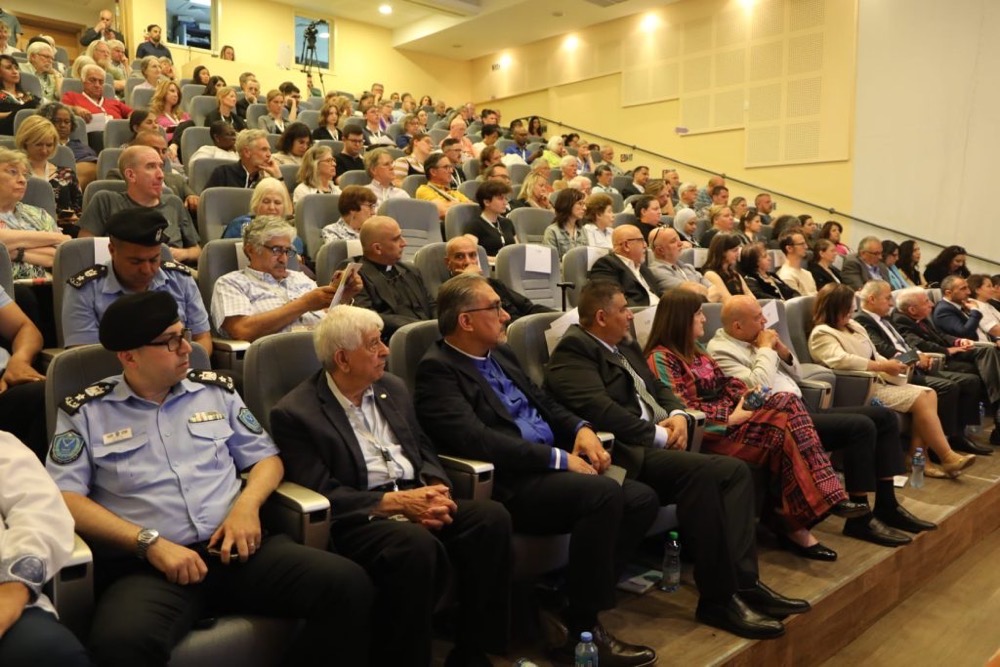
The Salloums attended a conference in May at Bethlehem Bible College. (Supplied)
However, the number of Christians living in Gaza, the West Bank, and occupied East Jerusalem has been falling steadily over many years, endangering the very survival of church communities in the cradle of Christianity.
The primary reason given by families who have chosen to emigrate is the lack of economic prospects under Israeli occupation.
Like their fellow Muslim Palestinians, Christians in the West Bank face restrictions on their movements, military checkpoints and raids, land seizures, home demolitions, settler violence, and limited water, electricity, and health services.
In Gaza, they have long endured airstrikes and the hardships of 15 years under blockade. Since Oct. 7, they have lost loved ones, homes, businesses, and employment under Israeli bombardment.
A 2020 poll of 995 Christian Palestinians from Gaza and the West Bank, conducted by the Palestinian Center for Policy and Survey Research, showed that 59 percent of respondents considering emigration cited economic reasons as the main factor driving their decision to leave.
Three percent of Palestinian Christians in the survey said the Israeli army destroyed their homes, and 14 percent had their land confiscated. By contrast, only 3 percent named religious concerns as their primary motivation for moving abroad.
While Muslim Palestinians also desire to emigrate, Christians manage to do so in much larger numbers because of their relative wealth.
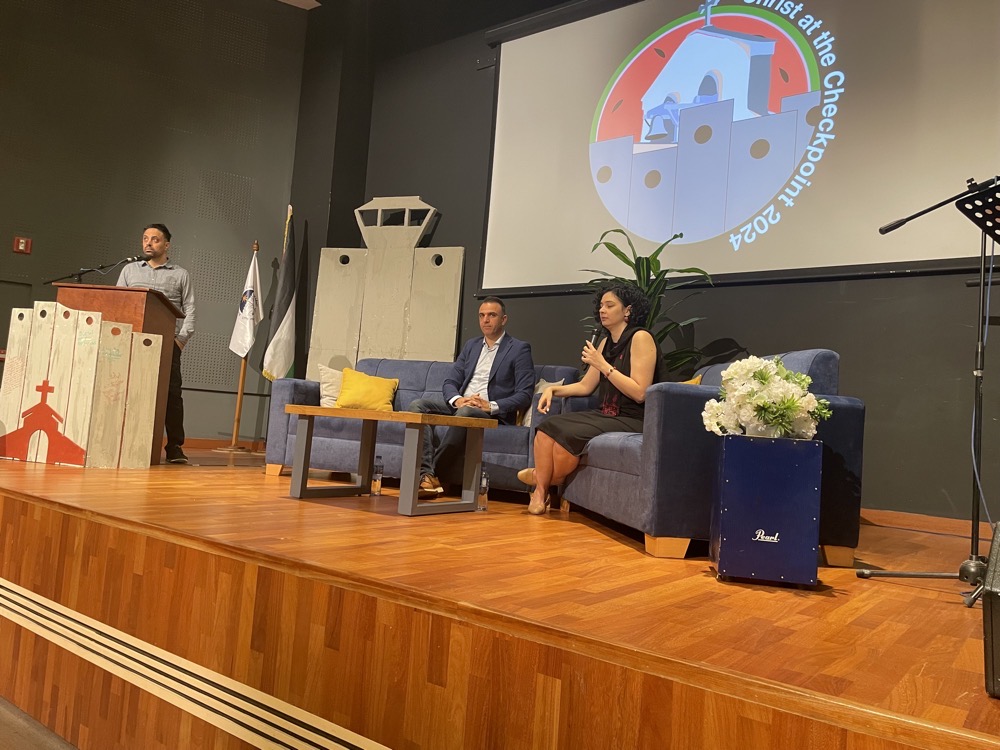
At the end of the four-day conference in Bethlehem, which included a visit to the Old City of Jerusalem, George and Sara resolved to return with others from their community to help raise awareness about the plight of Christian Palestinians.
“In October, we are bringing people from our church to the Middle East,” George said. “We are trying to break down fear and help bring understanding to the American church of the damage that is being done, often in the name and with the support of the American church.
“What will become of the Middle East if the church of Jesus Christ disappears from Palestine?”


