SRINAGAR: Two suspected rebels were killed in a firefight with soldiers in Indian-administered Kashmir, police said Monday, weeks after the disputed, mostly Muslim territory saw its highest voter turnout for decades in India’s general election.
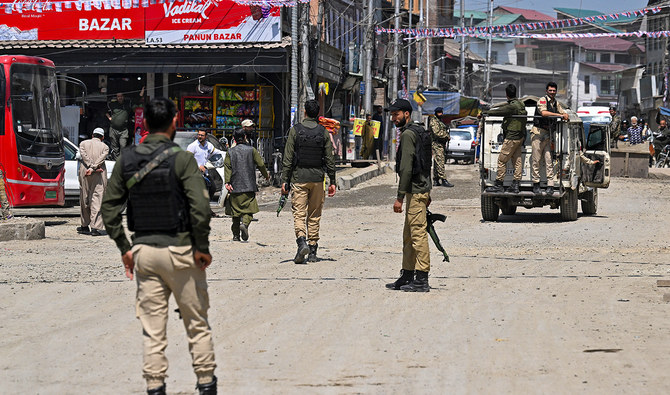
The armed encounter was triggered late Sunday when police and army contingents surrounded a house in the southern Pulwama district after receiving intelligence that militants were there.
The bodies of the two slain rebels, both believed to be locals, were recovered from the site, police said in a post on social media platform X.
Kashmir’s police chief Vidhi Kumar Birdi told reporters the duo’s killing was “a very significant development” in their fight against the insurgents.
After the clash, hundreds of angry residents gathered near two houses gutted during the firefight, shouting “We want freedom,” an AFP journalist saw, in a rare protest.
Kashmir has been divided between India and Pakistan since their independence in 1947, and both claim the high-altitude territory in full.
Rebel groups have waged an insurgency since 1989, demanding independence or a merger with Pakistan.
The conflict has left tens of thousands of civilians, soldiers, and rebels dead.
Violence and anti-India protests have drastically fallen since 2019, when Prime Minister Narendra Modi’s government canceled the region’s limited autonomy.
Five rebels and an Indian air force corporal were killed in clashes since election campaigning in the territory began in April.
But it saw a 58.6 percent turnout at the polls, the election commission said Monday, a 30 percentage point jump from the last vote in 2019 and the highest in 35 years.
No separatist group had called for a boycott of the election — a first since the armed revolt against Indian rule erupted in the territory in 1989.
India regularly accuses Pakistan of supporting and arming the rebels, a charge Islamabad denies.


![]()

Firefight with Indian soldiers leaves two Kashmir rebels dead
Short Url
https://arab.news/243ck
Firefight with Indian soldiers leaves two Kashmir rebels dead
- The armed encounter was triggered late Sunday when police and army contingents surrounded a house in the Pulwama district
- Kashmir’s police chief told reporters the duo’s killing was ‘a very significant development’ in their fight against the insurgents
Latest updates




© 2026 SAUDI RESEARCH & PUBLISHING COMPANY, All Rights Reserved And subject to Terms of Use Agreement.