MEXICO CITY: Mexican voters are poised to elect their first female president, a cause of celebration for many that has also touched off a flurry of false and misogynist online claims, blurring the lines behind fact and fiction.
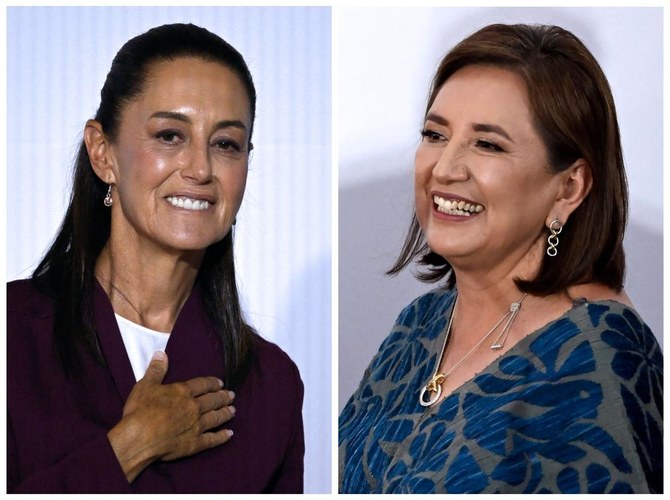
The two leading candidates, both women, have had to respond to demeaning attacks about their appearance, their credentials and their ability to lead the nation.
The candidate considered the favorite in Sunday’s contest, former Mexico City Mayor Claudia Sheinbaum, has also faced slurs about her Jewish background as well as repeatedly debunked claims she was born in Hungary. This week, in an apparent bid to undermine her candidacy, a social media account impersonating a legitimate news outlet posted fake, AI-generated audio of Sheinbaum admitting that her campaign was failing in a key Mexican state.
The wave of election misinformation facing voters in Mexico is the latest example of how the Internet, social media and AI are fueling the spread of false, misleading or hateful content in democracies around the world, warping public discourse and potentially influencing election outcomes.
“We have a general atmosphere of disinformation here in Mexico, but it’s slightly different from what is happening in India, or the US,” said Manuel Alejandro Guerrero, a professor and communications researcher at the Universidad Iberoamericana in Mexico City.
In Mexico’s case, that misinformation is the result of growing distrust of the news media, violence committed by drug cartels, and rapid increases in social media usage coupled with a lag in digital literacy. Guerrero added one more contributing factor now familiar to Americans: political leaders who willingly spread disinformation themselves.
Sheinbaum is a member of the Morena party, led by current President Andrés Manuel López Obrador. She faces opposition candidate Xóchitl Gálvez and Jorge Álvarez Máynez of the small Citizen Movement party.
Compared with election misinformation spread about male candidates, the attacks against Gálvez and Sheinbaum often take a particularly personal nature and focus on their gender, according to Maria Calderon, an attorney and researcher from Mexico who works with the Mexico Institute, a think tank based in Washington, D.C., that studies online politics.
“I was surprised by how cruel the comments could be,” said Calderon, whose analysis found that attacks on female candidates like Sheinbaum and Gálvez typically focus on their appearance, or their credentials, whereas misinformation about male candidates is more often about policy proposals.
“A lot of direct attacks on their weight, their height, how they dressed, the way they behave, the way they talk,” Calderon said.
She suggested that some of the sexism can be traced back to Mexico’s “machismo” culture and strong Catholic roots. Women only received the right to vote in Mexico in 1953.
Lopez Obrador has spread some of the false claims targeting Gálvez, as he did last year when he erroneously said she supported plans to end several popular social programs if elected. Despite her efforts to set the record straight, however, the narrative continues to dog her campaign, showing just how effective political misinformation can be even if debunked.
Con artists have also gotten in on the misinformation business in Mexico, using AI deepfake videos of Sheinbaum in an effort to peddle investment scams, for instance.
“You’ll see that it’s my voice, but it’s a fraud,” Sheinbaum said after one deepfake of her supposedly pitching an investment scam went viral.
As they have in other nations, the tech companies that operate most of the major social media platforms say they have rolled out a series of programs and policies designed to blunt the effect of misinformation ahead of the election.
Meta and other US-based tech platforms have been criticized for focusing most of their efforts on misinformation in English while taking a ” cookie-cutter ” approach to the rest of the globe.
“We are focused on providing reliable election information while combating misinformation across languages,” according to a statement from Meta, the owner of Facebook, Instagram and WhatsApp, about its election plans.
The specter of violence has haunted the election since the first campaigns began. Dozens of candidates for smaller offices have been killed or abducted by criminal gangs. Drug cartels have spread terror in the lead up to the election, spraying campaign rallies with gunfire, burning ballots and preventing polling places from being set up.
“This has been the most violent election that Mexico has had since we started recording elections,” Calderon said.


![]()


Sexist tropes and misinformation swirl online as Mexico prepares to elect its first female leader
Short Url
https://arab.news/4dug7
Sexist tropes and misinformation swirl online as Mexico prepares to elect its first female leader
- The two leading candidates, both women, have had to respond to demeaning attacks about their appearance, their credentials and their ability to lead the nation


US hotels seek World Cup boost after tourism dip under Trump
- At the US hotels that Meade Atkeson manages, a drop in tourism weighs heavily on business — but hoteliers like him hope that World Cup enthusiasm will soon eclipse wariness over President
WASHINGTON: At the US hotels that Meade Atkeson manages, a drop in tourism weighs heavily on business — but hoteliers like him hope that World Cup enthusiasm will soon eclipse wariness over President Donald Trump’s policies.
The US hospitality sector has been reeling from a tourism slump in the world’s biggest economy, which became the only major destination to see a drop in foreign visitors last year.
“Just financially, it’s difficult when international travel is down,” Atkeson told AFP, noting that such visitors tend to stay longer and spend more.
Foreign travelers account for nearly a quarter of business at the three hotels under Sonesta group that he manages — two in Washington and a third in Miami Beach.
Yet, in the first eleven months of 2025, US official data showed that inbound travel dropped by 5.4 percent.
Canadians were noticeably absent, with travel plunging by 21.7 percent from 2024, translating to about four million fewer people. The decline was nearly seven percent for French visitors.
Industry professionals see this as a consequence of Trump’s policies, even if they may not openly say so.
Visitors have chafed at the Republican president’s sweeping tariffs on foreign goods, broadsides against other countries, tightening immigration rules and portrayal of certain Democrat-led cities as ridden with crime.
Canadians “were asked to be the 51st state, right?” Atkeson said.
“If you talk to Canadians, many of them have chosen not to travel out of conscience” or on principle, he added.
Brazilian tourists meanwhile “can go anywhere they want,” he said. “And so they may have gone to Europe, they may have gone to the islands.”
‘Fear’
Thousands of kilometers away, the major resort city of Las Vegas in Nevada — boasting 150,000 hotel rooms — has also had a bad year.
Elsa Rodan, a chambermaid at the Bellagio resort and casino, says her establishment is “blessed” compared with others.
But even so, it has had to lower prices to attract guests, added Rodan, a representative of the Unite Here union who spoke at a Washington press conference.
Unite Here President Gwen Mills urges for a renewed effort to lobby the Trump administration over policies and rhetoric that she believes are jeopardizing the sector employing more than two million people.
According to her, hoteliers are not pushing the government enough.
Employers express “fear, the fear of picking your head up,” she said.
Hopefully ‘better’
Fewer visitors and overnight stays, alongside a drop in revenue, have triggered a $6.7 billion shortfall for Nevada hotels in 2025, according to the American Hotel and Lodging Association (AHLA).
But the organization hopes that 2026 will be a turning point — it is counting on the World Cup, from June 11 to July 19, to attract visitors.
Eleven US cities will be hosting matches.
“It’s being equated to having nearly 80 Super Bowls in just over a month,” AHLA spokesman Ralph Posner told AFP.
“The economic lift won’t be limited to host cities,” he added. “Destinations across the country are hoping to benefit as international visitors extend their trips and travel between markets.”
Las Vegas, for example, hopes to draw fans who might stop there before or after a game in Los Angeles or Kansas City.
Organizers say that besides the seven million spectators in stadiums, the World Cup is set to attract 20-30 million tourists.
The whole event, they believe, can generate $30 billion for the US economy.
“I hope that things will look better,” Atkeson said.
His Miami hotel is under renovations and cannot host much World Cup-related activity.
But his Washington establishments are highlighting their proximity to Philadelphia, where several matches will be held.
Another complication is war in the Middle East following US-Israeli strikes on Iran, which could snarl travel.
“It’s a little too soon to tell how we’re going to do with that, but we’ll see,” he said.
The US hospitality sector has been reeling from a tourism slump in the world’s biggest economy, which became the only major destination to see a drop in foreign visitors last year.
“Just financially, it’s difficult when international travel is down,” Atkeson told AFP, noting that such visitors tend to stay longer and spend more.
Foreign travelers account for nearly a quarter of business at the three hotels under Sonesta group that he manages — two in Washington and a third in Miami Beach.
Yet, in the first eleven months of 2025, US official data showed that inbound travel dropped by 5.4 percent.
Canadians were noticeably absent, with travel plunging by 21.7 percent from 2024, translating to about four million fewer people. The decline was nearly seven percent for French visitors.
Industry professionals see this as a consequence of Trump’s policies, even if they may not openly say so.
Visitors have chafed at the Republican president’s sweeping tariffs on foreign goods, broadsides against other countries, tightening immigration rules and portrayal of certain Democrat-led cities as ridden with crime.
Canadians “were asked to be the 51st state, right?” Atkeson said.
“If you talk to Canadians, many of them have chosen not to travel out of conscience” or on principle, he added.
Brazilian tourists meanwhile “can go anywhere they want,” he said. “And so they may have gone to Europe, they may have gone to the islands.”
‘Fear’
Thousands of kilometers away, the major resort city of Las Vegas in Nevada — boasting 150,000 hotel rooms — has also had a bad year.
Elsa Rodan, a chambermaid at the Bellagio resort and casino, says her establishment is “blessed” compared with others.
But even so, it has had to lower prices to attract guests, added Rodan, a representative of the Unite Here union who spoke at a Washington press conference.
Unite Here President Gwen Mills urges for a renewed effort to lobby the Trump administration over policies and rhetoric that she believes are jeopardizing the sector employing more than two million people.
According to her, hoteliers are not pushing the government enough.
Employers express “fear, the fear of picking your head up,” she said.
Hopefully ‘better’
Fewer visitors and overnight stays, alongside a drop in revenue, have triggered a $6.7 billion shortfall for Nevada hotels in 2025, according to the American Hotel and Lodging Association (AHLA).
But the organization hopes that 2026 will be a turning point — it is counting on the World Cup, from June 11 to July 19, to attract visitors.
Eleven US cities will be hosting matches.
“It’s being equated to having nearly 80 Super Bowls in just over a month,” AHLA spokesman Ralph Posner told AFP.
“The economic lift won’t be limited to host cities,” he added. “Destinations across the country are hoping to benefit as international visitors extend their trips and travel between markets.”
Las Vegas, for example, hopes to draw fans who might stop there before or after a game in Los Angeles or Kansas City.
Organizers say that besides the seven million spectators in stadiums, the World Cup is set to attract 20-30 million tourists.
The whole event, they believe, can generate $30 billion for the US economy.
“I hope that things will look better,” Atkeson said.
His Miami hotel is under renovations and cannot host much World Cup-related activity.
But his Washington establishments are highlighting their proximity to Philadelphia, where several matches will be held.
Another complication is war in the Middle East following US-Israeli strikes on Iran, which could snarl travel.
“It’s a little too soon to tell how we’re going to do with that, but we’ll see,” he said.
Latest updates


© 2026 SAUDI RESEARCH & PUBLISHING COMPANY, All Rights Reserved And subject to Terms of Use Agreement.