BEIRUT: A series of attacks by Hezbollah on Friday targeted multiple Israeli military sites with heavy Burkan missiles and suicide drones.
The strikes followed Israeli raids on Aitaroun, Houla, and the pro-Hezbollah border village of Maroun Al-Ras overnight on Thursday and into the early hours.
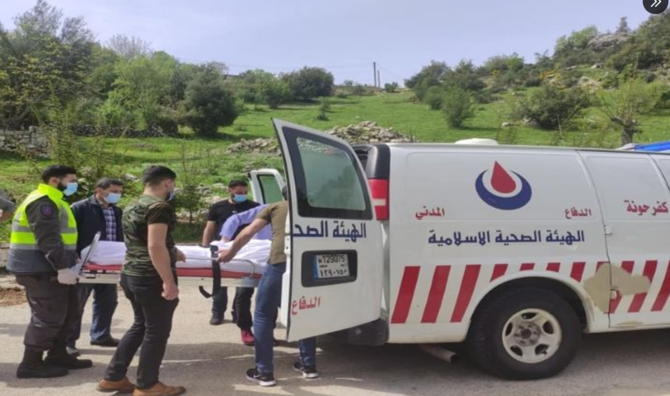
As aerial attacks on Lebanese targets continued, two Hezbollah members were killed. A military drone in Naqoura deliberately struck an ambulance, killing a paramedic and injuring one other person.
While ambulances and ambulatory units in Odaisseh, Blida, and Hanin have previously been targeted by artillery shelling, this is the first time an Israeli drone has targeted a medical vehicle.
In separate statements, Hezbollah said it struck the Branit barracks — headquarters of the Israeli army’s 91st division — with heavy Burkan missiles, “hitting it directly and destroying part of it.”
The group also targeted “the Baghdadi outpost with heavy Burkan missiles, hitting it directly,” as well as “a building used by the enemy’s soldiers in the Al-Manara settlement.”
Hezbollah said it also attacked Iron Dome launchpads in the Al-Zaoura bunker and a building used by Israeli soldiers in the Shomera settlement.
The two Hezbollah members who died were named as Samer Kamel Yassin, aged 42, and 54-year-old Hussein Mohammed Atwi, both from Houla.
Israeli media said two missiles landed in western Galilee without triggering sirens and claimed a building in Metula was hit when an anti-armor missile launched from Lebanon landed in the area.
Sirens sounded in several northern settlements warning of possible drone infiltration. The explosion of air interception rockets was heard over the Marjayoun Valley in southern Lebanon and Israel launched shells toward Al-Wazzani and raided Naqoura.
Israeli army spokesperson Avichay Adraee wrote on X: “Israeli military raids targeted four Hezbollah military buildings in Aitaroun and Markaba in southern Lebanon.”
The Israeli airstrikes, which have been ongoing for 237 days, have caused extensive damage to homes and buildings in the border towns, leaving the areas 90 percent uninhabited.
The number of displaced people who have relocated to Beirut’s southern suburbs has reached around 100,000.
The Cabinet has approved $1 million (93 billion Lebanese pounds) in compensation for civilian victims and aid for the displaced. However, the decision has sparked political protests.
Critics have condemned the government for spending so much public money on compensation for a war the Lebanese people did not choose while it struggles to pay public sector and military salaries.
They said Hezbollah “decided on its own to launch its rockets at Israel on Oct. 8 from the south, dragging Lebanon into the war.”
Objections came from the head of the Lebanese Forces Party, Samir Geagea, the head of the Lebanese Kataeb Party, MP Sami Gemayel, MP Nadim Gemayel, and other figures.
Caretaker Prime Minister Najib Mikati has repeatedly stated that Lebanon, suffering from an economic crisis, cannot bear the burdens of the southern war.
Parliamentary Speaker Nabih Berri expressed his deep concern weeks ago about “the extent of the destruction along the southern border, with initial estimates indicating massive losses.”
He noted: “The conditions for rebuilding what was destroyed by the Israeli attacks accompanying the 2006 war may not be the same today.”
On Thursday, Amos Hochstein, senior adviser for energy and investment to the US president, said in an interview with Carnegie Endowment for International Peace that he did not expect everlasting peace between Hezbollah and Israel.
“A land border agreement between Israel and Lebanon implemented in phases, by removing some of the motivations for conflict, and establishing recognized borders for the first time between the two countries, could dampen the simmering and deadly conflict between the two countries,” he said.


![]()

Ambulance strike kills paramedic in southern Lebanon
Short Url
https://arab.news/287x3
Ambulance strike kills paramedic in southern Lebanon
- Critics rap Mikati government for spending $1 million of public money on war compensation
- Hezbollah launches attacks with Burkan rockets, assault drones hit targets


Latest updates


© 2026 SAUDI RESEARCH & PUBLISHING COMPANY, All Rights Reserved And subject to Terms of Use Agreement.