

WEF warns of political risk, says global economy is brightening

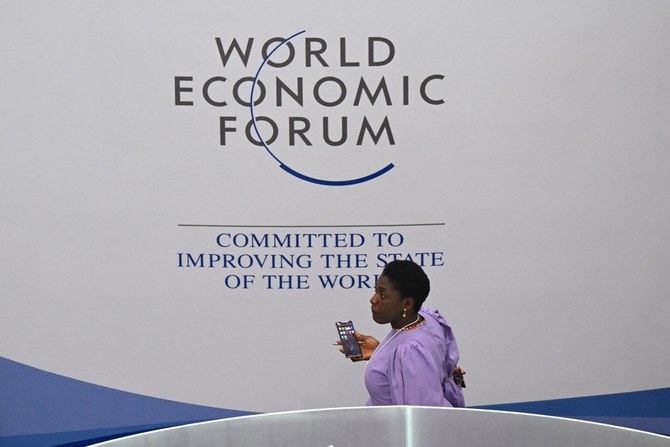
Despite escalating challenges for businesses and policymakers, the report identified technological transformation, artificial intelligence, and the green and energy transitions as key contributors to global growth. (WEF/File)
Short Url
Updated 29 May 2024
Follow

WEF warns of political risk, says global economy is brightening

  • Cautioned optimism underscores challenges for businesses and policymakers
  • MENA region expected to improve despite regional political tensions

LONDON: The World Economic Forum said on Wednesday that the global economy is poised to improve or remain stable this year, but it also warned of potential dangers stemming from geopolitical and domestic tensions.

“The latest Chief Economists Outlook points to welcome but tentative signs of improvement in the global economic climate,” said Saadia Zahidi, managing director of the WEF.

“This underscores the increasingly complex landscape that leaders are navigating. There is an urgent need for policymaking that not only looks to revive the engines of the global economy but also seeks to put in place the foundations of more inclusive, sustainable and resilient growth.”

The report highlighted that while the proportion of economists who feel optimistic about the economic outlook nearly doubled from the previous survey conducted in January, 97 percent of respondents anticipate that geopolitics will contribute to global economic volatility this year.

Furthermore, 83 percent said domestic politics would be a source of volatility in 2024, a year when nearly half the world’s population will be voting.

Experts predicted a positive outlook for the US and Asian economies, driven by decreasing inflation and robust markets.

The Middle East and North Africa region is also expected to experience moderate growth, with slight improvements since the previous survey, despite unstable political developments due to the ongoing Gaza conflict.

Despite escalating challenges for businesses and policymakers, the report identified technological transformation, artificial intelligence, and the green and energy transitions as key contributors to global growth, also driven by looser or unchanged fiscal and monetary policies.

“Despite some brightening of the near-term growth outlook, the latest results point to growing challenges for businesses and policymakers,” the WEF said in a press release.

“However, the views on the long-term prospects for the global economy are encouraging, with many policy opportunities to boost growth across high and low-income economies.”


Kuwait to boost Islamic finance with sukuk regulation

Updated 05 February 2026
Follow

Kuwait to boost Islamic finance with sukuk regulation

  • The move supports sustainable financing and is part of Kuwait’s efforts to diversify its oil-dependent economy

RIYADH: Kuwait is planning to introduce legislation to regulate the issuance of sukuk, or Islamic bonds, both domestically and internationally, as part of efforts to support more sustainable financing for the oil-rich Gulf nation, Prime Minister Sheikh Ahmad Abdullah Al-Ahmad Al-Sabah said on Wednesday.

Speaking at the World Governments Summit in Dubai, Al-Sabah highlighted that Kuwait is exploring a variety of debt instruments to diversify its economy. The country has been implementing fiscal reforms aimed at stimulating growth and controlling its budget deficit amid persistently low oil prices. Hydrocarbons continue to dominate Kuwait’s revenue stream, accounting for nearly 90 percent of government income in 2024.

The Gulf Cooperation Council’s debt capital market is projected to exceed $1.25 trillion by 2026, driven by project funding and government initiatives, representing a 13.6 percent expansion, according to Fitch Ratings.

The region is expected to remain one of the largest sources of US dollar-denominated debt and sukuk issuance among emerging markets. Fitch also noted that cross-sector economic diversification, refinancing needs, and deficit funding are key factors behind this growth.

“We are about to approve the first legislation regulating issuance of government sukuk locally and internationally, in accordance with Islamic laws,” Al-Sabah said.

“This enables us to deal with financial challenges flexibly and responsibly, and to plan for medium and long-term finances.”

Kuwait returned to global debt markets last year with strong results, raising $11.25 billion through a three-part bond sale — the country’s first US dollar issuance since 2017 — drawing substantial investor demand. In March, a new public debt law raised the borrowing ceiling to 30 billion dinars ($98 billion) from 10 billion dinars, enabling longer-term borrowing.

The Gulf’s debt capital markets, which totaled $1.1 trillion at the end of the third quarter of 2025, have evolved from primarily sovereign funding tools into increasingly sophisticated instruments serving governments, banks, and corporates alike. As diversification efforts accelerate and refinancing cycles intensify, regional issuers have become regular participants in global debt markets, reinforcing the GCC’s role in emerging-market capital flows.

In 2025, GCC countries accounted for 35 percent of all emerging-market US dollar debt issuance, excluding China, with growth in US dollar sukuk issuance notably outpacing conventional bonds. The region’s total outstanding debt capital markets grew more than 14 percent year on year, reaching $1.1 trillion.