Social responsibility forum fosters partnerships for positive impact

1 / 4
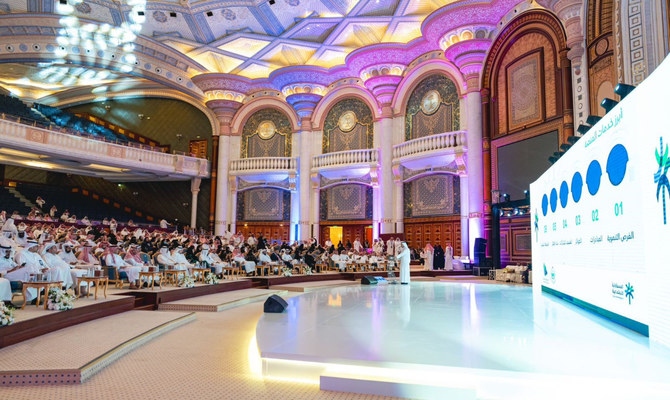
The Ministry of Human Resources and Social Development branch in Makkah organized The Social Responsibility Forum, themed "Social Responsibility to Serve the Pilgrims," on May 26. (Supplied)
2 / 4
The Ministry of Human Resources and Social Development branch in Makkah organized The Social Responsibility Forum, themed "Social Responsibility to Serve the Pilgrims," on May 26. (Supplied)
3 / 4
The Ministry of Human Resources and Social Development branch in Makkah organized The Social Responsibility Forum, themed "Social Responsibility to Serve the Pilgrims," on May 26. (Supplied)
4 / 4
The Ministry of Human Resources and Social Development branch in Makkah organized The Social Responsibility Forum, themed "Social Responsibility to Serve the Pilgrims," on May 26. (Supplied)
Short Url
Updated 27 May 2024
Follow

Social responsibility forum fosters partnerships for positive impact

  • The forum included development workshops designed to cultivate a culture of social responsibility and foster innovative initiatives geared toward societal advancement and enhancing services for pilgrims

JEDDAH: The Ministry of Human Resources and Social Development branch in Makkah on May 26 organized a social responsibility forum with the theme, “Social Responsibility to Serve the Pilgrims.” 

The forum featured dialogue sessions covering topics such as developing a social responsibility strategy, introducing a program to assist visitors to the Holy Mosques and identify development opportunities, discussing social responsibility in the private sector, exploring the role of social responsibility in domestic pilgrim companies, and showcasing the Sustainable Camp Initiative.

Kholoud Al Thagafi, a faculty member at King Abdulaziz University, addressed the topic of social responsibility in the private sector by discussing the key priorities for directing initiatives and programs, highlighting the essential pillars of success, and identifying obstacles that hinder the effectiveness of social responsibility programs. 

“Social responsibility in the private sector is not just a duty but a pathway to sustainable success. By prioritizing contributions, focusing on key pillars of achievement, and overcoming obstacles, we pave the way for impactful change and a brighter future for all,” she said.

She also provided insights into companies that have made significant contributions to community service.

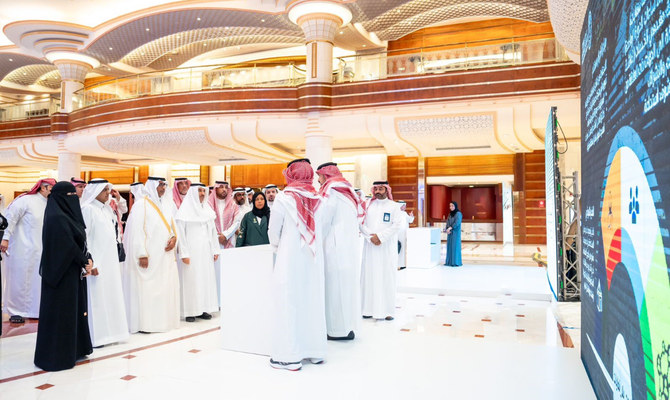
The forum included development workshops designed to cultivate a culture of social responsibility and foster innovative initiatives geared toward societal advancement and enhancing services for pilgrims. An accompanying exhibition showcased various best practices in social responsibility, emphasizing their effects in the region. The exhibition also highlighted the efforts of institutions and sectors in carrying out social responsibility initiatives to cater to the needs of the pilgrims.

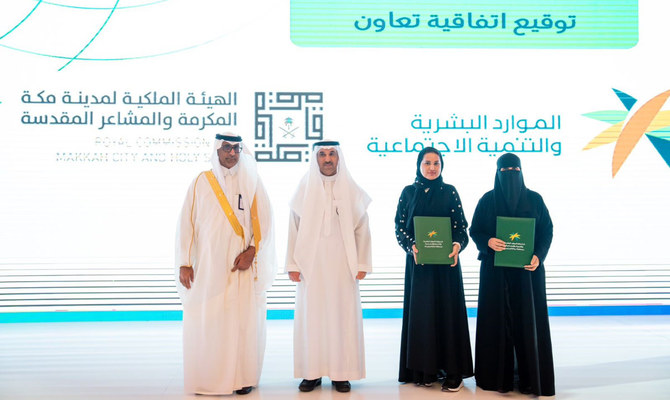
During the forum, the Ministry of Human Resources and Social Development branch signed six cooperation agreements with key entities in the private sector, including the General Administration of Social Responsibility and Voluntary Work at the Ministry of Hajj and Umrah, the Royal Commission for Makkah City and Holy Sites, the Jeddah Development Authority, the Ritz-Carlton Hotel in Jeddah, Nestle Arabia Company, and Saudi Arabian Marketing and Agencies Company.

These partnerships aim to bolster social responsibility initiatives in various sectors in the region and work toward realizing the objectives of Saudi Arabia’s Vision 2030. 

Abdulrahman Alrefaie, assistant director of human resources at the Ritz-Carlton, shared his thoughts on the partnership agreement with the ministry, saying: “By collaborating with the ministry, we are reaffirming our dedication to making a positive impact on society. This partnership will enable us to align our initiatives with national goals, ensuring that our efforts contribute to the greater good.

“We will be working closely with the ministry to implement and promote sustainable practices within the hotel and the community. This includes initiatives focused on environmental conservation, education, and health and well-being.”

In emphasizing the initiative’s broader impact, Alrefaie expressed a hope to inspire other businesses and organizations to embrace social responsibility, aiming to inspire a ripple effect of positive change throughout Saudi Arabia.

“The Ministry of Human Resources and Social Development’s remarkable initiative showcases their steadfast dedication to fostering social responsibility and community development, which is truly commendable. Together, we are paving the way for a brighter, more inclusive future through this valuable partnership,” he added.


Saudi tourism minister urges governments to ease travel barriers amid global tensions

Updated 22 January 2026
Follow

Saudi tourism minister urges governments to ease travel barriers amid global tensions

  • Tourism Minister Ahmed Al-Khateeb said visa restrictions and connectivity were major hurdles disrupting global movement, urging more frequent flights to smaller destinations
  • Panel examined key challenges facing the $10 trillion global travel industry, including rising geopolitical tensions, climate volatility, artificial intelligence and growing cyber risks

DUBAI: Saudi Arabia’s tourism minister, Ahmed Al-Khateeb, has said travel should be made more accessible and flexible as it fosters dialogue and peace at a time when geopolitical tensions are prompting governments to impose stricter visa restrictions.

He was speaking during a panel discussion at the World Economic Forum’s annual meeting in Davos, which examined the key challenges facing the $10 trillion global travel industry. These include rising geopolitical tensions, climate volatility, artificial intelligence and growing cyber risks.

“Tourism brings peace at a time where everybody wants to hear about peace. It connects people, encourages dialogue, creates economies, and serves smaller economies like Africa, Latin America, the Pacific and the Caribbean countries,” said Al-Khateeb.

His remarks come as the US has tightened visa and immigration policies, affecting nationals from dozens of countries, and as anti-tourism protests have surfaced in parts of Europe amid mounting concerns over overtourism in major destinations.

He highlighted Saudi Arabia’s achievements in tourism, saying the sector has created 250,000 jobs in the last five years and boosted female participation to 47 percent, exceeding the global average of 45 percent. He highlighted the Kingdom’s focus on building new airports and expanding existing ones, as well as boosting the hotel sector to cater for 150 million travelers by 2030.

The sector’s contribution to the economy has grown from about 3 percent in 2020 to 5 percent today, with plans to raise that figure to between 8 and 10 percent by 2030.

With travel and tourism accounting for around 10 percent of global GDP, Al-Khateeb said that raising the sector’s contribution in Saudi Arabia would strengthen the Kingdom’s economy, make it more resilient and sustainable, and “allow us to share our beautiful culture with the world.”

He said visa restrictions and connectivity were major hurdles disrupting global movement, urging more frequent flights to smaller destinations to diversify traveler experiences and expand economies beyond major hubs.

With panelists citing last year’s anti-tourism protests in Spain and Mexico, Al-Khateeb said overtourism, already a challenge in some cities, will worsen as the UN projects an increase in the number of global travelers from 1.5 billion to 2 billion by 2050. He therefore urged governments to promote smaller cities and spread tourism beyond traditional hotspots to boost economic growth and create more jobs.

Panel at the World Economic Forum examined key trends and challenges shaping the $10 trillion global travel industry. (Screengrab)

Expressing similar sentiments, Martin Eurnekian, CEO of Corporacion America International, linked economic growth to travel and said travel deregulation in the past had boosted European economies.

“Our history shows when growth was accelerated and these were the cases where the (travel) industry was set free,” said Eurnekian, adding geopolitical tensions and economic regulations were exacting a heavy cost on the industry.

“This is an industry based on freedom and globalization and if we lose sight of that we can really hurt the industry,” he added.

Cara Morton, CEO of global businesses and operations and a member of the executive committee at Zurich Insurance Group, said “disruption is now the norm,” citing an in-house assessment that found 80 percent of 4,000 business travelers experienced some form of disruption during their journeys.

She highlighted the role of artificial intelligence in steering people to new, less crowded destinations: “Obviously that will require governments to then make sure that those places have got the right infrastructure, but we will be able to see wealth distributed more equally. So the key is how we use AI in this area.”

Al-Khateeb said that while AI can enhance traveler experience, it should not replace human interaction.

“We will use tech when it isn’t necessary … such as using AI (for passengers to) move fast and finish their biometrics, but when you go to destination, you want to be served by humans not machines.”

He highlighted global travel trends, including the growing role of airports as destinations in their own right, driven by retail and food and beverage offerings, as well as the rapid rise of wellness tourism.

“Travel interacts with a wide range of sectors from aviation and airports to mobility, transportation, hotels, retail, and entertainment,” said Al-Khateeb.