

Saudi-based Pakistani group recruits over 2,500 volunteers to facilitate Hajj pilgrims this year

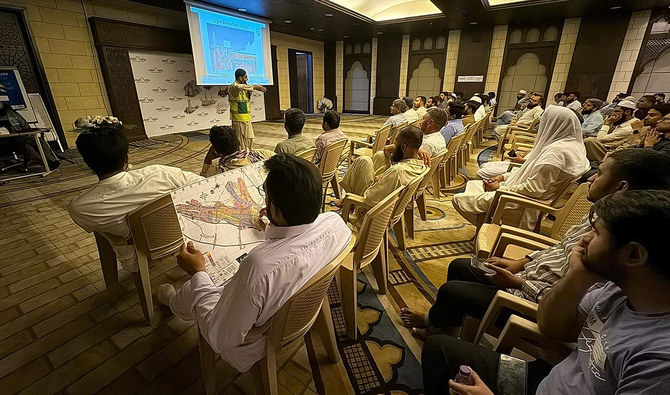
A man looks map of the Saudi holy city of Makkah as Pakistani volunteers attend a training session to assist pilgrims during this year’s annual Hajj pilgrimage in Jeddah on May 15, 2024. (Photo courtesy: Pakistan Hajj Volunteers Group)
Short Url
Updated 26 May 2024
Follow

Saudi-based Pakistani group recruits over 2,500 volunteers to facilitate Hajj pilgrims this year

  • The Pakistan Hajj Volunteers Group comprises thousands of expatriates living in the Kingdom who facilitate pilgrims each year
  • The PHVG offers guidance, wheelchair services, and other facilities to pilgrims during Hajj days irrespective of their nationalities

ISLAMABAD: The Pakistan Hajj Volunteers Group (PHVG), a Saudi Arabia-based group of Pakistani expatriates, has recruited more than 2,500 volunteers to assist pilgrims during this year’s annual Hajj pilgrimage, a senior PHVG official said on Sunday.
Established in 2011 with only 85 volunteers, the PHVG has expanded over the course of 12 years and currently includes thousands of members, who volunteer during Hajj pilgrimage every year. The group works in close coordination with the Pakistani consulate in Jeddah and the Pakistan Hajj Mission.
The PHVG assists and provides guidance to pilgrims during the annual Hajj pilgrimage in Mina Valley, and the Saudi cities of Azizia and Makkah from the 10th till 12th of the Islamic holy month of Dhu Al-Hijjah, when Hajj activities reach their peak.
“The PHVG registered and verified 2,838 volunteers for Hajj 2024 operation and also has around 100 key volunteers in our three regions (Hejaz, central and eastern parts of the Kingdom) who are engaged year-round for all the preparations for the guests of Allah,” Ashraf Ali Khan, the PHVG central coordinator, told Arab News.
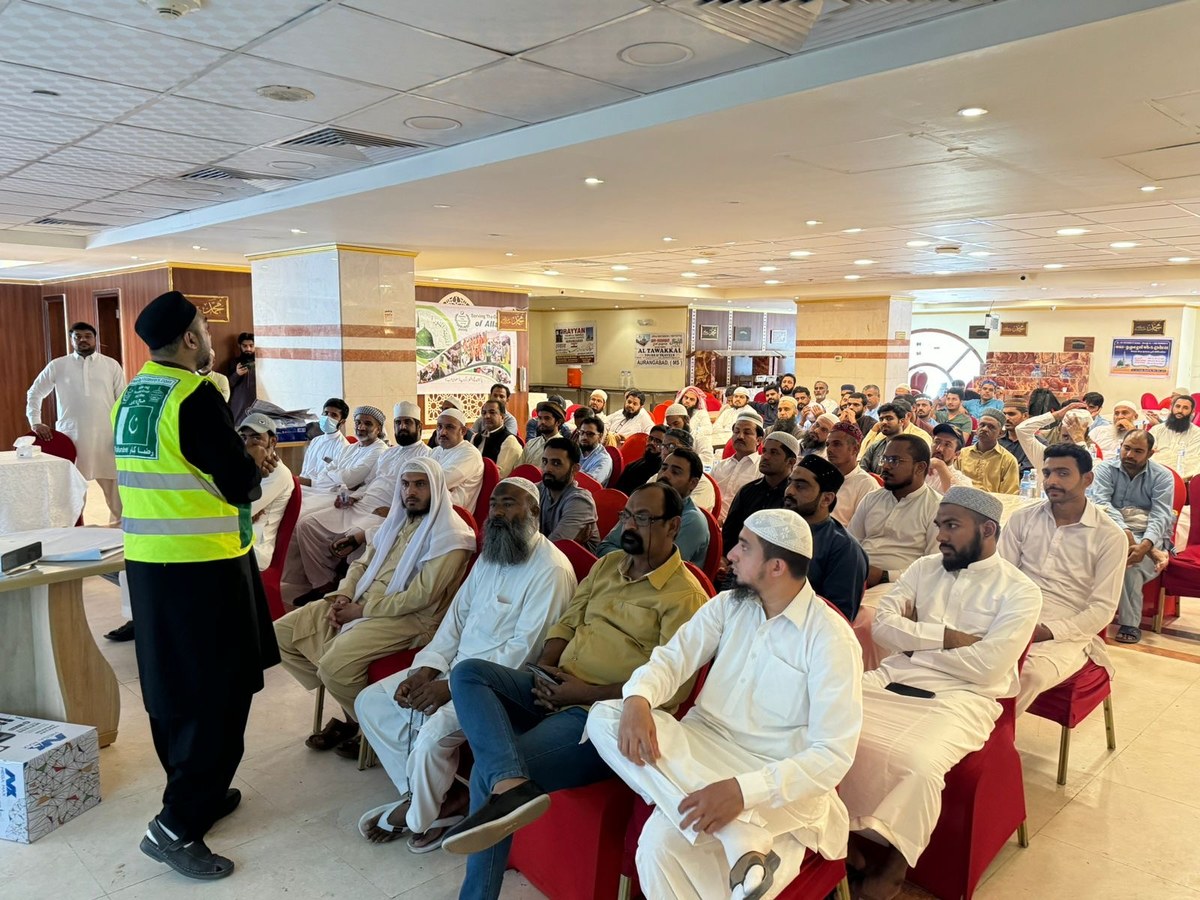


Pakistan Hajj Volunteers Group official briefs Pakistani volunteers during a training session to facilitate Hajj pilgrims in Jeddah on May 15, 2024. (Photo courtesy: Pakistan Hajj Volunteers Group)

The PHVG started its registration campaign on February 9 that ended on May 10, according to the official. The organization used print, electronic, and social media to register Pakistani volunteers from all over the Kingdom.
“Any Pakistani legally present in the Kingdom can become a volunteer and they also need to be registered on the Saudi social services website for further permissions,” Khan said, adding all volunteers were required to complete two mandatory training sessions and an online exam before the final selection.
The official said his organization trained volunteers using audiovisual training sessions and instructed them on the Mina map reading and the usage of its mobile application, PHVG Hajj Navigator.
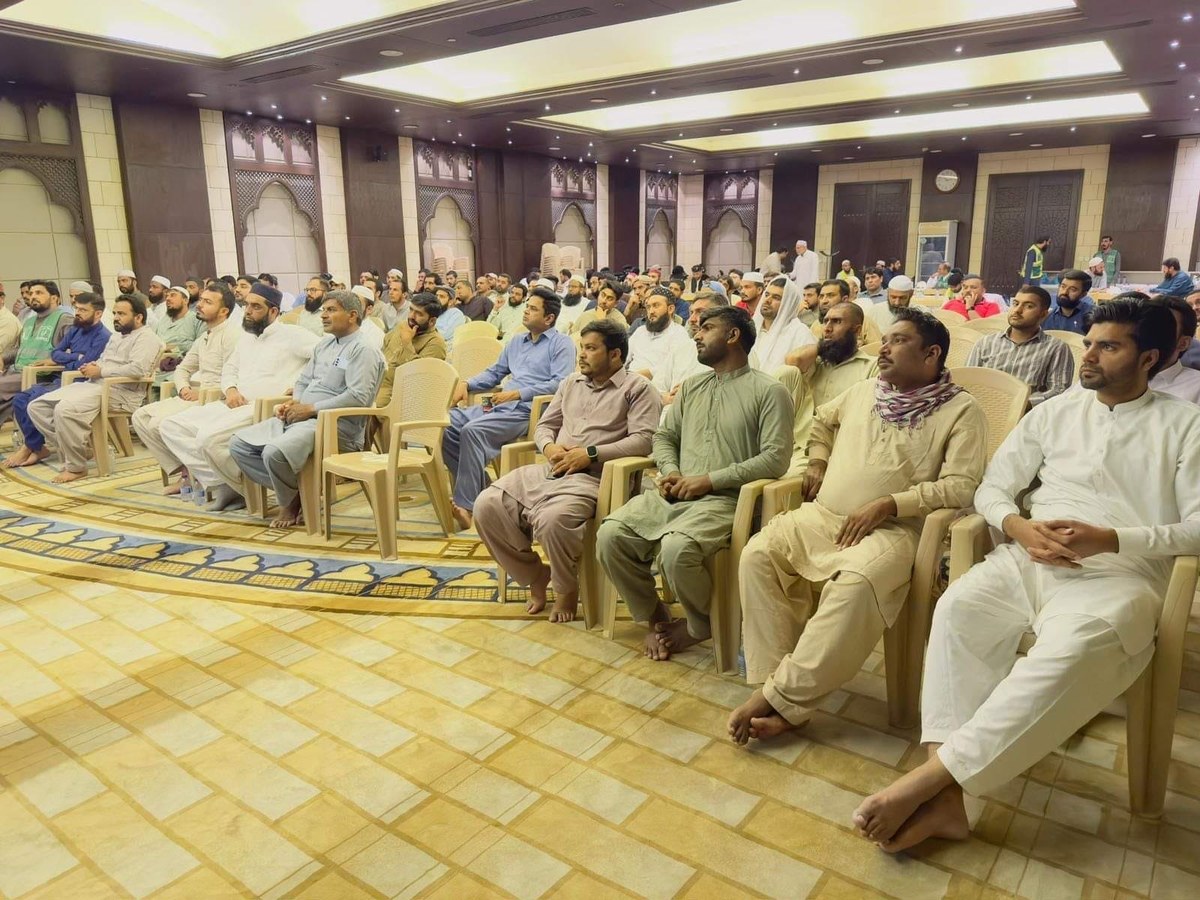


Pakistani volunteers attend a training session to facilitate Hajj pilgrims in Jeddah on May 15, 2024, ahead of annual Hajj pilgrimage. (Photo courtesy: Pakistan Hajj Volunteers Group)

“The volunteers are neither allowed to perform Hajj nor compensated for their services as they are devoted to helping and guiding pilgrims to seek the reward and pleasure from Allah,” he added.
The volunteers mainly help Hajj pilgrims in five different areas, including providing training through videos and presentations, according to the official.
Along with this, volunteers also provide guidance in Mina, especially through translation, to pilgrims who come from around the world, and guide them to their tents, hospitals and assist them with wheelchairs.
“Additionally, we offer Tawaf-e-Ziyara to pilgrims who fall ill during the pilgrimage,” Khan said. “Each sick pilgrim is accompanied by two volunteers who escort them from the hospital and return them after completing the Tawaf.”
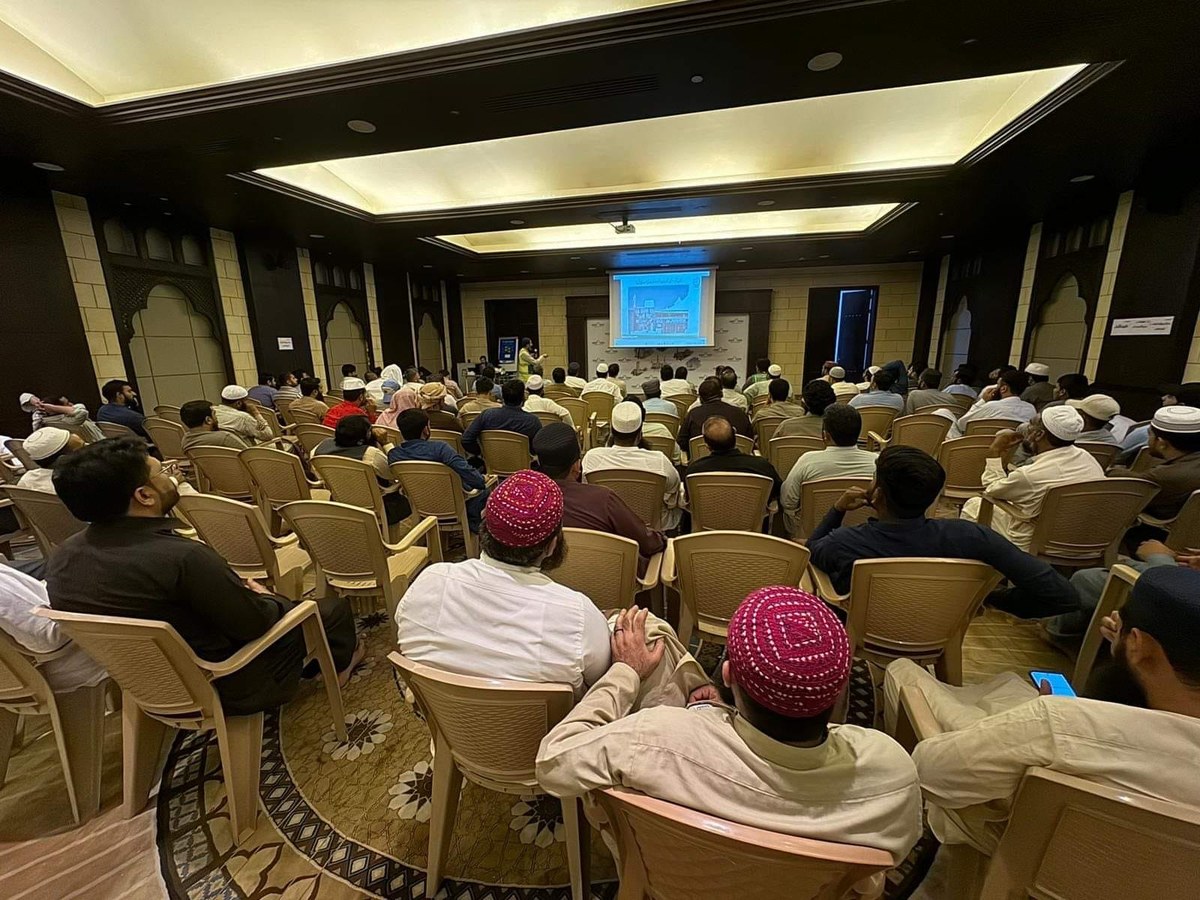


Pakistan Hajj Volunteers Group official briefs Pakistani volunteers during a training session to facilitate Hajj pilgrims in Jeddah on May 15, 2024. (Photo courtesy: Pakistan Hajj Volunteers Group)


ADB, Pakistan sign over $300 million agreements to undertake climate resilience initiatives

Updated 30 December 2025
Follow

ADB, Pakistan sign over $300 million agreements to undertake climate resilience initiatives

  • Pakistan ranks among nations most vulnerable to climate change and has seen erratic changes in weather patterns
  • The projects in Sindh and Punjab will restore nature-based coastal defenses and enhance agricultural productivity

ISLAMABAD: The Pakistani government and the Asian Development Bank (ADB) have signed more than $300 million agreements to undertake two major climate resilience initiatives, Pakistan’s Press Information Department (PID) said on Tuesday.

The projects include the Sindh Coastal Resilience Sector Project (SCRP), valued at Rs50.5 billion ($180.5 million), and the Punjab Climate-Resilient and Low-Carbon Agriculture Mechanization Project (PCRLCAMP), totaling Rs34.7 billion ($124 million).

Pakistan ranks among nations most vulnerable to climate change and has seen erratic changes in its weather patterns. In 2022, monsoon floods killed over 1,700 people, displaced another 33 million and caused over $30 billion losses, while another 1,037 people were killed in floods this year.

The South Asian country is ramping up climate resilience efforts, with support from the ADB and World Bank, and investing in climate-resilient infrastructure, particularly in vulnerable areas.

“Both sides expressed their commitment to effectively utilize the financing for successful and timely completion of the two initiatives,” the PID said in a statement.

The Sindh Coastal Resilience Project (SCRP) will promote integrated water resources and flood risk management, restore nature-based coastal defenses, and strengthen institutional and community capacity for strategic action planning, directly benefiting over 3.8 million people in Thatta, Sujawal, and Badin districts, according to ADB.

The Punjab project will enhance agricultural productivity and climate resilience across 30 districts, improving small farmers’ access to climate-smart machinery, introducing circular agriculture practices to reduce residue burning, establishing testing and training facilities, and empowering 15,000 women through skills development and livelihood diversification.

Earlier this month, the ADB also approved $381 million in financing for Pakistan’s Punjab province to modernize agriculture and strengthen education and health services, including concessional loans and grants for farm mechanization, Science, Technology, Engineering and Mathematics (STEM) education, and nursing sector reforms.