BEIRUT: Lebanon is willing to cooperate with any international effort to stop Israeli aggression and bring security to the region, Parliamentary Speaker Nabih Berri said on Friday.
However, in a statement marking the 24th anniversary of Israel’s withdrawal from southern Lebanon in 2000, Berri warned that Lebanon “is not ready to waive any of its sovereign rights.”
He also accused Israel of displaying “greed toward Lebanon, its resources, its entity, and its land, sea, and air borders.”
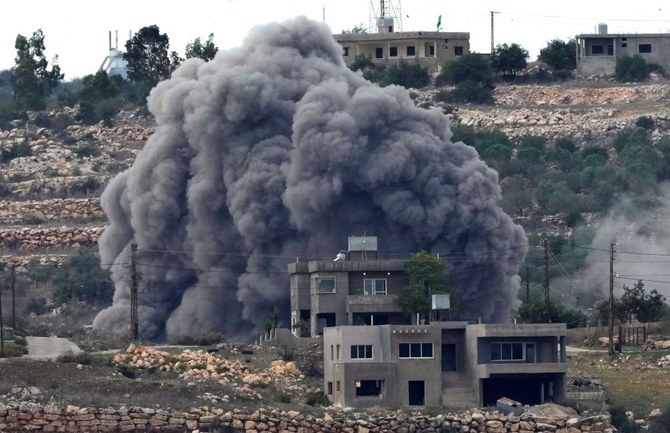
Berri’s statement came as hostilities between Hezbollah and the Israeli army in the southern border region entered their 230th day.
The parliamentary speaker called for intensified international and regional efforts to halt Israel’s assault in the Gaza Strip, saying this was crucial to maintain security and stability in the entire region.
Hezbollah claims its actions have been in support of Gaza amid further Israeli threats to Lebanon.
Israeli Prime Minister Benjamin Netanyahu vowed on Thursday from the northern command headquarters “to carry out detailed, important and even surprising plans to return displaced settlers to the north.”
He claimed Israel had killed hundreds of Hezbollah fighters.
Benny Gantz, a minister in the Israeli war Cabinet, said: “Get ready from now on for the return of the residents of the north to their houses safely in early September by force or order.”
Berri returned from Tehran after attending the funeral of Iranian President Ebrahim Raisi, who was killed in a helicopter crash on May 19.
In his message to the Lebanese, he renewed Lebanon’s “commitment and adherence to UN Resolution 1701, and all its terms and stipulations.”
The resolution calls for an end to hostilities between Israel and Hezbollah, the withdrawal of Israeli forces from Lebanon to be replaced by Lebanese and UNIFIL forces in southern Lebanon, and the disarmament of armed groups including Hezbollah.
Berri accused Israel of ignoring the resolution “since the moment it was issued, with over 30,000 land, sea and air violations.”
Lebanon “upholds its right to defend its land with all the available means in the face of Israeli hostilities,” he said.
He called for the liberation of “the remaining occupied territory in the Kfarchouba Hills, the occupied Shebaa Farms, the northern part of the GHajjar village, and the contested border points with occupied Palestine all the way to the B1 point in Ras Al-Naqoura.”
Caretaker Minister of Defense Maurice Slim said that Lebanon preferred peace to war.
However, “defending the land was and will be the Lebanese state’s choice through the resilience of its army and people, especially the steadfast ones who are still residing in their villages and towns to repel the aggression,” he said.
Israeli warplanes on Thursday struck the town of Maroun Al-Ras in the Bint Jbeil district.
Sirens sounded in Israeli settlements opposite the border with Lebanon amid fears of possible drone attacks.
The Israeli newspaper Yedioth Ahronoth reported on Friday that Hezbollah’s drones caused significant damage in the northern towns and resulted in several fatalities.
Another newspaper, Israel Hayom, said that Hezbollah’s drones are “one of the biggest threats facing Israel in the northern arena.”
The newspaper said that Hezbollah leader Mohammed Hassan Fares, who was killed by an Israeli drone strike last week in Qana, was a scientist who specialized in robotics and machine learning.


![]()

Lebanon ‘open to any effort to curb Israeli aggression,’ says Berri
Short Url
https://arab.news/4jzzg
Lebanon ‘open to any effort to curb Israeli aggression,’ says Berri
- Parliamentary speaker accuses Israel of ‘greed’ over Lebanese resources
- Berri’s statement came as hostilities between Hezbollah and the Israeli army in the southern border region entered their 230th day


Latest updates


© 2026 SAUDI RESEARCH & PUBLISHING COMPANY, All Rights Reserved And subject to Terms of Use Agreement.