



NEW YORK: Republican presidential candidate Donald Trump claimed without evidence on Thursday that immigrants from Africa, the Middle East and elsewhere were “building an army” to attack Americans “from within,” once again using inflammatory rhetoric about migrants in the US illegally.
During a rally in the mainly Hispanic and Black neighborhood of New York City’s South Bronx, Trump sought to portray migrants from China, the Democratic Republic of the Congo and other countries as a violent threat, even as studies show immigrants are not more likely to engage in criminality.
“Almost everyone is a male and they look like fighting age. I think they’re building an army,” Trump said to a few thousand supporters who gathered to hear him in the South Bronx’s Crotona Park. “They want to get us from within.”
Throughout his campaign, Trump has repeatedly used incendiary language to accuse immigrants in the US illegally of fueling violent crime, calling them “animals” responsible for “poisoning the blood” of the country. As evidence, he points to individual instances of crimes, rather than aggregate data.
“We are not going to let these people come in and take our city away from us and take our country away,” Trump said, vowing to carry out “the largest criminal deportation operation in our country’s history” if re-elected to the White House.
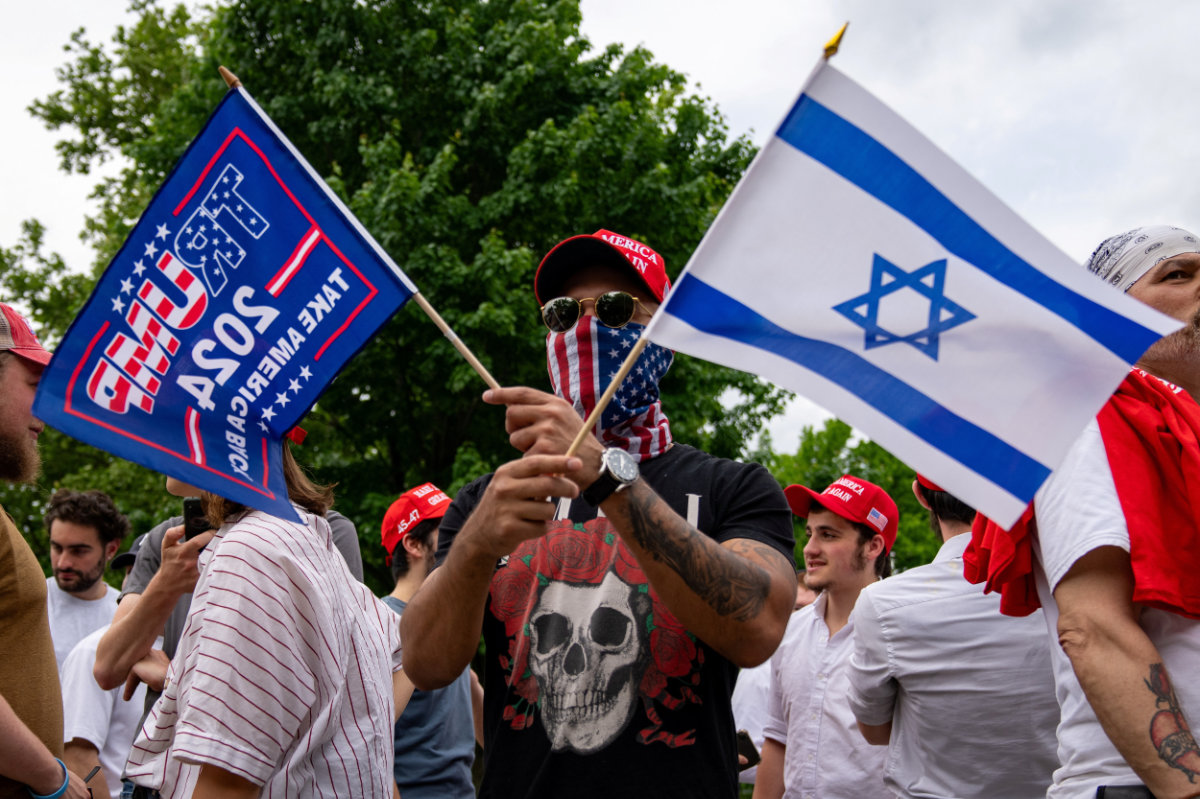
Supporters gather for former US President Donald Trump's rally outside of the campaign rally at Crotona Park in the Bronx borough of New York City on May 23, 2024. (REUTERS)
Trump also sought to tie record levels of migrants caught crossing the US-Mexico border illegally with the economic plight of Black and Hispanic voters, arguing, without evidence, that migrants were taking their jobs.
Trump’s decision to speak in the Bronx was in part a matter of convenience. His campaign schedule has been crimped by his trial in New York on charges he falsified business records to hide a hush money payment to a porn star. In April, he made a campaign appearance at a convenience store in Harlem, New York.
Trump is locked in a tight race with Democratic President Joe Biden ahead of the Nov. 5 election. The Bronx rally was part of his effort to exploit Biden’s weakening support among Hispanic and Black voters.
Roughly 55 percent of Bronx County residents are Hispanic and about one-third are Black, and the crowd on Thursday was more racially mixed than his usual rallies, which are predominantly white.
Trump’s campaign had a permit for up to 3,500 people to attend the rally, the New York City Parks Department said.
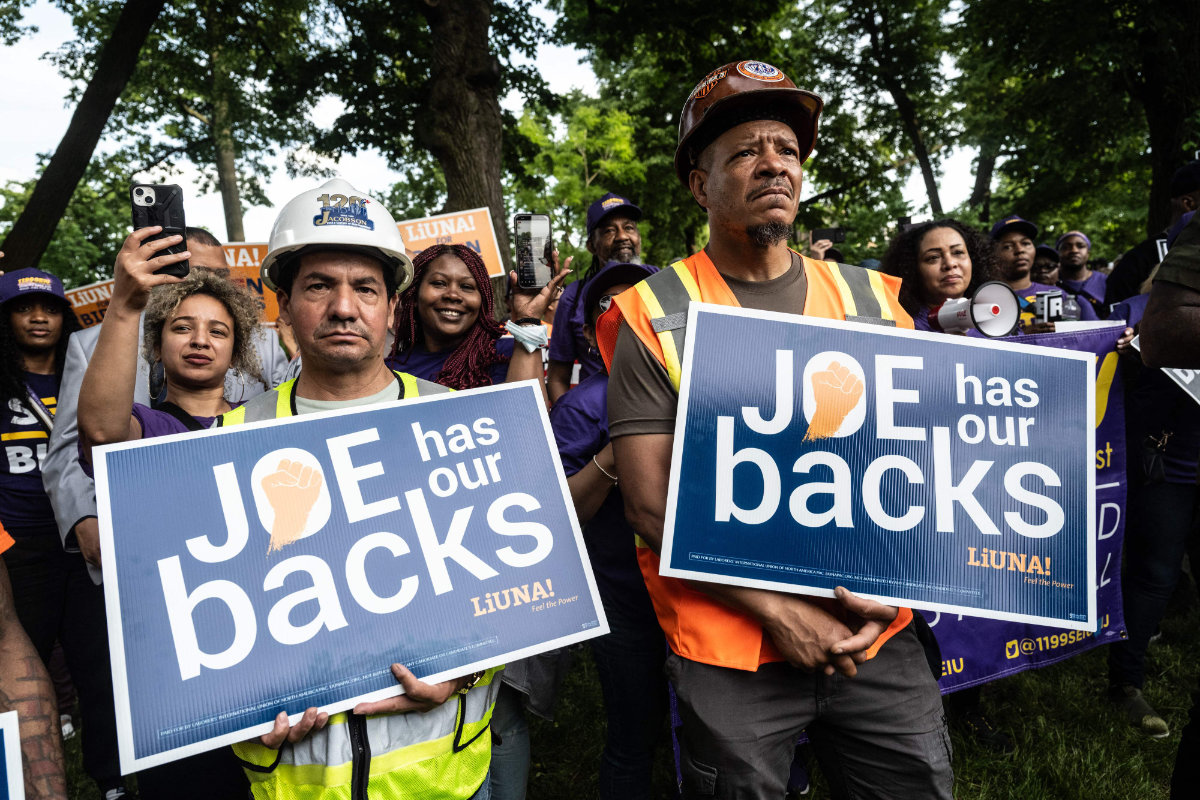
Protesters against Donald Trump gather near the Crotona Park rally venue on May 23, 2024 in the Bronx borough of New York City. Trump's visit to the deep blue borough of the Bronx is seen as a way to make inroads with Black and Hispanic voters. (Getty Images/AFP)
‘Historic’ rally in the Bronx
Recent polls suggest the Trump is gaining ground with Blacks and Hispanics, who were critical to Biden’s win in 2020. Trump strategists see a chance to grab enough of their votes to make the difference in swing states in November.
Biden has had a flurry of actions and events focused on bolstering support among African American voters. He has singled out Trump and other Republicans for attacking programs aimed at improving diversity, equity and inclusion, and on Thursday the president’s campaign released a pair of TV and radio ads criticizing Trump’s treatment of Black people.
Reuters interviewed nine Hispanic and Black rally attendees who said they will vote for Trump in 2024. Of the seven who were voting age in 2020, six voted for Trump. They cited the economy and immigration as their main reasons for supporting him.
“It’s historic that he’s here,” said Steven Suarez, 46, who is Puerto Rican, a reference to Trump being the first Republican presidential candidate to make a stop in the Bronx since Ronald Reagan in the 1980s. “He could have gone anywhere in New York City. He could have gone to Manhattan. He chose to come here.”
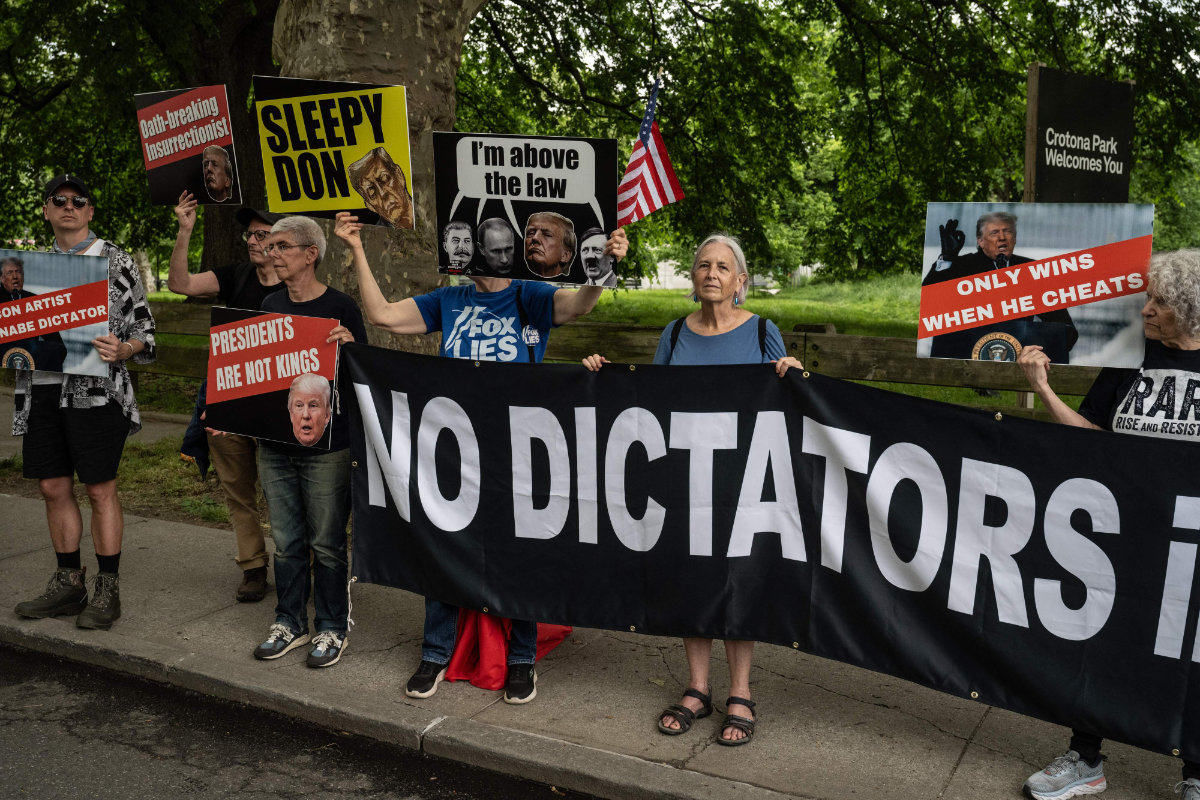
Protesters against Donald Trump gather near the Crotona Park rally venue on May 23, 2024 in the Bronx borough of New York City. Trump's visit to the deep blue borough of the Bronx is seen as a way to make inroads with Black and Hispanic voters. (Getty Images/AFP)
In a New York Times/Siena College poll in March, Trump was selected by 23 percent of Black and 46 percent of Hispanic respondents in a one-on-one matchup with Biden. That is far higher than the 12 percent of Black and 32 percent of Hispanic voters Trump won in 2020, according to Edison Research exit polls.
Political analysts have attributed weakening support for Biden among voters of color in part to the outsized impact of inflation on people living paycheck to paycheck.
Attending his first Trump rally on Thursday, Ed Rosa, 60, said he was a longtime Democratic voter but felt his vote for Biden in 2020 was a mistake. He said the Democratic Party had “become too socialist” and was not handling the economy or the southern border well.


