

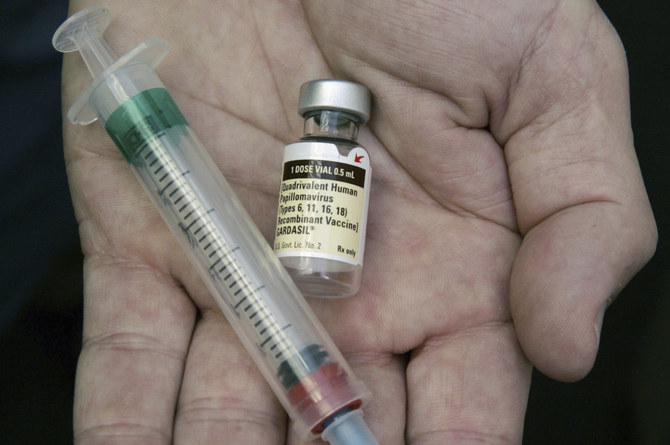

New research suggests the HPV vaccine is preventing cancer in men, as well as in women, but fewer boys than girls are getting the shots in the United States.
The HPV vaccine was developed to prevent cervical cancer in women and experts give it credit, along with screening, for lowering cervical cancer rates. Evidence that the shots are preventing HPV-related cancers in men has been slower to emerge, but the new research suggests vaccinated men have fewer cancers of the mouth and throat compared to those who didn’t get the shots. These cancers are more than twice as common in men than in women.
For the study, researchers compared 3.4 million people of similar ages — half vaccinated versus half unvaccinated — in a large health care dataset.As expected, vaccinated women had a lower risk of developing cervical cancer within at least five years of getting the shots. For men, there were benefits too. Vaccinated men had a lower risk of developing any HPV-related cancer, such as cancers of the anus, penis and mouth and throat.
These cancers take years to develop so the numbers were low: There were 57 HPV-related cancers among the unvaccinated men — mostly head and neck cancers — compared to 26 among the men who had the HPV vaccine.
“We think the maximum benefit from the vaccine will actually happen in the next two or three decades,” said study co-author Dr. Joseph Curry, a head and neck surgeon at the Sidney Kimmel Cancer Center in Philadelphia. “What we’re showing here is an early wave of effect.”
Results of the study and a second were released Thursday by the American Society of Clinical Oncology and will be discussed next month at its annual meeting in Chicago. The second study shows vaccination rates rising but males lag behind females in getting the HPV shots.
HPV, or human papillomavirus, is very common and is spread through sex. Most HPV infections cause no symptoms and clear up without treatment. Others develop into cancer, about 37,000 cases a year, according to the Centers for Disease Control and Prevention.
In the US, the HPV vaccine has been recommended since 2006 for girls at age 11 or 12, and since 2011 for boys the same age. Catch-up shots are recommended for anyone through age 26 who hasn’t been vaccinated.
In the second study, researchers looked at self- and parent-reported HPV vaccination rates in preteens and young adults in a large government survey. From 2011 to 2020, vaccination rates rose from 38 percent to 49 percent among females, and among males from 8 percent to 36 percent.
“HPV vaccine uptake among young males increased by more than fourfold over the last decade, though vaccination rates among young males still fall behind females,” said study co-author Dr. Danh Nguyen at the University of Texas Southwestern Medical Center in Dallas.
Parents of boys, as well as girls, should know that HPV vaccines lower cancer risk, said Jasmin Tiro of the University of Chicago Medicine Comprehensive Cancer Center who was not involved in the research. And young men who haven’t been vaccinated can still get the shots.
“It’s really important that teenagers get exposed to the vaccine before they’re exposed to the virus,” she said.


