

Pakistan’s deputy PM visits Kyrgyzstan to address concerns of Pakistani students following mob violence

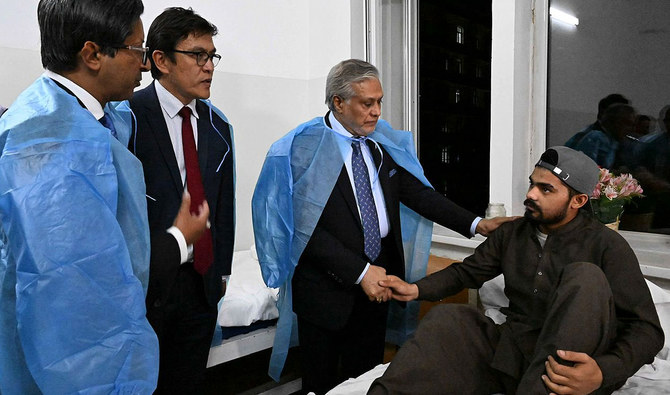
In this handout photograph, taken and released by Pakistan’s foreign ministry, Pakistan’s Deputy Prime Minister Ishaq Dar (2R) shakes hands with Pakistani textile worker, Shahzaib, at the National Hospital in Bishkek on May 22, 2024. Shahzaib was among five Pakistanis who were injured during the May 17 mob violence in Kyrgyz capital. (Photo courtesy: MOFA)
Short Url
Updated 22 May 2024
Follow

Pakistan’s deputy PM visits Kyrgyzstan to address concerns of Pakistani students following mob violence

  • Ishaq Dar flew to Bishkek with the Kyrgyz foreign minister after their meeting on the sidelines of SCO conference in Astana
  • Pakistan continues to evacuate students even as the top officials of the two countries hold meetings to sort things out

ISLAMABAD: Pakistan’s Deputy Prime Minister Ishaq Dar arrived in Kyrgyzstan’s capital, Bishkek, on Tuesday to address concerns of young nationals of his country enrolled in various educational institutions of the Central Asian state who were targeted by mob violence last week.
The violence began in Bishkek on Friday night after videos of a brawl between Kyrgyz and Egyptian students went viral on social media, prompting groups of local residents to target university hostels and private lodgings of international students, including those from Pakistan.
According to official figures, about 10,000 Pakistani students are enrolled in Kyrgyzstan, with nearly 6,000 in Bishkek. The frenzied violence forced them to confine themselves for several hours in their rooms without food and drinking water, with many of them making evacuation requests online.
Dar, who is also the foreign minister of Pakistan, held a meeting with his Kyrgyz counterpart in Kazakhstan on the sidelines of a meeting of the Shanghai Cooperation Organization (SCO) Council of Foreign Ministers.
“Deputy Prime Minister and Foreign Minister Senator Mohammad Ishaq Dar has arrived in Bishkek, Kyrgyz Republic for a working visit,” Pakistan’s foreign office announced in a statement on Tuesday. “He was invited to visit the Kyrgyz Republic by Kyrgyz Foreign Minister Zheenbek Kulubaev after their meeting yesterday in Astana, Kazakhstan on the sidelines of the SCO Council of Foreign Ministers. The two Ministers traveled together from Astana to Bishkek.”
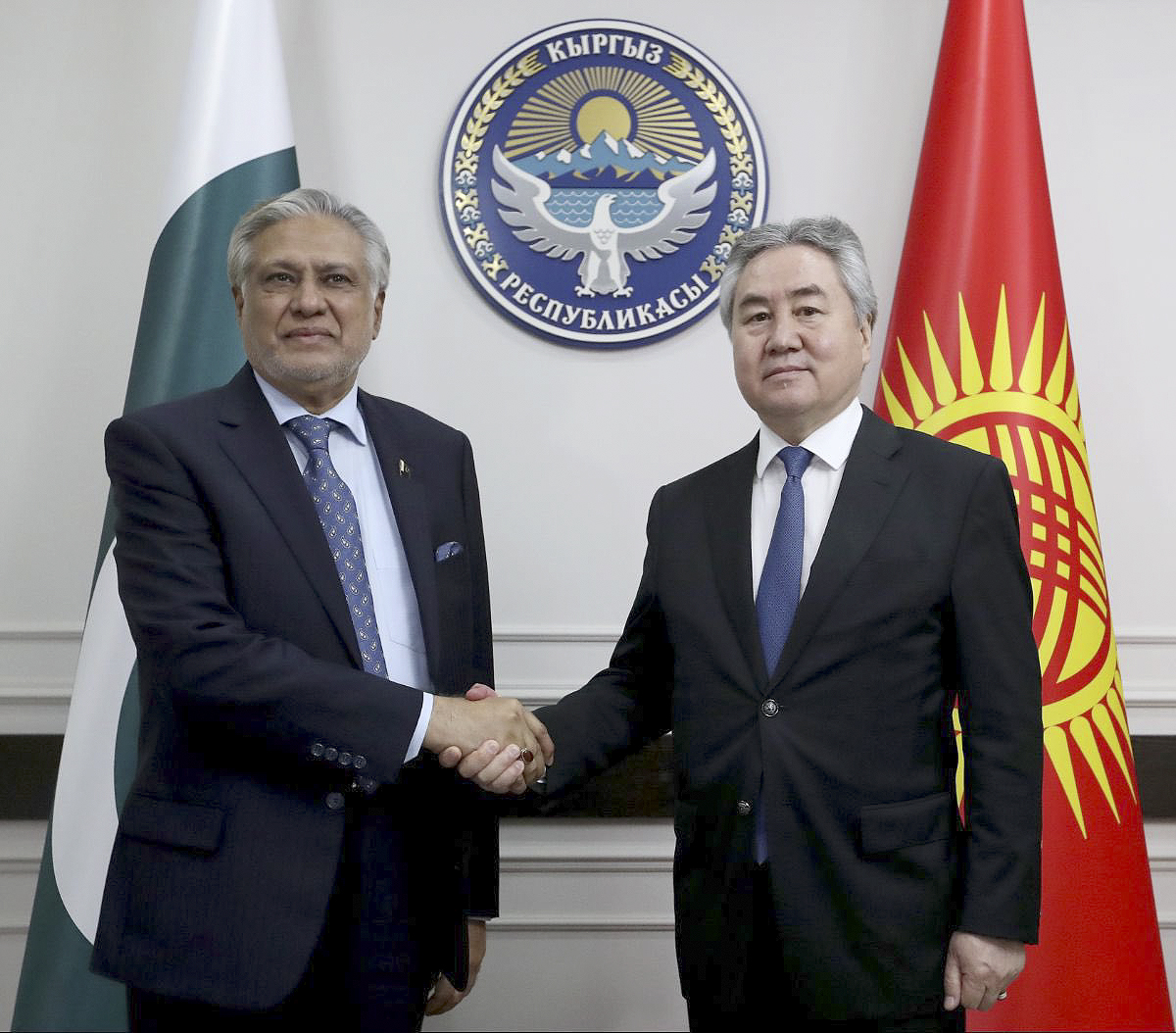


In this handout photograph, taken and released by Pakistan’s foreign ministry, Pakistan’s Deputy Prime Minister Ishaq Dar (L) shakes hands with Kyrgyzstan Foreign Minister Kulubaev Zheenbek Moldokanovich in Bishkek on May 22, 2024. (Photo courtesy: MOFA)

“In Bishkek, the Deputy Prime Minister will discuss with the Kyrgyz Foreign Minister the concerns of Pakistani nationals in the Kyrgyz Republic, including the recent issues faced by Pakistani students,” it added.
Five Pakistani nationals were injured in last week’s violence. Four of them were released after receiving first aid. However, one student was hospitalized due to more serious injuries.
Dar also met with the student who remains under treatment among his other official engagements.
Pakistan has so far repatriated over 1,000 students from Bishkek after the mob violence via various flights. The evacuation process continues even as officials of the two countries try to sort things out.
The most recent flight carrying about 170 Pakistani students arrived in Multan on Wednesday morning.
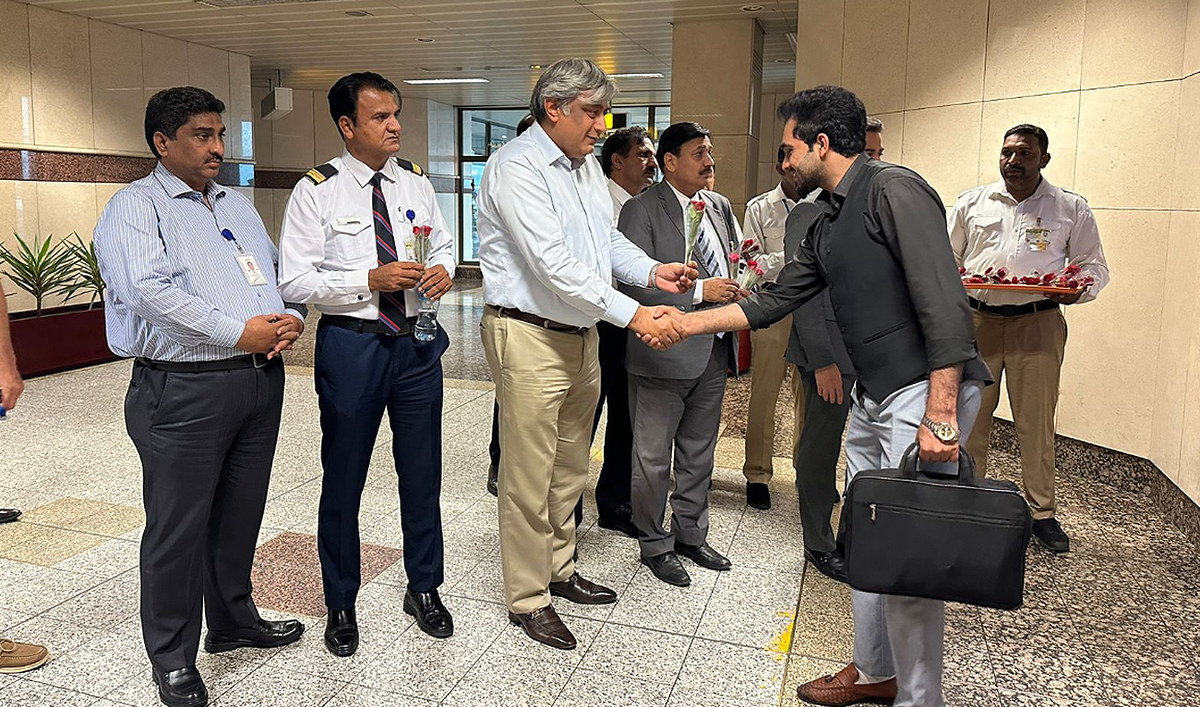


In this handout photograph, taken and released by Pakistan International Airlines, officials from Pakistan's national airline welcome students arriving from Bishkek via a special PIA flight at the Allama Iqbal International Airport in Lahore on May 21, 2024, days after mobs in Kyrgyz capital attacked foreign students following a brawl with migrants. (Photo courtesy: PIA)


Pakistan reviews austerity measures amid Middle East crisis, urges strict nationwide implementation

Updated 11 March 2026
Follow

Pakistan reviews austerity measures amid Middle East crisis, urges strict nationwide implementation

  • Deputy Prime Minister Ishaq Dar chairs review meeting of austerity steps
  • Officials briefed on salary cuts, school closures, four‑day week, petrol conservation

ISLAMABAD: Pakistan’s government on Wednesday assessed progress on a sweeping set of austerity measures introduced to mitigate the country’s economic strain from sharply rising global oil prices and supply disruptions linked to the ongoing war in the Middle East.

Prime Minister Shehbaz Sharif this week announced a series of austerity steps, including a four‑day work week for government offices, requiring 50  percent of staff to work from home, cutting fuel allowances for official vehicles by half, grounding up to 60  percent of the government fleet and closing all schools for two weeks to conserve fuel amid the global oil crisis.

The measures were unveiled in response to global oil market volatility triggered by the conflict involving the United States, Israel and Iran, which has disrupted supply routes such as the Strait of Hormuz and pushed crude prices sharply higher, straining Pakistan’s heavily import‑dependent energy sector.

“The meeting stressed the importance of strict and transparent adherence to the austerity measures, promoting fiscal responsibility and prudent use of public resources,” Deputy Prime Minister and Foreign Minister Senator Mohammad Ishaq Dar said in a statement.

He was chairing a meeting of the Committee for Monitoring and Implementation of Conservation and Additional Austerity Measures, constituted under the directions of the PM, bringing together federal and provincial officials to review execution of the broad cost‑cutting plan. 

Dar emphasized the government’s commitment to enforcing the PM’s austerity steps nationwide. The committee’s review also covered reductions in departmental expenditure, deductions from salaries of senior officials earning over Rs. 300,000 ($1,120), and coordination with provincial administrations to ensure uniform implementation of the plan.

Participants at the meeting reiterated that all ministries and divisions must continue strict monitoring and reporting, with transparent oversight mechanisms, as Pakistan navigates the economic pressures from the prolonged Middle East crisis and its fallout on global energy and trade markets.