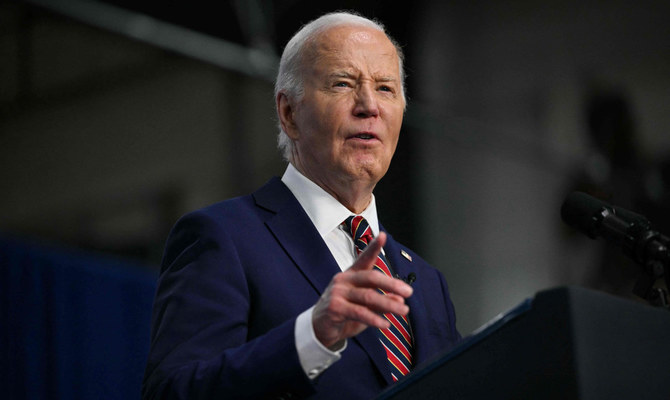
NASHUA, N.H.: President Joe Biden, aiming to highlight his legislative accomplishments this election year, traveled to New Hampshire on Tuesday to discuss how he’s helped military veterans get benefits as a result of burn pit or other toxic exposure during their service.
“We can never fully thank you for all the sacrifices you’ve made,” Biden said to the veterans and their families gathered at a YMCA. “In America, we leave no veteran behind. That’s our motto.”
In raw numbers, more than 1 million claims have been granted to veterans since Biden signed the so-called PACT Act into law in August 2022, the administration said Tuesday. That amounts to about 888,000 veterans and survivors in all 50 states who have been able to receive disability benefits under the law.
That totals about $5.7 billion in benefits given to veterans and their survivors, according to the administration.
“The president, I think, has believed now for too long, too many veterans who got sick serving and fighting for our country had to fight the VA for their care, too,” Veterans Affairs Secretary Denis McDonough told reporters on Monday. PACT stands for “Promise to Address Comprehensive Toxics.”
The PACT Act is relatively lower profile compared to the president’s other legislative accomplishments — such as a bipartisan infrastructure law and a sweeping tax, climate and health care package — but it is one that is deeply personal for Biden.
He has blamed burn pits for the brain cancer that killed his son, Beau, who served in Iraq, and has vowed repeatedly that he would get the PACT Act into law. Burn pits are where chemicals, tires, plastics, medical equipment and human waste were disposed of on military bases and were used in Iraq and Afghanistan.
Before the law, the Department of Veterans Affairs denied 70 percent of disability claims that involved burn pit exposure. Now, the law requires the VA to assume that certain respiratory illnesses and cancers were related to burn pit or other toxic exposure without veterans having to prove the link.
Before Biden’s planned remarks, he went to a Veterans of Foreign Wars post in Merrimack, New Hampshire. The president met there with Lisa Clark, an Air Force veteran who is receiving benefits through the PACT Act because her late husband, Senior Master Sergeant Carl Clark, was exposed to the chemical herbicide Agent Orange during the Vietnam War.
Sen. Jon Tester, D-Montana, marked the milestone by praising the veterans who advocated for the law.
“For far too long, our nation failed to honor its promises to our veterans exposed to toxins in military conflicts across the globe— until we fought like hell alongside veterans to finally get the PACT Act signed into law,” Tester, chairman of the Senate Veterans’ Affairs Committee, said.


![]()

Over 1 million claims related to toxic exposure granted under new veterans law, Biden announces
Short Url
https://arab.news/vfvue
Over 1 million claims related to toxic exposure granted under new veterans law, Biden announces
- In raw numbers, more than 1 million claims have been granted to veterans since Biden signed the so-called PACT Act into law in August 2022, the administration said Tuesday


Latest updates


© 2026 SAUDI RESEARCH & PUBLISHING COMPANY, All Rights Reserved And subject to Terms of Use Agreement.