Germany: ICC asking for arrest warrants for Hamas leaders is logical

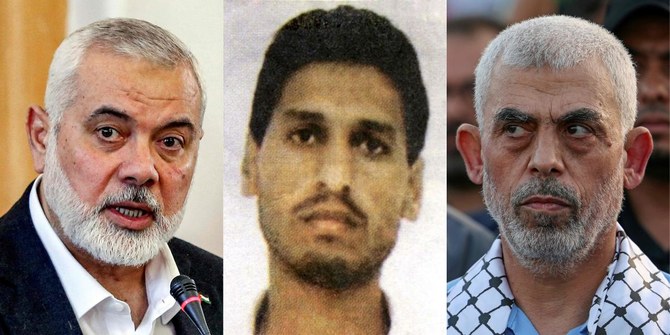
This combination of pictures created on May 21, 2024, shows (L/R): Ismail Haniyeh, the Doha-based political bureau chief of Hamas, the alleged military leader of Hamas movement, Mohammed Deif, and head of Hamas’s political wing in Gaza Yahya Sinwar. (AFP)
Short Url
Updated 21 May 2024
Follow

Germany: ICC asking for arrest warrants for Hamas leaders is logical

  • “The accusations of the chief prosecutor are serious and must be substantiated,” said the spokesperson

BERLIN: A request by the International Criminal Court (ICC) for arrest warrants for Hamas leaders is logical and no comparisons can be made with Israel’s prime minister and defense minister, for whom warrants are also being sought, a German government spokesperson said.
“The accusations of the chief prosecutor are serious and must be substantiated,” said the spokesperson on Tuesday. He added that Germany assumed Israel’s democratic system and rule of law with a strong, independent judiciary would be taken into account by judges deciding whether to issue the warrants.


UN calls on Taliban to lift ban on Afghan women in its offices

Updated 7 sec ago
Follow

UN calls on Taliban to lift ban on Afghan women in its offices

  • In September, the Taliban authorities began prohibiting women staff members from entering UN offices
  • Staff have been working remotely for past three months, notably providing assistance to victims of deadly quakes

KABUL: The United Nations called on the Taliban authorities on Sunday to lift its ban on Afghan women working in its offices, saying the restriction puts “life-saving services” at risk.

Since the Taliban regained power in 2021, Afghan women have been barred from doing most jobs, visiting parks and beauty salons, and attending school beyond the age of 12.

In September, the Taliban authorities began prohibiting women staff members from entering UN offices.

“We call for the ban on Afghan women staff and contractors from entering United Nations premises to be reversed, and for their safe access to offices and the field,” Susan Ferguson, the special representative of the UN’s women’s agency in Afghanistan, said in a statement.

“The longer these restrictions remain in place, the greater the risk to these life-saving services,” Ferguson said, adding that they violated the UN’s principles of human rights and equality.

The statement did not say how many staff were affected, but UN sources indicated that several hundred women were facing the ban.

Staff have been working remotely for the past three months, notably providing assistance to the victims of deadly earthquakes and to Afghan migrants deported from neighboring Pakistan and Iran, Ferguson said.

Describing their work as “indispensable,” she said: “Only through their presence can we reach women and girls safely and provide culturally appropriate assistance.”

The Taliban authorities did not immediately respond to an AFP request for comment.

In September, the UN’s refugee agency suspended cash aid to returned Afghan migrants, citing the impossibility of interviewing and collecting information on the more than 50 percent of returnees who were women.