


Author: Haemin Sunim
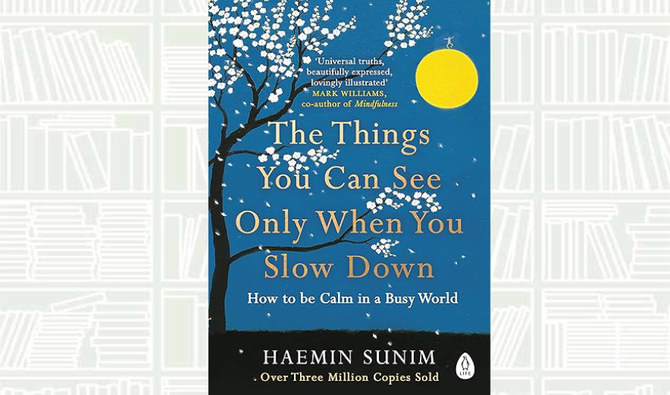
“The Things You Can See Only When You Slow Down: How to be Calm in a Busy World” offers advice on how to find inner peace in today’s busy world.
The 300-page book, published in 2017, was written by Haemin Sunim, a Korean Buddhist monk, and has sold more than 3 million copies.
The author underwent monastic training in South Korea before spending seven years teaching Asian religions at Hampshire College in the US. The book elaborates on the wisdom he gained from personal experiences as a Buddhist monk.
One of the book’s strengths is its simplicity. The author’s writing style is easy to understand as he presents his ideas in bite-sized chapters, each focusing on a different aspect of mindfulness.
Whether he is writing about the meaning of silence or of gratitude, Sunim’s words resonate with a quiet authority which prompts the reader to pause and reflect on their own lives.
In addition, the book is filled with amazing imagery that complements the stories. The beautiful drawings contribute to Sunim’s narrative and create a sense of serenity and peace.
The author emphasizes the concept of enjoying the little things in life to the fullest, such as drinking a cup of tea in the morning, taking a walk in nature, or having a thoughtful conversation with loved ones.
Slowing down allows people to notice the happiness hidden in even the simplest tasks and moments, he claims.
He also encourages readers to be kind to themselves and offers advice on how people can develop a deeper sense of self-acceptance and self-love, fostering emotional well-being and resilience.
Sunim’s wisdom and compassion are clear. His words remind readers that despite the noise and distractions of the modern world, true happiness can be found when they slow down.


