

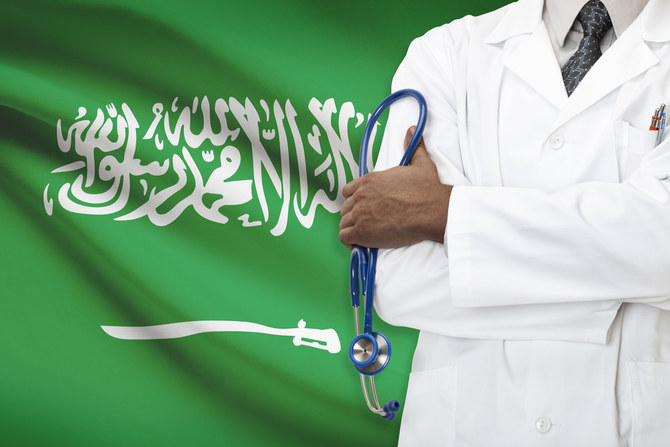

RIYADH: Saudi Arabia’s bold healthcare reforms promise valuable lessons for the region and beyond, according to a senior official.
In an interview with Arab News, Adeel Kheiri, partner in Oliver Wyman’s India, Middle East and Africa health and life sciences practice, highlighted the Kingdom’s endeavors in this sector.
Saudi Arabia has embarked on a journey to prioritize the health and well-being of its citizens, laying a robust foundation for progress.
This commitment has been evident through a steady increase in healthcare spending, with a staggering SR147 billion ($39.2 billion) allocated in 2020 alone, signaling a resolute dedication to revolutionize the nation’s health infrastructure.
Reflecting on this shift, Kheiri said: “Saudi Arabia’s ambitious healthcare reforms stand out for their scale, complexity, and rapid timeframe. This unique approach will undoubtedly offer valuable lessons learned for the IMEA (India, Middle East, and Africa) region and beyond.”
Vikas Kharbanda, Arthur D. Little’s Middle East partner and healthcare practice lead, echoed that analysis, and told Arab News that very few health systems have managed to “achieve the degree of structural, policy and operations reforms as Saudi Arabia is witnessing at the moment, particularly at the scale and geographical scope.”
Kharbanda expressed that the Kingdom is on a path to achieving an “unprecedented change” at a pace “that has not been seen in most health systems that have gone through similar modernization journeys.”
Foundation of progress
An ambitious plan has been set in motion to expand healthcare facilities, with a particular emphasis on augmenting hospitals and primary healthcare centers.
According to project management and advisory services firm Currie & Brown, Saudi Arabia has 78,000 beds in more than 500 hospitals.
This is up from 445 hospitals and 64,694 beds in 2014.
At a macro level, the evolution of Saudi Arabia’s modern health system unfolded across three distinct periods, according to Arthur D. Little.
The initial decade of the century witnessed the early acknowledgment of challenges, leading to substantial investments in establishing core fundamentals.
This included significant investments in physical infrastructure, formulation of health insurance policies, and the expansion of the healthcare network.
“The second phase of development was triggered around the early part of the second decade amidst a growing burden on the public health system, increasing demand for services, the emergence of epidemics, steady growth in the health insurance sector, and need for efficiency that saw increasing focus on digitalization, integration, capacity, and productivity enhancement,” said Kharbanda.
The onset of the third phase of development, initiated toward the conclusion of the second decade, with the introduction of Vision 2030 and the Healthcare Sector Transformation Program, heralds a truly transformative era.
The program is transforming the Kingdom’s healthcare system to be more comprehensive, effective, and integrated than ever before.
This enhanced system prioritizes innovation, financial sustainability, and disease prevention while improving access to healthcare.
It also focuses on expanding e-health services and digital solutions, improving the quality of care, and adhering to international standards.

Adeel Kheiri, partner in Oliver Wyman’s India, Middle East and Africa Health and Life Sciences practice. Supplied
Elevating quality of care
Quality stands as a cornerstone of Saudi Arabia’s healthcare ethos, evidenced by the implementation of accreditation programs like the National Accreditation Program for Healthcare Organizations and the Saudi Central Board for Accreditation of Healthcare Institutions.
These programs uphold stringent standards of patient safety and care, catalyzing an elevation in healthcare services quality throughout the Kingdom.
“Saudi Arabia is likely to make significant strides in managing the human capital to meet the needs of a more future-facing health system,” Kharbanda said.
He added: “This involves identifying and setting up the training systems and accreditation for new roles in the care delivery system, including nurse practitioners, biostatisticians, etc.”
The focus, according to Kharbanda, has to be on developing the necessary capacity and capability in the workforce to meet the new models of care delivery centered around people instead of patients and ensuring new skills to adapt to the rapidly changing medical technologies.
Universal health coverage
Furthermore, Saudi Arabia’s commitment to quality care extends to its efforts toward achieving universal health coverage.
In a landmark move in 2019, the Kingdom embarked on a journey toward UHC, guaranteeing free healthcare services for all citizens irrespective of their socioeconomic status.
This initiative not only ensures equitable access to medical services but also fosters a culture of inclusivity within the healthcare framework.
The ongoing plans go beyond just investing in the capacity of the health system, according to Kharbanda.
He noted that the approach is centered on ensuring a more remarkable shift toward primary care to “manage health rather than sickness.”
Saudi Arabia’s commitment to UHC is a core tenet in its commitment to provide an economically vibrant society and underpin that with an equally robust, resilient, and lively social infrastructure.
“In my view, Saudi Arabia’s investment in world-class health infrastructure will be critical at three levels,” Kharbanda said.
He explained that establishing strong social infrastructure, including high-quality healthcare, not only attracts and fosters top human capital but also directly contributes to economic growth by boosting productivity and creating jobs.
Kharbanda added: “To ensure access to equitable, high-quality, and affordable healthcare, it is necessary to rapidly shift the healthcare delivery system toward care out of the hospitals, and increasing participation of the private sector.”
This is anticipated to positively impact the national economy, potentially saving SR30 billion to SR40 billion in projected public health spending by 2030 and catalyzing over SR30 billion in private sector investments within the same timeframe.
Harnessing technology’s power
The advancement of digital health services, including telemedicine and other e-health services, has made significant strides in recent years and has had a positive impact on the post-COVID-19 environment in the Kingdom, according to Arthur D. Little.
“While consumer-facing digital health solutions are gaining traction, the most impactful innovations for Saudi Arabia’s healthcare transformation will likely be non-clinical and support service applications,” Kheiri said.
He explained that tech enablement in these areas can significantly improve automation, transparency, and efficiency, especially as government health systems are corporatized and expected to adhere to private-sector-like operating principles.
Through a digital health revolution, the Kingdom has pioneered telemedicine and e-health services, transcending geographical barriers to enhance patient care.
The inauguration of the SEHA Virtual Hospital in 2022 exemplifies Saudi Arabia’s commitment to leveraging technology for the greater good, enabling virtual consultations and remote surgeries to reach even the farthest communities.
“Cross-border collaboration in healthcare and life sciences holds immense potential for the IMEA region,” Kheiri said.
He continued: “Saudi Arabia’s advancements can act as a catalyst, particularly in areas like life sciences localization and medical tourism. By working together, countries can leverage each other’s strengths, minimize duplication of efforts, and achieve greater success on the global stage.”
The Arthur D. Little partner believes that localization has always been a topic of great importance in ensuring the long-term sustainability and self-reliability of the sector.
“The real opportunity resides in the emerging areas for biotech and genetic based services where the playing field is less loaded in favor of established and traditional pharma and other technologies suppliers,” Kharbanda added.
Challenges and opportunities
Despite the strides it is making in the healthcare sector, Saudi Arabia faces challenges, including the deployment and operations of capacity in low-density population zones.
“No capacity in any health system will be sufficient to meet the demand unless people take better care of their wellness and participate in the system by bringing greater accountability for their health,” Arthur D. Little said.
Therefore, the challenge is to develop systems where awareness, education, and greater participation lead to a more efficient health system.
The top official noted that outside of the urban centers, there is a greater need to engage people in health management through a more vibrant community-based engagement and health management.
“We see significant advancements in medical technologies and new therapies, the challenge will be to adapt the system to these requirements to take into account novel funding approaches, technologies, and an ecosystem capable of fostering and adopting these innovations,” Kharbanda explained.
However, the Kingdom remains resolute in its pursuit, with plans to privatize segments of the healthcare sector and localize pharmaceutical production, heralding new opportunities for growth and innovation.

Vikas Kharbanda, Partner and Healthcare practice Lead at Arthur D. Little, Middle East. Supplied
Insurance industry integration
Alongside its healthcare advancements, Saudi Arabia’s insurance industry is experiencing rapid growth.
Projected to reach $22 billion by 2028, with a compound annual growth rate of 5.2 percent, the sector is primarily driven by the health and motor segments, accounting for 86 percent of overall gross written premiums.
Despite expectations of normalization in growth starting from 2024, the industry has witnessed substantial expansion.
Moreover, the creation of almost 4,000 new healthcare jobs through the signing of eight memorandums of understanding valued at $1.07 billion in October with international and local companies further demonstrates Saudi Arabia’s commitment to enhancing its healthcare sector.
These agreements aim to facilitate self-sufficiency in the healthcare sector by localizing the supply chain for advanced medical devices, thereby generating 3,800 job opportunities within the Kingdom.
“With a strategy centered on the growth of private providers, there has, in parallel, been tremendous focus on the growth of the private insurance sector as well,” Kharbanda emphasized.
He added: “The GWP (gross written premium) for the health insurance market in the Kingdom has grown by almost 50 percent over the last six years, with nearly 25 percent growth being achieved in 2022. This clearly demonstrates the increasing penetration levels for health insurance in the Saudi market.”
GWP is the total amount of money an insurer collects from its customers in exchange for insurance policies.
The mandatory health insurance program, along with economic growth driving workforce expansion, is expected to further boost the health insurance market, according to the top official.
“What would be very interesting is to explore models for supporting a greater collaboration in private and public health financing to allow more choices for patients to shift between public and private providers through an episode and enhance access to services while gradually re-aligning the whole health financing model with more outcome-based and value centric schemes,” Kharbanda suggested.
Looking to the future
As Saudi Arabia continues to develop healthcare financing, the future holds promising prospects for collaboration between public and private sectors.
Business can help accelerate healthcare innovation and accessibility, according to Oliver Wyman’s partner.
“Public-private partnerships and other forms of private sector engagement can help address existing ecosystem gaps and also support planned enhancement to the care continuum,” Kheiri said.
Establishing clear collaboration models, aligning incentives, and balanced risk-sharing will be essential for success, he noted.
The Kingdom has embarked on a journey of reforms within the health system that aims to achieve changes in a time that is unprecedented in many ways.
“This presents a unique opportunity for Saudi Arabia to become a case study of how health reforms can be carried out in an inclusive, ambitious, and comprehensive fashion,” Kharbanda noted.
This transformation happens when the underlying medicinal science and technologies go through a very rapid evolution, he explained, adding “this also presents a unique opportunity for Saudi Arabia to demonstrate the ability to transform an existing health system and construct a future health system centered on wellness, digitalization, and people-centric health management rather than patient-centric care delivery.”


